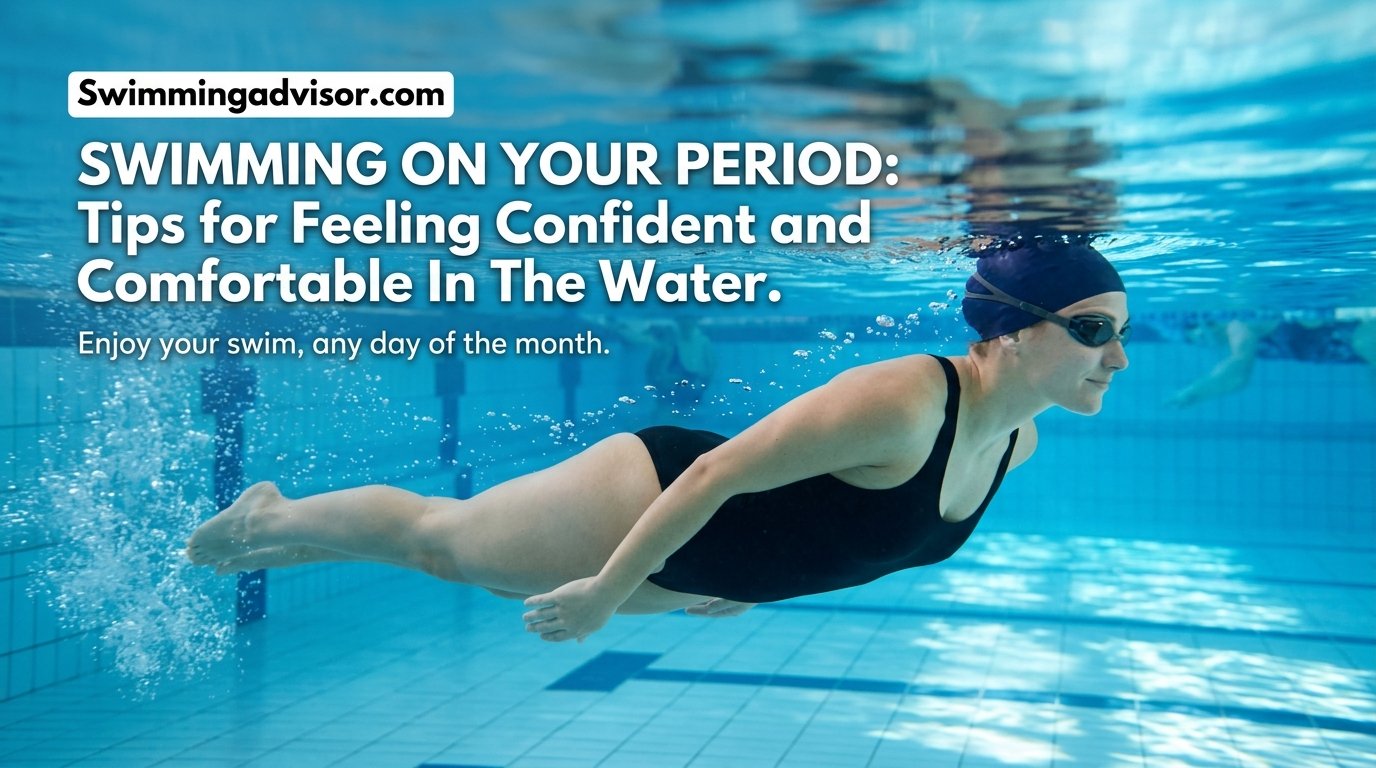
Can I Go Swimming on My Period? Everything You Need to Know Before You Dive In
Short answer: yes, you can. Longer answer: here is exactly how to do it comfortably, hygienically, and without a single leak-related worry.
If you have ever stood on the edge of a pool deck, counted the days on your calendar, and quietly panicked, you are in very good company. Almost everyone who menstruates has wondered at some point whether a swim is off the table once their period arrives. Maybe you grew up hearing that water is “unclean” on your period, or that sharks can smell you from a mile away, or that your flow will turn the whole pool red. Maybe a friend told you that you can only swim with a tampon and nothing else works.
Here is the good news up front: a period does not have to keep you out of the water. Swimming is safe, it is common, and for many people it is one of the most comfortable ways to exercise on a heavy-feeling day. What matters is knowing which period products actually hold up in water, how often to change them, and what to pack so you can get in and out of the pool with confidence.
This guide walks through all of it. We will cover what really happens to your flow in water, how tampons, cups, discs and period swimwear compare, what to think about in a chlorinated pool versus the ocean, how to stay safe, how swimming interacts with cramps, and how to plan your swim around the heaviest days of your cycle. Whether you are a casual beach-goer, a lap swimmer, a parent helping a daughter through her first period, or a competitive athlete, you will find something useful here.
One quick note before we begin: this article is general information, not medical advice. If you have very heavy bleeding, severe pain, or any symptom that worries you, your doctor or another qualified health professional is the right person to ask.
1. The Straight Answer: Yes, You Can Swim on Your Period
Let us settle the main question clearly. Yes, you can go swimming on your period. There is no medical reason to avoid water while you are menstruating, and there is no rule saying you must sit out. Doctors, athletic trainers and swim coaches routinely encourage people to stay active through their cycle, and swimming is one of the gentlest options available because the water supports your body weight.
The only real condition is that you use an internal or purpose-made product, because a regular external pad soaks up water and becomes useless the moment you get wet. That single fact is the source of most of the confusion. People assume that if pads do not work in water, nothing will, and so swimming must be off limits. In reality, tampons, menstrual cups, menstrual discs and modern period swimwear are all designed to handle exactly this situation.
Why the myth that you cannot swim persists
The idea that you should avoid water during a period has deep cultural roots. Historically, menstruation was surrounded by taboos in many societies, and some of those ideas have survived in the form of advice passed from older relatives to younger ones. Add in a bit of embarrassment about leaks, and you get a belief that feels practical even though it has no medical basis.
Modern health guidance has moved well past it. Swimming during your period is considered perfectly safe, and many people find that it actually eases some of the discomfort that comes with bleeding days. You do not need permission, a doctor’s note, or a special excuse. You just need a plan.
You can swim on your period. Use a tampon, menstrual cup, menstrual disc or period-proof swimwear rather than a pad, change or empty your product on schedule, and bring a spare so you are never caught off guard.
If you are curious about the bigger picture of why the pool is such a good place to spend your time, take a look at our guide on whether swimming is a good workout. The short version is that it is easy on the joints, works nearly every muscle group, and leaves you feeling energized rather than drained, which is a nice bonus when your period is making you feel a bit flat.
Get everything you need for a stress-free period swim in one place.
Shop Period Swim Essentials2. What Actually Happens to Your Flow in Water
One of the most common questions is also one of the most practical: what does your period do when you are submerged? The answer is a little surprising. Your flow does not simply gush out and cloud the water around you. In most cases, it slows down or seems to stop while you are in the pool.
Water pressure and body position
Many people notice that their period appears to pause while they are swimming. There are two commonly cited explanations. First, the pressure of the water against your body can make it less likely that blood flows out freely. Second, when you are horizontal, as in swimming, gravity is not helping the flow leave your body the way it does when you are standing or walking around. The combination often produces a temporary slowdown.
That slowdown is not a true stop. Menstruation is driven by your uterine lining shedding, and that process keeps going. When you climb out of the pool and stand up, the flow can resume, sometimes with what feels like a sudden rush of everything that built up. This is completely normal, and it is exactly why relying on the “pause” instead of using a proper product is a bad idea.
Will it turn the water red?
No. Even if some blood does escape, it is diluted immediately in such a large volume of water that nobody will notice. A swimming pool contains tens of thousands of gallons, and pool sanitizers and filtration handle the tiny amounts involved. Nobody around you can tell, and there is nothing unsanitary about it. Even a home inflatable pool, which holds far less water, is more than enough to dilute any incidental amount. If you are planning a backyard dip, our guide on how much water goes in inflatable swimming pools shows just how much dilution you are working with.
The leak most people actually worry about
The real-world leak risk is rarely in the water. It is on the walk from the changing room to the pool, or in the moments after you step out, when your flow resumes and your swimsuit is wet and clingy. That is why the products and habits in the rest of this article matter so much. A well-placed tampon, cup or disc, plus a dark swimsuit and a quick bathroom check before and after your swim, takes care of nearly all of it.
| Situation | What happens | What to do |
|---|---|---|
| Swimming horizontally | Flow often slows or seems to pause | Still use a product; do not rely on the pause |
| Standing in shallow water | Flow may continue normally | Check your product before you get in |
| Getting out of the pool | Flow can resume or surge | Wrap a towel and head to the restroom |
| Long swim sessions | Products can become saturated | Bring a spare and follow change times |
Dark, leak-resistant swimwear makes the walk to the pool far less stressful.
Browse Dark Swimsuits3. Tampons for Swimming: The Classic Choice
Tampons are the product most people think of first, and for good reason. They are small, widely available, easy to carry, and designed to be worn internally, which means water does not interfere with how they work. For a short swim, a properly inserted tampon is one of the most straightforward options.
How to use a tampon for a swim
Insert a fresh tampon shortly before you get in the water, rather than wearing one that has already been in for hours. This gives you the maximum amount of wear time while you are swimming and reduces the chance that it becomes saturated mid-session. Make sure it is inserted far enough that you cannot feel it. If you can feel it, it is not placed correctly and is more likely to be uncomfortable or shift.
Choose the lowest absorbency that matches your flow. Wearing a higher absorbency than you need increases the risk of dryness and irritation and is linked to a higher risk of toxic shock syndrome, which we discuss in more detail later. Many swimmers choose a regular absorbency for the first couple of days and step down to a light one as the flow tapers off.
The string question
A lot of people worry about the string. A wet tampon string can hang out of a swimsuit bottom, which feels awkward but is not something most people notice. Tuck the string neatly to the side before you put on your suit. If the string still bothers you, swimwear with a slightly higher leg line or a swim skirt offers extra coverage. Never cut the string off to solve the problem, because you need it to remove the tampon safely.
Pros
- Small and easy to carry in a swim bag
- Works well for short to moderate swims
- Widely available and affordable
- Available in multiple absorbencies
Cons
- Must be changed on a schedule
- Can absorb a little pool water
- String can feel awkward for some
- Not ideal for very long sessions
Do tampons absorb pool water?
A tampon can take on a small amount of water, particularly around the string and the base, but a modern tampon is built to absorb from the inside, where blood collects. It is not going to swell up and leak water into the pool. That said, it is a good idea to change your tampon soon after you finish swimming, since a damp tampon that has sat for a while is not ideal from a hygiene standpoint.
If you like to train in the water regularly and want to track your sessions, a good waterproof device helps you keep a log on the days you feel your best. Our roundup of the best swimming watches can help you notice how your energy changes across your cycle.
Find tampons in the right absorbency for your flow.
Shop Tampons4. Menstrual Cups: The Swimmer’s Secret Weapon
If you swim often, a menstrual cup may become your favorite product. A cup is a small, flexible bell made from medical-grade silicone that sits inside the vaginal canal and collects blood rather than absorbing it. Because it collects rather than soaks, it does not interact with water the way a tampon does, and it can be worn for longer stretches.
Why swimmers love them
A cup can typically be worn for up to twelve hours, depending on your flow and the manufacturer’s guidance, which covers a full swim session plus the trip there and back. There is no string to worry about, nothing to absorb pool water, and once it is seated properly, many people genuinely forget it is there. For long training blocks, open water days, or a whole day at the beach, that is a huge advantage.
Getting a good seal
The key to a leak-free swim is a proper seal. After insertion, run a clean finger around the base of the cup to make sure it has fully opened. Some people also give the stem a gentle tug to feel for suction. If you feel resistance, the seal is good. If the cup slides out easily, it may not be seated correctly, and you should reposition it before swimming.
Practice at home first. Cups have a learning curve, and the pool deck is a poor place to discover that you have not got the folding technique quite right. Give yourself a cycle or two of practice before you rely on one for a big swim day.
Emptying and cleaning
Empty the cup at least every twelve hours, or sooner on heavy days. In a public restroom, you can empty it, rinse it with water, and reinsert it. Between periods, sterilize it according to the instructions that come with it, which usually means boiling it for a few minutes. Always wash your hands before handling it.
Pros
- Up to twelve hours of wear
- No string and no absorption
- Reusable and cost-effective over time
- Great for long swims and open water
Cons
- Learning curve for insertion and removal
- Emptying in public restrooms takes planning
- Needs proper sterilizing between cycles
- Sizing can take some trial and error
Cups also pair nicely with an active lifestyle beyond the pool. If your swim sessions are part of a bigger plan to build stamina, have a look at our tips on how to increase swimming endurance, because a reliable period product takes one more distraction out of the equation.
Ready to try a cup? Compare sizes and brands before you decide.
Shop Menstrual Cups5. Period Swimwear: Built-In Protection You Can Trust
Period swimwear is one of the most exciting changes in this space. These are swimsuits, bikini bottoms, and swim shorts with built-in absorbent, leak-resistant layers designed to hold menstrual blood without being worn alone in heavy flow. They give you a little extra security and, for lighter days, may be enough on their own.
How period swimwear works
Most period swim bottoms use a layered design. An inner layer wicks moisture away from the body, a middle layer absorbs, and an outer layer is water-resistant so that pool water does not soak in. The absorbency is usually modest compared with a dedicated period product, so the most common advice is to use these as backup alongside a tampon or cup on medium to heavy days, and as a stand-alone option on light days or at the very end of your period.
Choosing the right style
Consider how you like to move. High-waisted bikini bottoms offer a sense of security and stay in place during swimming. Swim shorts give more coverage and are great for active play or surfing. One-piece suits work well if you want a seamless feel. Dark colors and patterns help you feel more at ease if you are worried about visible marks.
- For light days: Period swim bottoms can work alone, especially near the start or end of your cycle.
- For medium days: Pair period swim bottoms with a tampon or cup as a safety net.
- For heavy days: Use a cup or disc with period swimwear for extra peace of mind.
- For teens and first-timers: Period swim bottoms can feel more approachable than inserting a product for the first time.
Caring for period swimwear
Rinse it in cool water right after use, wash it according to the care label, and air-dry. Skip fabric softener, which can coat the fibers and reduce absorbency. Harsh chlorinated water is tough on any swimwear, so a quick rinse after every swim extends its life. If you like to keep your gear organized, our list of the best swim bags includes options with a dedicated wet compartment, which is handy for storing a damp period swimsuit after a session.
| Product | Best for | Typical wear time | Works alone? |
|---|---|---|---|
| Tampon | Short to moderate swims | Up to about 4 to 8 hours | Yes |
| Menstrual cup | Long swims, open water | Up to about 12 hours | Yes |
| Menstrual disc | Heavy days, long sessions | Up to about 12 hours | Yes |
| Period swim bottoms | Light days, backup | Varies by brand | On light days |
| Regular pad | Not suitable for swimming | Not applicable | No |
Explore period-proof swim bottoms, shorts and one-pieces.
Shop Period Swimwear6. Menstrual Discs, Sponges and Pads: What Works and What Does Not
Beyond tampons and cups, a few other products come up in conversations about swimming on your period. Some are excellent swim companions, and one is a definite no.
Menstrual discs
A menstrual disc is a flexible ring that sits higher in the vaginal canal, tucked behind the pubic bone, and collects blood in a shallow basin. Like a cup, it can often be worn for up to twelve hours. Many swimmers like discs because they sit in a spot where they are less likely to be felt and can handle heavier flow. Some people also find them easier to use than cups. There is a learning curve, and they are not for everyone, but they are a strong option for long swim sessions.
Sea sponges and other alternatives
You may see natural sponge products marketed as period solutions. These are harder to keep clean and absorb water, and health authorities generally advise caution. For swimming, a tampon, cup or disc is a safer, more predictable pick.
Why pads do not work for swimming
A regular adhesive pad is designed to sit against your underwear and absorb fluid. In water, it will absorb pool water in seconds, swell, lose its adhesive grip, and become a soggy mess. It will not protect you, and it can be uncomfortable or embarrassing. Save pads for after your swim, when you are back on dry land.
Wearing a pad under your swimsuit does not protect you in the water. If you are not comfortable with internal products, period swim bottoms are the better external option.
Combining products
Many swimmers layer their protection. A cup with period swim bottoms, or a tampon with a dark swimsuit, gives you both a primary and a backup. There is no shame in over-preparing. If your swimming is casual and relaxed, consider how you will spend the rest of your time in the water. A comfortable float is a lovely low-effort way to enjoy the pool on a day when you are not up for lap swimming, and our guide to the best floaties has some easygoing ideas.
Discs are a great pick for heavier days and long swim sessions.
Shop Menstrual Discs7. Pool, Ocean, Lake or Hot Tub: Does the Water Matter?
Where you swim changes a few small details. The basic rule stays the same, but each environment has its own quirks worth knowing.
Chlorinated pools
A properly maintained pool is one of the easiest places to swim on your period. Chlorine and other sanitizers keep the water clean, and the volume of water is large enough that there is no hygiene concern for other swimmers. The main thing to keep in mind is comfort: chlorine can be drying, so a quick rinse afterward helps. If you are looking to keep your own backyard water clean, the guide on chemicals needed for inflatable swimming pools explains how to maintain water you can swim in comfortably.
The ocean
Ocean swimming on your period is safe. The big question everyone asks is about sharks, and the honest answer is that there is no credible evidence that menstruating swimmers are at higher risk of shark attacks. Sharks do detect blood, but the amount released during a period is tiny compared with what they would respond to, and the water dilutes it immediately. Ocean swimmers in every part of the world swim on their periods without incident. Wave action and cold water can make it a little harder to keep a product in place, so a cup or disc with a good seal is especially handy.
Lakes and rivers
Fresh open water is fine too. The considerations are practical: there may be no restroom nearby, so plan for changing or emptying your product before and after. If you are into open water training, our roundup of the best open water swimming watches is worth a look, and a longer-wear product like a cup or disc is a good fit for those swims.
Hot tubs and warm water
Warm water can increase blood flow and may make your flow feel heavier for a short time. A hot tub is not dangerous, but you may want to keep your soak shorter, stay hydrated, and get up slowly if you feel dizzy, since heat and menstruation can both lower your energy. Use a reliable internal product and plan to change it afterward.
Your own backyard pool
A home inflatable pool is a wonderfully private place to swim on your period, with a bathroom just steps away. If you are shopping for one, our picks for the best inflatable swimming pools for adults show which are roomy enough for actual swimming and lounging, and our general best inflatable swimming pools roundup covers every size. Warm water makes a backyard soak even more relaxing, and our tips on how to heat inflatable swimming pools naturally show how to get there without a heater.
| Water type | Period-friendly? | Things to keep in mind |
|---|---|---|
| Chlorinated pool | Yes | Rinse afterward; chlorine can dry skin |
| Ocean | Yes | Waves can shift products; choose a secure one |
| Lake or river | Yes | Restrooms may be limited; plan ahead |
| Hot tub | Yes, in moderation | Heat can increase flow; stay hydrated |
| Backyard inflatable pool | Yes | Private and close to a bathroom |
Love a private swim? Explore roomy inflatable pools for your backyard.
Shop Inflatable Pools8. Hygiene, Safety and Toxic Shock Syndrome
Swimming on your period is safe, but a few safety basics are worth knowing. None of them should scare you away from the water. They are the same habits that keep you healthy on any day of your cycle.
Change on schedule
Tampons should generally be changed every four to eight hours and never worn longer than eight. Cups and discs can typically stay in for up to twelve hours, but always follow the guidance for the specific product you use. If you are in the water for a long session, plan a mid-point change or empty, especially on heavy days.
What is toxic shock syndrome?
Toxic shock syndrome, often shortened to TSS, is a rare but serious condition caused by toxins from certain bacteria. It has been linked to tampon use, particularly when tampons are worn for too long or when a higher absorbency than necessary is used. It is uncommon, but it is worth knowing the warning signs: a sudden high fever, a sunburn-like rash, dizziness or fainting, vomiting or diarrhea, and muscle aches. If you notice these symptoms, remove the tampon and get medical help immediately.
If you develop a sudden fever, rash, dizziness, or feel seriously unwell during or after using a period product, seek urgent medical care and tell the provider you use tampons or another internal product.
Reduce your risk
- Use the lowest absorbency that manages your flow.
- Wash your hands before and after inserting or removing any product.
- Do not leave a tampon in longer than recommended, including overnight beyond the time limit.
- Do not insert a tampon when you are not bleeding or on very light days.
- Consider alternating with pads or period underwear when you are out of the water.
Get out of a wet suit promptly
Sitting in a wet swimsuit for hours can encourage irritation and yeast overgrowth for some people, and a period can make you a little more sensitive. Change into dry clothes after your swim, rinse off if you can, and let your skin breathe. Keep in mind that a wet swimsuit, whether or not you are on your period, is not meant to be worn all afternoon. Keeping your gear clean matters too, and if you use pool toys or floats regularly, our tips on how to clean pool floats help you keep your whole setup fresh.
Do you need to worry about other swimmers?
Not at all. Properly maintained pools are disinfected, and menstrual blood is not a hygiene risk to other swimmers. Using an internal product is about your own comfort, not protecting anyone else.
Keep a fresh, dry set of clothes handy for after your swim.
Shop Towels and Robes9. Cramps, Energy and Whether Swimming Helps
Many people assume they will feel too tired or crampy to swim on their period. For plenty of people, it turns out to be the opposite. Gentle exercise can ease some of the discomfort that comes with menstruation, and swimming is among the easiest on the body.
Why swimming can feel good on your period
Exercise prompts your body to release endorphins, which are natural mood lifters and can help dull pain. Water also supports your weight, which means less strain on your back and joints, areas that often ache during a period. The warm-but-cool sensation of water can feel soothing on an achy lower abdomen and back. Many swimmers report that a relaxed swim leaves them feeling calmer and less bloated.
Listen to your body
That said, there is no obligation to push through. Some days the best decision is a slow, easy session or a day off entirely. Periods vary from person to person and from cycle to cycle. Your energy levels may dip on the first day or two, particularly if you have heavy bleeding or strong cramps. Think of these days as a chance to swim at a gentler pace: slow laps, a relaxed float, or some easy technique work rather than a hard interval set.
Easy session ideas for low-energy days
- Easy floating and stretching: Drift on your back and let your muscles loosen.
- Kick sets with a board: A kickboard lets your upper body rest while your legs get a gentle workout. Our guide on how to use a kickboard for swimming explains the basics, and the best swimming kickboards list helps you pick one.
- Technique drills: Low-intensity drills let you improve without pushing hard. Take a look at how to improve swimming technique for ideas.
- Walking in the shallow end: Water walking is easy on cramping muscles and still gets you moving.
When to skip it
If you feel dizzy, faint, or unusually weak, or your pain is severe, rest instead. Severe pain that interferes with daily life is worth discussing with a doctor, because it is not something you have to simply put up with. Hydrate well and eat something before you swim, since low blood sugar and low iron after heavy bleeding can make you feel drained.
A kickboard makes low-energy swim days gentle and productive.
Shop Kickboards10. Heavy Days, Light Days: Timing Your Swim
No two periods are quite alike, and your flow probably changes day by day. Planning your swim around that rhythm helps you feel confident in the water.
The heaviest days
For most people, the first one to three days are the heaviest. If you swim during this window, pick your most secure option: a cup or disc paired with period swim bottoms, or a fresh tampon of the right absorbency with a backup layer. Keep the session to a reasonable length, and build in a restroom check afterward. It is perfectly fine to choose a shorter or calmer swim on these days, and some people prefer to wait until the flow eases.
Medium days
As your flow settles, you have more flexibility. A standard tampon or cup generally handles a full swim session, and you may choose to use period swimwear as insurance rather than relying on it alone.
The light tail end
On the last day or two, when the flow is spotting or light, period swim bottoms may be enough by themselves. If you prefer, a light tampon or a cup still works. On these days, avoid using a tampon if your flow is very light, since a dry tampon can be uncomfortable to remove and raises the risk of irritation. Period swimwear or a small cup are better matches for light flow.
A simple planning table
| Flow level | Suggested setup | Swim length tips |
|---|---|---|
| Heavy | Cup or disc plus period swim bottoms | Shorter sessions; check afterward |
| Medium | Tampon or cup, with optional backup | Normal sessions; change on schedule |
| Light | Period swim bottoms or light tampon | Full sessions are fine |
| Spotting | Period swim bottoms alone | No restrictions |
Tracking your patterns
Over a few cycles, you may notice predictable patterns in your flow and energy. Some people keep notes on a phone, and waterproof fitness devices can help you see which days feel strongest. If you are curious about budget-friendly options, our guide to a cheap swimming watch is a good place to begin, and the best Garmin swimming watch roundup covers the premium end. Knowing your rhythm helps you schedule harder sessions for your higher-energy days and easier swims when you need them.
Track your swims and energy across your cycle with a waterproof watch.
Shop Swim Watches11. Build Your Period Swim Bag and Routine
The secret to swimming on your period without stress is preparation. A well-stocked bag and a simple routine remove nearly every source of worry.
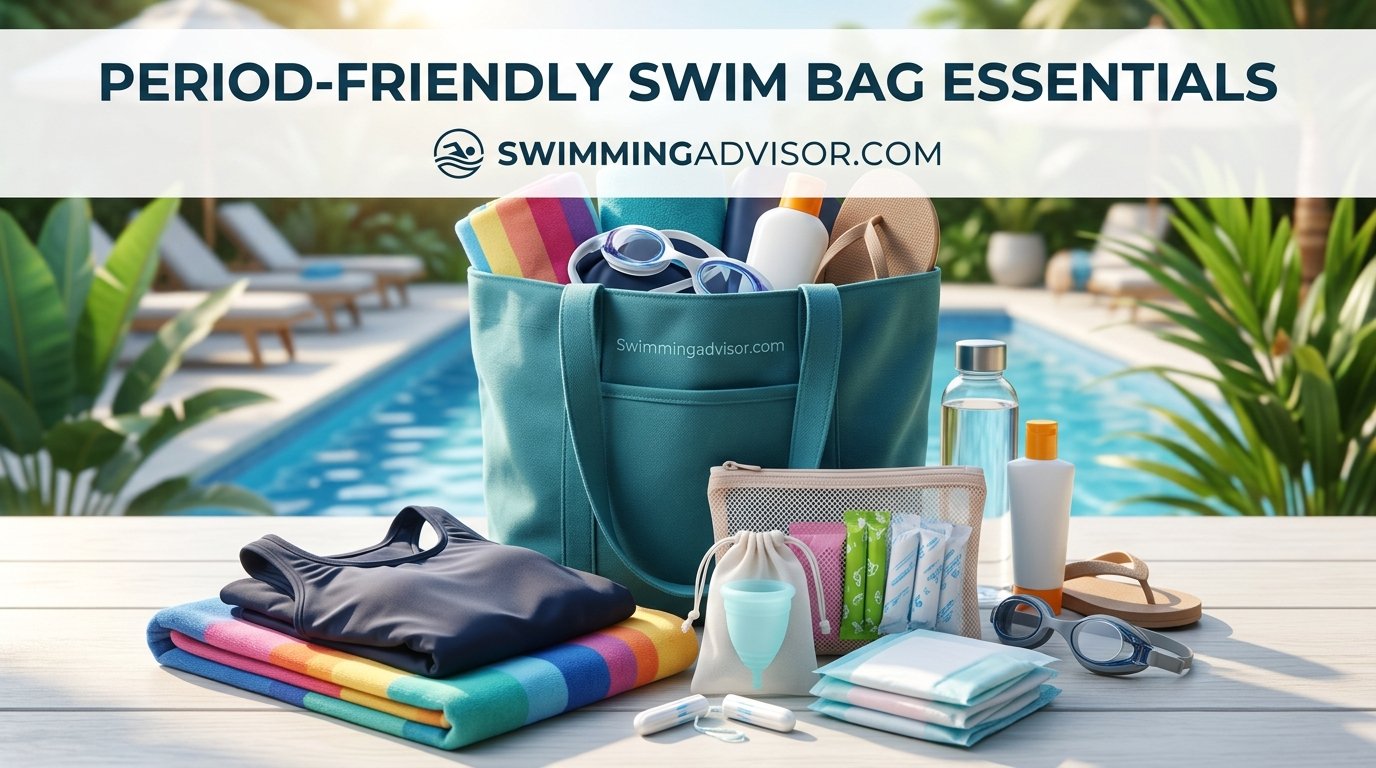
What to pack
- Your primary product: A tampon, cup or disc, plus at least one spare.
- Period swim bottoms or a backup layer: Extra peace of mind.
- A spare swimsuit: Handy if you want to change after your swim.
- A wet bag or dry bag: For your damp swimsuit and towel.
- Hand sanitizer or wipes: For when a sink is out of reach.
- A small pouch for discretion: So you can walk to the restroom comfortably.
- Dry underwear and a clean outfit: For after you swim.
- A towel or wrap: To cover up between the pool and the changing room.
- Water and a snack: Hydration and a little fuel help, especially on heavy days.
- Pain relief, if you use it: Take according to the label or your doctor’s guidance.
A bag with a separate wet compartment keeps everything organized, and our list of the best swim bags has options for every budget.
Your before, during and after routine
- Before: Use the restroom, insert a fresh product, and put on your swimsuit. Check that your string is tucked away or your cup is seated.
- During: Swim at a comfortable pace. If you feel any shifting, step out and check rather than hoping for the best.
- After: Wrap up in a towel, head to the restroom, and change your product if it is time or if it is saturated. Rinse off and change into dry clothes.
- At home: Rinse period swimwear and hang it to dry. Sterilize your cup between cycles.
Extra comfort gear
A good pair of goggles and a well-fitting cap reduce the little discomforts that feel bigger on a period day. If you like breaking up a long swim with variety, tools like hand paddles and a snorkel add interest without piling on stress, and our lists of the best swim paddles and best swim snorkels are worth a browse once you are feeling strong again. For a supportive, relaxed session, a belt can also help with buoyancy, and you can see our picks for the best swim belt for adults.
Pack it once and grab it every time with a wet and dry swim bag.
Shop Swim Bags12. Special Situations: First Periods, Athletes, Kids and More
Some circumstances call for a little extra thought. Here are the situations readers ask about most often.
A first period and swimming
If you or your daughter is dealing with a first period, swimming is still allowed. The challenge is usually confidence rather than safety. Start with period swim bottoms or a small tampon, practice inserting at home, and pick a day when there is no rush. Many people find that swimming is a great way to feel normal again after a first period, and it is okay to take it slowly. Parents can help by stocking a simple kit and being matter-of-fact about it. Reassure young swimmers that there is nothing wrong with taking a day off or swimming in a low-key way.
Competitive swimmers
Elite and club swimmers swim through their periods all the time. The key is reliability: a secure internal product, dark suit, and a plan for long practices. Many athletes choose a cup or disc for the long wear time. Some also notice predictable performance dips or boosts across the month, and tracking can help you plan training. If you are working to build your stamina through the month, check out our tips on improving your swimming endurance, and consider adding gear like swim paddles, which we explain in our guide to what swim paddles do, once you are feeling strong.
Swim lessons and kids
Children learning to swim can still take lessons on their period, with the same product guidance as anyone else. For younger kids who are still learning their way around the pool, floatation aids help them build confidence. See our picks for the best floaties and check how to blow up pool floats safely. Our best inflatable swimming pool for kids list is a good read if you are setting up a backyard space.
Heavy or irregular periods
If your periods are very heavy, for example soaking through a product in an hour or two, or you pass large clots, it is worth speaking to a doctor. Heavy bleeding is common but treatable, and it can affect your energy and iron levels. Until you get advice, choose the most secure products, limit the length of your swim, and listen to your body.
Swimming with an IUD, birth control or other conditions
Most people with an IUD can use a tampon and swim as usual, and many can use a cup with guidance from their healthcare provider, because of a small risk of dislodgement. If you have questions about a particular condition or device, your healthcare provider is the right person to ask.
Plus-size and heavier swimmers
If you like to lounge rather than swim laps, sturdy pool floats give you a comfortable, relaxed way to enjoy the water on a period day. Our guide to the best pool floats for heavy adults covers strong options, and our tips on how to store pool floats help you keep them in good shape between uses.
Make every swim day feel easy with comfortable, dependable gear.
Shop Swim GearFrequently Asked Questions About Swimming on Your Period
Can I go swimming on my period?
Yes. There is no medical reason to avoid swimming while you are menstruating. Use a tampon, menstrual cup, menstrual disc or period swimwear instead of a pad, and follow the recommended change times for your product.
Will my period blood leak into the pool?
With a properly placed internal product, leaks are unlikely. Even if a tiny amount escapes, it is diluted instantly in the large volume of water and is not noticeable or a hygiene issue for other swimmers.
Does my period stop when I am in the water?
It often seems to slow or pause because of water pressure and your horizontal position, but it does not truly stop. The flow can resume when you get out, so always wear a product.
Can I swim with a pad on?
A regular pad will absorb water, swell and lose its grip, so it will not protect you in the pool. Use a tampon, cup, disc or period swim bottoms instead, and save pads for after your swim.
Is it safe to swim in the ocean on my period?
Yes. There is no credible evidence that menstruating swimmers face a higher risk from sharks, and the small amount of blood is diluted immediately. Choose a secure product because waves can shift things around.
How long can I wear a tampon while swimming?
Tampons are generally changed every four to eight hours and should not be worn longer than eight. For a long swim session, plan to change it partway through, and change it soon after you get out of the water.
Are menstrual cups good for swimming?
Yes, many swimmers love them. A cup can often be worn for up to twelve hours, has no string, and does not absorb water, which makes it a great fit for long swims and open water. Practice at home first to get a reliable seal.
Can I swim with period swimwear only?
On light days, many people can rely on period swimwear alone. On medium and heavy days, it is best used as a backup with a tampon, cup or disc, since its absorbency is typically modest.
Will swimming make my cramps better or worse?
Many people find that gentle swimming eases cramps and lifts their mood thanks to endorphins and the support of the water. If you feel dizzy, faint or in severe pain, rest instead and speak with a doctor if pain is frequent.
Do chlorine and pool chemicals affect my period?
Chlorine does not change your cycle or your flow. It can dry out skin, so rinse off after your swim and change into dry clothes to stay comfortable.
Can I swim on my first period?
Yes. Start with period swim bottoms or a small tampon, practice at home, and choose a low-pressure day. Taking a day off is always fine too.
What should I do if I think I have toxic shock syndrome?
Remove your tampon and seek urgent medical care if you have a sudden high fever, a sunburn-like rash, dizziness, vomiting or muscle aches. Tell the provider you use internal period products.
Conclusion: Your Period Does Not Have to Keep You Out of the Water
So, can you go swimming on your period? Absolutely. With the right product, a little planning, and a realistic read on how you feel, you can enjoy the pool, the ocean, or your own backyard any day of the month. Tampons, menstrual cups, discs and period swimwear each have a place, and the best choice depends on your flow, your swim length, and what feels most comfortable to you.
Remember the essentials: skip the regular pad, change or empty on schedule, know the warning signs of toxic shock syndrome, pack a spare, and listen to your body. Some days you will feel strong enough for a hard set, and other days a gentle float is exactly right. Both are perfectly good ways to spend a period day.
Stock up, pack your bag, and get back in the water. You have got this.
Ready to swim with confidence? Start with the essentials.
Shop Period Swim Essentials