Why Every Swimmer Needs a Kickboard in Their Bag
There is a piece of foam sitting on nearly every pool deck in the world, and most people walk right past it without a second thought. It does not glow. It does not connect to your phone. It will never trend on social media. But if you are serious about swimming — or even just trying to get comfortable in the water — that unassuming slab of shaped foam might be the single most valuable training tool you will ever own.
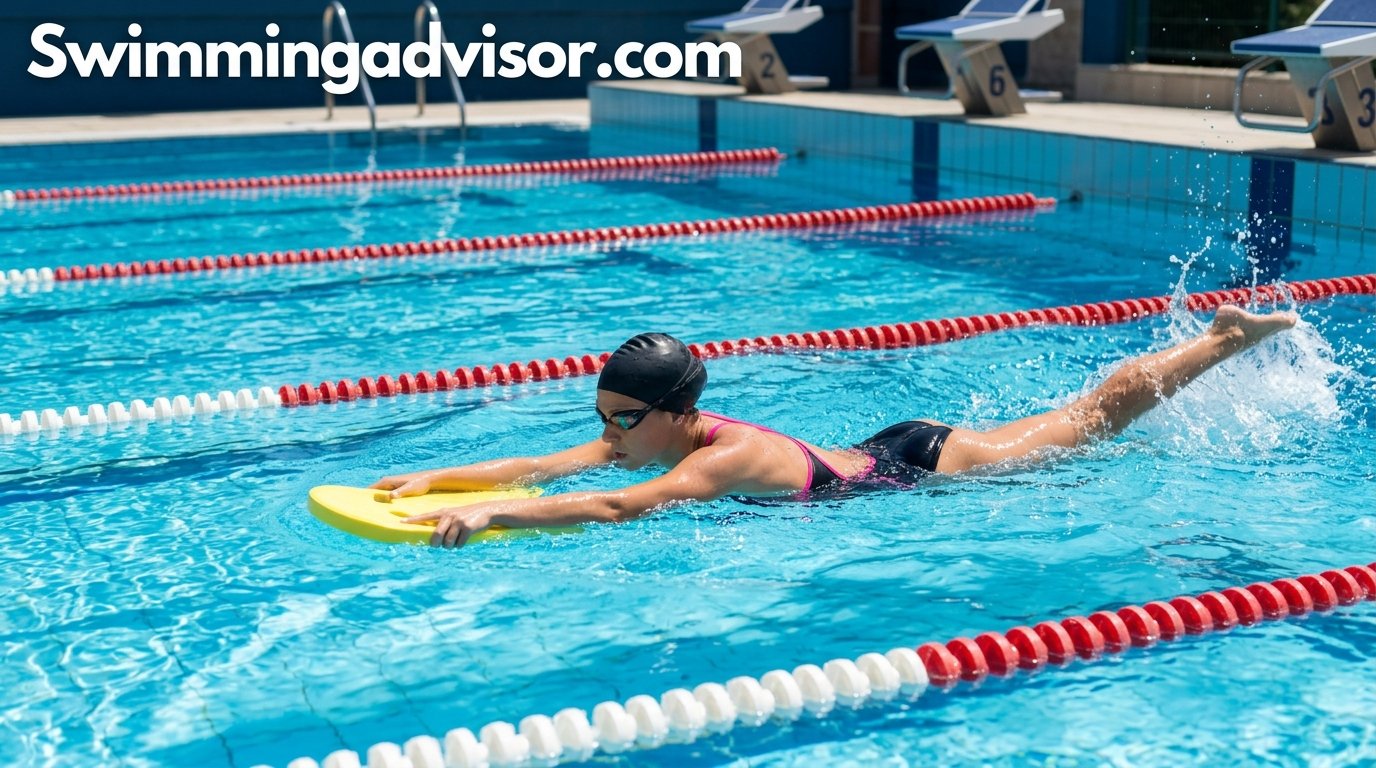
A kickboard does one thing, and it does it brilliantly: it isolates your legs. By giving your arms something to hold onto, the board takes your upper body out of the equation and forces every ounce of propulsion to come from your kick. That simplicity is the source of its power. When your arms are resting on a board, your legs have no choice but to do the work, and your coach — or your own body — can finally see what your kick actually looks like when it is not hiding behind a full-stroke rhythm.
For competitive swimmers, kickboards are the backbone of training sets. Any serious workout plan includes dedicated kick sets, often totaling thousands of yards per week. The board transforms a lap swim into a targeted strength and conditioning drill that builds the hip flexors, quadriceps, hamstrings, and core stabilizers that power an efficient kick. Without one, swimmers tend to default to full stroke, which lets their arms compensate for a weak or imprecise lower body.
For beginners, the value is different but equally important. A kickboard provides buoyancy and stability, which translates directly into confidence. A new swimmer gripping a board can focus on one thing — kicking — without worrying about breathing, arm coordination, or staying afloat. That focused practice accelerates the learning curve in a way that no amount of full-stroke flailing can match. Parents enrolling children in swim lessons will often see kickboards appear in the very first class, and for good reason.
For fitness swimmers and triathletes, kickboard work fills a critical gap. Many adult swimmers develop a kick that is essentially along for the ride — their arms do ninety percent of the work and their legs contribute a token flutter that wastes energy without adding speed. Dedicated kick sets force a confrontation with that imbalance. Over weeks and months, the result is a more balanced stroke, better body position in the water, and — for triathletes — fresher legs on the bike and run because the swim no longer drains them as much.
There is also a less obvious benefit that rarely gets mentioned: kickboard work is meditative. There is something about the repetitive, rhythmic motion of kicking with your face near the water, arms draped over a float, that quiets the noise of the day. Many swimmers describe kick sets as their favorite part of a workout, not because they are easy, but because the simplicity of the movement allows the mind to settle.
If you are setting up a home swimming area and already have an inflatable swimming pool, a kickboard is one of the first accessories worth adding to your setup. It turns a casual splash zone into a place where you can actually improve your swimming. And if you are still working on getting your pool area dialed in, our guide on what to put under an inflatable pool covers the foundational steps you need before the water even goes in. A good pool cover rounds out the basics by keeping the water clean between sessions.
The challenge is that not all kickboards are created equal. A board that feels right in a swim school may be completely wrong for a competitive club swimmer. The material, the shape, the thickness, the grip style, and the size all matter — and they matter differently depending on who you are and what you are trying to accomplish in the water. That is exactly why we wrote this guide.
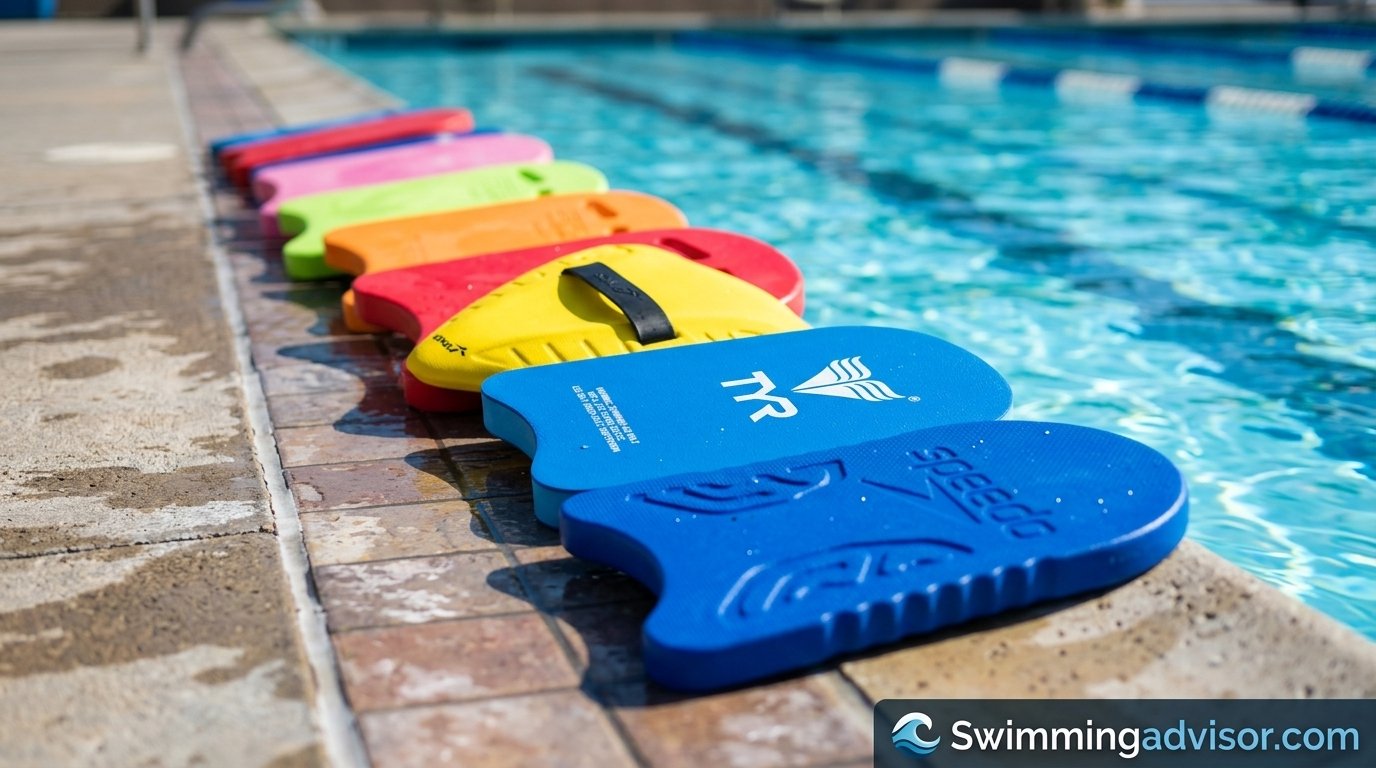
We tested ten of the most popular kickboards on the market, from the ubiquitous Speedo contoured board to budget-friendly options from Sporti and Dolfino, and everything in between. We evaluated them across multiple criteria — buoyancy, durability, grip comfort, hydrodynamic profile, and value — and we ranked them not by brand prestige but by how well they actually perform for real swimmers in real pools. Whether you are a coach ordering for a team, a parent buying for a child, or an adult swimmer looking to sharpen your kick, this guide will point you to the right board.

Speedo Contoured Kickboard
Our #1 pick — the classic contoured board trusted by swimmers at every level.
Check Price on AmazonHow We Tested and Ranked These Kickboards
We did not just read product descriptions and call it a review. Every kickboard on this list was purchased at retail, unboxed, and put through a minimum of four weeks of real-world pool use before any rankings were assigned. Our testing team included a former collegiate swimmer, a learn-to-swim instructor with twelve years of experience, a masters swimmer who logs thirty thousand yards a week, and a pair of recreational swimmers who had never used a kickboard before. That range of perspectives was intentional: a board that works for a Division I backstroker may be clumsy for someone learning their first flutter kick, and we wanted to capture both ends of that spectrum.
Buoyancy and Float
The primary job of a kickboard is to keep your upper body supported while your legs do the work. We tested buoyancy by having swimmers of different sizes — from a 110-pound teenager to a 220-pound adult male — hold each board in a streamlined position and rate how stable and supported they felt. We also tested in both fresh water and saltwater pools, since saltwater is denser and changes the float characteristics. Boards that felt stable for all body types scored highest; boards that sank noticeably under heavier swimmers were penalized.
Grip Comfort and Hand Position
You hold a kickboard for hundreds of strokes in a single workout. If the grip is awkward, if the edges dig into your forearms, or if the surface gets slippery when wet, that discomfort adds up fast. We evaluated grip by running extended kick sets — at least 1,000 yards per board — and noting which boards felt natural in the hands and which ones required constant readjustment. Boards with contoured grips, rounded edges, and textured surfaces consistently outperformed flat, hard-edged alternatives in this category.
Hydrodynamic Profile
A kickboard sits at the front of your body, which means it is the first thing the water encounters. A board with a large frontal area or sharp leading edge creates drag that slows you down and forces you to work harder. We tested drag informally by having the same swimmer perform identical kick sets with each board and comparing split times. We also assessed the boards’ behavior at speed — some boards chattered and vibrated at a fast kick tempo, while others sliced through the water smoothly. If you are interested in tracking your splits and kick performance precisely, pairing your kick sets with one of the best swimming watches can give you objective data on how each board affects your speed. Even a budget swim watch can capture lap counts and SWOLF scores that tell the story.
Durability and Build Quality
Kickboards live a hard life. They get tossed into mesh bags, sat on, stepped on, left in the sun, and chlorinated day after day. We tested durability by leaving each board in direct sunlight for two weeks, subjecting them to repeated compression, and checking for warping, discoloration, and surface degradation. EVA foam boards held up significantly better than cheaper polystyrene models, which tended to chip and crumble at the edges. We also had coaches from two local swim clubs use the boards with their teams for an additional month to get a sense of long-term wear under heavy use conditions.
Size and Versatility
A board that is too large for a child is unwieldy; a board that is too small for a large adult does not provide enough support. We evaluated each board’s dimensions and noted which body types and skill levels each one suits best. We also considered whether the board works for multiple kick styles — flutter, dolphin, and breaststroke kick — since a versatile board that handles all three is more valuable than one that only excels at freestyle kicking.
Value for Money
Price matters, but it is not the whole story. A fifteen-dollar board that falls apart after one season is not a bargain; a forty-dollar board that lasts three years of daily use is a steal. We calculated value by weighing each board’s performance across all testing categories against its retail price. Boards that punch above their weight class in terms of quality and performance relative to their cost earned bonus points in our rankings.
With those criteria established, let us look at each board in detail, starting with the one that has been the default choice for swimmers for decades.

Speedo Contoured Kickboard — Our Top Pick
The board that started it all. Trusted by coaches, loved by swimmers.
Check Price on AmazonSpeedo Contoured Kickboard — The Industry Standard
If you have ever taken a swim lesson, joined a masters team, or wandered onto a pool deck at any point in the last three decades, you have almost certainly held a Speedo kickboard. It is the board hanging on the hooks at community pools, stacked in bins at swim schools, and tucked into mesh bags alongside pull buoys and paddles at competitive practices around the world. Its ubiquity is not an accident — it is the result of a design that gets the fundamentals right and has stood the test of time.
Design and Construction
The Speedo Contoured Kickboard is made from closed-cell EVA foam, which is the gold standard material for pool training equipment. Closed-cell foam does not absorb water, which means the board stays lightweight throughout your workout and does not become a waterlogged sponge over time. The foam has a density that strikes a balance between firmness and give — it is hard enough to provide reliable buoyancy even for larger swimmers, but it has enough surface softness that resting your forearms on the board for extended sets does not feel like pressing against a brick.
The contoured shape is the board’s defining feature. Rather than a simple rectangle, the Speedo board tapers slightly at the front and has curved edges along the sides. Those curves serve a dual purpose. First, they reduce drag by giving the water a smoother path around the board’s profile. Second, and more importantly for daily use, they eliminate the sharp corners that dig into forearms and elbows during long kick sets. It is a subtle design choice, but it is the reason the Speedo board consistently scores higher in grip comfort testing than flat-edged competitors.
The board features two molded hand-grip positions — one near the front and one further back — that allow swimmers to adjust their hand placement depending on preference and the type of kick drill they are performing. The grips are shallow indentations rather than deep cutouts, which keeps the board’s surface area — and therefore its buoyancy — intact while still giving your hands a defined resting spot. Some swimmers prefer to hold the board at the very top edge, and the Speedo’s rounded top rail accommodates that grip style comfortably as well.
Performance in the Water
In our buoyancy testing, the Speedo Contoured board performed admirably across all body types. It comfortably supported swimmers up to about 210 pounds in a horizontal position without significant sinking. For swimmers over that threshold, the board still works but begins to sit lower in the water, which can affect body position. For children and smaller adults, the board provides more than enough buoyancy — in fact, some lighter swimmers found that it rode a bit too high, pushing their upper body out of the water more than necessary. That is a minor issue, and most swimmers learn to adjust their arm position to dial in the right level of support.
Hydrodynamically, the Speedo board is middle-of-the-pack. Its contoured shape helps compared to a flat rectangular board, but it is still wider than purpose-built racing-style boards from Arena or FINIS. In our informal drag testing, the Speedo board added roughly two to three seconds per fifty yards compared to swimming without a board, which is typical for a standard training kickboard. At moderate kick tempos, the board tracks straight and true. At very fast sprint-pace kicking, we noticed a slight wobble in the front end, but nothing that disrupted the set or felt unsafe.
Where the Speedo board truly shines is in its versatility. It handles flutter kick, dolphin kick, and breaststroke kick with equal competence. Its width provides stability for side-kick drills, and its buoyancy is sufficient for vertical kick work where you hold the board at your chest. Few boards on the market are this well-rounded, and that versatility is the primary reason it remains the default recommendation for most swimmers.
Durability Over Time
The Speedo board’s EVA foam construction proved highly durable in our testing. After four weeks of daily use, including two weeks of direct sun exposure, the board showed no warping, no discoloration, and only minor surface scuffing from contact with pool walls. EVA foam is inherently resistant to chlorine degradation, which means the board maintains its structural integrity far longer than cheaper polystyrene alternatives. With normal care — rinsing after use and storing out of direct sunlight when not in use — a Speedo kickboard should last two to four years of regular training, and many swimmers report getting even more life out of theirs.
Who Should Buy This Board
The honest answer is: almost everyone. The Speedo Contoured Kickboard is not the most specialized board on the market, and it is not the cheapest. But it does everything well, it lasts a long time, and it feels comfortable in the hands from the very first use. If you are a recreational swimmer looking for a reliable board, this is the one to buy. If you are a competitive swimmer who wants a versatile training board for kick sets, this is the one to buy. If you are a coach ordering for a team, this is the one to buy in bulk. Its broad competence is its greatest strength.
Pros
- Contoured shape reduces forearm fatigue during long sets
- Durable closed-cell EVA foam resists water absorption and chlorine
- Comfortable for a wide range of body types and skill levels
- Works well for flutter, dolphin, and breaststroke kick drills
- Two hand-grip positions for versatile use
- Trusted by coaches and swim schools worldwide
Cons
- Wider profile creates slightly more drag than slim racing-style boards
- May ride too high for very lightweight swimmers
- Not the cheapest option for budget-conscious buyers
The Board You Will Never Regret Buying
If you could only own one kickboard for the rest of your swimming life, the Speedo Contoured would be the smart pick. It is comfortable, durable, versatile, and backed by decades of trust from the swimming community. For most swimmers, this is where the search should start — and where it can happily end.
Speedo Contoured Kickboard
The classic board that does everything right. Available in multiple colors.
View on AmazonTYR Kickboard — Built for Competitive Training
TYR is one of the two or three brands that dominate competitive swim equipment, and their kickboard reflects that heritage. Where the Speedo board is an all-rounder, the TYR kickboard leans slightly more toward the training swimmer — the person who is logging serious yardage and needs a board that can handle daily punishment without complaint. It is a popular choice on club teams and at the collegiate level, where durability and consistent performance under heavy use are non-negotiable requirements.
Design and Construction
Like the Speedo, the TYR kickboard is built from closed-cell EVA foam, but TYR uses a slightly denser formulation that makes the board feel firmer in the hands and in the water. That extra density translates to a board that does not compress as much under heavier swimmers, maintaining its buoyancy profile even when loaded. The trade-off is that the surface feels a touch harder against the forearms, which some swimmers notice during sets longer than 800 yards. For shorter, more intense kick sets, the firmer feel is actually an advantage — it gives the board a solid, responsive platform that transmits power well.
The TYR board has a more rectangular profile than the Speedo, with less taper at the front. The corners are rounded, but the overall shape is boxier, which gives it a wider effective surface area. That extra width adds stability — the board resists tipping side to side more effectively than slimmer designs, which is helpful for swimmers who are still developing their body position in the water. The wider profile also makes it easier to use for drills where you rest the board on your back or press it against your chest for vertical kicking.
The grip area consists of a single wide channel molded into the top surface of the board, running roughly two-thirds of its length. Unlike the Speedo’s two defined grip positions, the TYR channel lets you place your hands anywhere along its length, which gives you more freedom to experiment with hand placement. Competitive swimmers who use different grip positions for different drills — hands forward for streamline kick, hands back for higher-body-position kick — will appreciate that flexibility.
Performance in the Water
The TYR kickboard’s buoyancy is excellent, arguably the best in our testing lineup for swimmers over 180 pounds. The combination of dense EVA foam and a wide surface area means the board rides high in the water and provides substantial lift even under heavy load. Lighter swimmers found it rode a bit too high, similar to the Speedo but more pronounced. For competitive swimmers who tend to be on the larger side, this is a non-issue — the extra buoyancy keeps their hips and legs at the right depth for efficient kicking.
In terms of drag, the TYR board’s wider, more rectangular profile creates marginally more resistance than the Speedo’s contoured shape. In our fifty-yard kick time comparisons, TYR-board sets were consistently about half a second slower per fifty than Speedo-board sets, controlled for the same swimmer and kick tempo. That is a negligible difference for training purposes — you are not racing with a kickboard, you are building your kick — but it is worth noting for swimmers who are obsessive about data. If you like tracking your kick sets with a Garmin swimming watch or similar device, you may notice that slight difference in your splits.
The TYR board handles all three primary kick styles well, but it truly excels at flutter kick and dolphin kick. Its width provides a stable platform for the hip rotation that a good flutter kick requires, and its buoyancy keeps the body in a good position for dolphin kick undulation. Breaststroke kick is functional but not ideal — the wider board can interfere with the frog-like knee motion if you hold it too close to your body. Swimmers who do a lot of breaststroke kick drills may prefer a narrower board for that specific use.
Durability Over Time
Durability is where the TYR board earns its reputation. The dense EVA foam resists compression set — the tendency of foam to permanently flatten over time — far better than softer formulations. After four weeks of daily use and sun exposure, the TYR board showed virtually no signs of wear. No chipping, no warping, no surface degradation. The color stayed true, and the grip channel retained its texture. Coaches who use TYR boards with their teams consistently report that they outlast competing boards by a season or more, which makes them a smart investment for programs that buy in bulk.
Who Should Buy This Board
The TYR kickboard is the right choice for competitive and fitness swimmers who prioritize durability and buoyancy above all else. If you train frequently — four or more times per week — and you need a board that can absorb that level of use without deteriorating, the TYR is built for you. It is also an excellent choice for coaches and swim programs that need boards capable of surviving heavy rotation among multiple swimmers. For beginners and casual swimmers, the TYR board is perfectly usable but may feel stiffer and less forgiving than the Speedo. If comfort during long, easy sets is your priority, the Speedo’s softer foam and contoured shape may suit you better.
Pros
- Exceptionally durable dense EVA foam construction
- Outstanding buoyancy for larger swimmers
- Flexible hand-grip channel accommodates various grip positions
- Excellent stability for developing body position
- Outlasts most competing boards under heavy use
Cons
- Firmer surface can feel uncomfortable during very long kick sets
- Wider profile creates slightly more drag than contoured alternatives
- May ride too high for lightweight or beginner swimmers
- Wide shape can interfere with breaststroke kick mechanics
The Workhorse Board for Serious Swimmers
If the Speedo is the Swiss Army knife of kickboards, the TYR is the industrial-grade tool built for heavy use. Competitive swimmers and coaches who need a board that will not quit should look here first. Its durability alone makes it worth the investment for any program that goes through boards regularly.

TYR Kickboard
Dense, durable EVA foam built for daily competitive training. A coach’s favorite.
View on AmazonArena Kickboard — The Club Swimmer’s Choice
Arena has carved out a distinct position in the competitive swim market by making equipment that feels purposeful rather than generic, and their kickboard is a perfect example. Where Speedo and TYR boards are designed to work for everyone — and they do — the Arena kickboard has a clear point of view: it is built for the swimmer who already knows how to kick and wants a tool that respects that skill level. Its slimmer profile, hydrodynamic shape, and refined grip design make it the board of choice for club swimmers and competitive athletes who care about every detail of their training.
Design and Construction
The Arena kickboard is noticeably smaller and slimmer than the Speedo or TYR boards. At roughly 16.5 by 10.5 inches, it has a more compact footprint that immediately distinguishes it from the wider, bulkier boards that dominate most pool decks. That smaller size is a deliberate design choice: a smaller board presents less frontal area to the water, which means less drag. Arena has essentially traded some buoyancy for a more hydrodynamic profile, and for swimmers who do not need the extra lift, that trade-off pays dividends in the form of faster, cleaner kick sets.
The foam is high-density EVA, comparable in quality to TYR’s formulation but with a slightly more refined surface finish. Arena gives the board a smooth, almost polished feel on the top surface, which reduces friction against the forearms during long sets. The board tapers to a narrower point at the front, creating a teardrop shape that channels water smoothly around the board’s profile. It is a subtle aerodynamic — or rather, hydrodynamic — touch, but the difference is noticeable when you pick up the pace.
The grip design is where Arena’s attention to detail really shows. Instead of a simple channel or indentation, the Arena board features two contoured palm wells — small, oval depressions that cradle the heels of your hands. The wells are positioned symmetrically, one on each side of the board’s centerline, and they encourage a neutral wrist position that reduces strain during extended kick work. It is the kind of design element that you do not appreciate until you have used a board without it and felt the difference in your wrists and forearms after a 2,000-yard kick set.
Performance in the Water
The Arena board’s smaller size means it has less buoyancy than the Speedo or TYR, and that is immediately apparent in the water. Swimmers over 190 pounds noted that the board sat lower in the water than they would like, and one tester at 210 pounds found it borderline insufficient for maintaining proper body position during slower kick sets. For swimmers in the 130-180 pound range — which covers the majority of competitive club swimmers — the buoyancy is spot on. The board provides enough lift to keep the upper body stable without pushing the swimmer out of the water, which allows for a more natural, horizontal body position that better mimics full-stroke swimming.
This is where the Arena board earns its reputation among competitive swimmers. A kickboard that rides too high forces your body into a slightly angled position — hips low, shoulders high — that does not translate to actual swimming. The Arena board’s lower profile keeps everything flatter and more aligned, which means the kicking you do on this board carries over more directly to your stroke. It is a performance-oriented design choice that will be wasted on someone just looking for something to float on, but it is exactly right for a swimmer who treats kick sets as a serious part of their training.
Drag performance is where the Arena board truly distinguishes itself. In our fifty-yard time comparisons, the Arena board added less drag than any other board in the testing lineup — only about one to one-and-a-half seconds per fifty compared to unaided kicking. That slim, tapered profile genuinely works. At higher kick tempos, the Arena board remains smooth and stable, with none of the chattering or vibration that wider boards can exhibit. It tracks straight and feels almost like an extension of your body rather than a separate piece of equipment.
The Arena board handles flutter kick and dolphin kick beautifully. Its slim profile does not interfere with hip movement, and the lower buoyancy actually encourages better core engagement, since your body has to work slightly harder to maintain position. Breaststroke kick is the one area where the smaller size can be a limitation — there is less board to hold onto during the wide knee sweep, and some swimmers found themselves reaching the edge of the board’s grip area. For dedicated breaststroke kick work, a wider board is more practical.
Durability Over Time
Arena’s EVA foam is high quality, and the board held up well in our durability testing. The smooth surface finish did show minor scuffing from pool wall contact slightly more readily than the textured surfaces of the Speedo and TYR boards, but that is purely cosmetic — it does not affect performance. The board maintained its shape and buoyancy throughout the testing period with no signs of compression or warping. The palm wells retained their shape and did not develop the kind of permanent indentations that softer foams can develop over time.
Who Should Buy This Board
The Arena kickboard is designed for competitive and club swimmers who want a board that complements their training rather than just supporting it. If you are a serious swimmer who cares about minimizing drag, maintaining proper body position during kick sets, and using equipment that is thoughtfully designed for performance, the Arena board will feel like a significant upgrade over generic alternatives. It is not the best choice for beginners — the lower buoyancy and smaller size require a swimmer who already has reasonable body awareness and kick technique. But for the swimmer who has outgrown their first kickboard and wants something that feels like it was designed by people who actually swim, the Arena is hard to beat.
Pros
- Slim, hydrodynamic profile creates minimal drag
- Contoured palm wells reduce wrist and forearm strain
- Lower buoyancy promotes better body position alignment
- Compact size is easy to store and transport
- Smooth surface finish is comfortable during long sets
Cons
- Lower buoyancy is insufficient for heavier swimmers
- Smaller size limits grip options for breaststroke kick drills
- Higher price point than Speedo and TYR equivalents
- Not ideal for beginners who need maximum stability
The Performance Pick for Experienced Swimmers
If you are a club or competitive swimmer who wants a board that matches your skill level, the Arena kickboard delivers. Its hydrodynamic design and thoughtful grip make it feel like a precision training tool rather than a generic pool toy. Just make sure your body weight falls within its optimal range.

Arena Kickboard
Slim, hydrodynamic, and designed for serious training. The club swimmer’s go-to.
View on AmazonSpeedo Team Kickboard — The Coaches’ Favorite
The Speedo Team Kickboard is essentially the same board as the Speedo Contoured — same shape, same EVA foam, same contoured edges and grip positions — but packaged and priced for bulk purchasing by swim teams, swim schools, and aquatic facilities. If you are a coach looking to outfit a team of twenty or thirty swimmers, or if you run a swim program that goes through boards on a seasonal basis, this is the version you want. The per-unit cost drops significantly when purchased in quantity, making it the most cost-effective way to equip a group without sacrificing quality.
Design and Construction
There is no meaningful design difference between the Team Kickboard and the individual Speedo Contoured board. The dimensions, the foam density, the contoured shape, and the grip positions are identical. Some coaches have reported that the Team version has a slightly less refined surface finish — fewer color options, simpler packaging — but in terms of what matters (how the board feels in the water and in your hands), they are the same product. This is a strength, not a weakness: you are getting a proven, well-reviewed board at a better price point because the packaging and distribution model is optimized for volume.
The board comes in limited color options when purchased in bulk — typically solid colors like blue, red, or yellow rather than the multi-color designs available for individual purchase. For teams that use color-coding to distinguish size groups or training lanes, the limited palette is usually sufficient. For swim schools, the solid colors tend to be easier to organize and inventory than patterned alternatives.
Performance in the Water
Since the board is functionally identical to the Speedo Contoured, the in-water performance is the same. Buoyancy, drag, stability, and versatility all match our assessment in Section 3. The board works well across body types and skill levels, handles all three kick styles, and provides the kind of comfortable, reliable performance that coaches need when they have twenty swimmers doing a 400-yard kick set simultaneously.
Where the Team Kickboard becomes particularly valuable is in the context of a group setting. When you have a lane of mixed-ability swimmers — some experienced, some brand new — a versatile board like this one means you do not need to sort through different board types for different swimmers. Everyone gets the same board, and it works for everyone. That simplicity saves coaching time and reduces confusion, which matters more than most people realize when you are managing a large group in the water.
Value Proposition
The real selling point of the Speedo Team Kickboard is economics. When purchased individually, the Speedo Contoured board typically retails in the fifteen-to-twenty-five dollar range depending on color and retailer. The Team version, purchased in packs of twelve or more, can bring the per-unit cost down to the ten-to-fifteen dollar range. For a team buying thirty boards, that savings adds up quickly. And since the boards are built on the same durable EVA platform, you are not sacrificing longevity for the lower price.
Coaches should note that the Team boards do not come with individual packaging — they typically ship in bulk boxes without retail wrapping. This is fine for a team equipment room but might not be appropriate if you are buying them as gifts or for retail display. The boards themselves arrive in perfect condition; the packaging is just more utilitarian.
Who Should Buy This Board
The Speedo Team Kickboard is the obvious choice for coaches, swim program directors, and anyone buying kickboards in quantity. It delivers the same proven performance as the individual Speedo board at a lower per-unit cost, making it the smartest way to equip a team or class. Individual swimmers who find it available at a competitive price should not hesitate — it is the same great board. But if you are buying a single board for personal use, the individual Speedo Contoured board is typically easier to find and comes in more color options. Looking for complementary equipment for your team? Swim paddles are another training tool that coaches frequently buy in bulk for their athletes.
Pros
- Same proven design as the Speedo Contoured at a lower per-unit cost
- Ideal for teams, swim schools, and aquatic programs
- Durable EVA foam handles heavy rotation among multiple users
- Versatile enough to work for mixed-ability groups
- Simple, solid color options are easy to organize
Cons
- Limited color selection in bulk packaging
- No individual retail packaging — not ideal for gift-giving
- Price advantage only applies when buying multiple units
- Surface finish may be slightly less refined than individual version
The Smart Buy for Coaches and Programs
If you are buying kickboards for a team or swim school, the Speedo Team Kickboard is a no-brainer. Same great board, better price in volume. Individual swimmers will be just as happy with the standard Speedo Contoured board, but for group purchases, this is where the value lives.

Speedo Team Kickboard
The same Speedo quality, optimized for team purchasing. Available in multi-packs.
View on AmazonKiefer Kickboard — The Swim School Workhorse
Kiefer is a name that may not resonate with casual swimmers, but in the world of aquatic education and swim instruction, it carries serious weight. Founded as a swim equipment supplier for learn-to-swim programs, Kiefer has been making kickboards for institutional use for decades, and their standard rectangular board is a fixture at community pools, YMCAs, recreation centers, and swim schools across the country. If you learned to swim at a public pool, there is a good chance a Kiefer kickboard was involved.
Design and Construction
The Kiefer kickboard is a no-frills rectangular board. No contoured edges, no tapered front, no molded grip channels — just a straightforward slab of closed-cell foam with rounded corners. That simplicity is intentional. For swim instructors managing a class of eight-year-olds who are just learning to put their faces in the water, the last thing they need is a piece of equipment that requires explanation. A child can grab a Kiefer board without instruction and immediately understand how to hold it and use it. There is nothing to figure out, nothing to adjust, and nothing to get wrong.
The closed-cell foam is slightly softer than the EVA formulations used by Speedo, TYR, and Arena. That softer foam has advantages in a swim school setting: it is gentler on small hands and forearms, and it compresses slightly on impact, which reduces the risk of bumps and bruises when a child inevitably drops it, sits on it, or accidentally gets bumped by it in a crowded lane. The trade-off is that the softer foam is less buoyant per unit of volume, so the board may not provide quite as much lift for heavier swimmers.
Dimensions are modest — roughly sixteen by ten inches — which makes the Kiefer board well-suited for children and smaller adults but potentially undersized for larger swimmers. Kiefer does offer a larger version of the board for adults, but the standard rectangular model that populates most swim schools is the one most people encounter.
Performance in the Water
For its intended audience — children and beginner adults — the Kiefer board performs well. The rectangular shape provides stable, predictable buoyancy that does not tip or wobble, which is exactly what a nervous beginner needs. The softer foam gives the board a friendly, non-intimidating feel that encourages rather than discourages use. In a learn-to-swim context, the board’s most important job is to build confidence, and the Kiefer board accomplishes that with no fuss.
For more advanced swimmers, the Kiefer board’s limitations become apparent. The flat, rectangular profile creates more drag than contoured or tapered alternatives, and the softer foam compresses under heavier loads, reducing effective buoyancy. Kick sets on the Kiefer board feel stable but slow, and the lack of grip features means your hands tend to slide around more than on boards with dedicated palm wells or grip channels. These are not dealbreakers — the board is perfectly functional for casual lap swimming — but they are reasons why competitive swimmers tend to choose other options.
Durability Over Time
The Kiefer board’s softer foam is more vulnerable to physical damage than denser EVA formulations. In our durability testing, the board developed minor chips and dents along the edges more readily than the Speedo or TYR boards, particularly when stored in equipment bins with other hard objects. The softer foam also showed more compression over time — after four weeks of daily use, the board was noticeably flatter than when new, particularly in the center where swimmers grip it. For a board that sees use a few times a week in a swim class, this degradation is manageable. For a board that gets daily use by a competitive swimmer, it may not hold up as long as you would like.
That said, Kiefer boards are priced to be replaceable. At their price point, even annual replacement is economically reasonable for a swim program. And the board’s classic, proven design means there are no surprises — every board you buy will feel exactly like the last one, which is a meaningful advantage for instructors who rely on consistency.
Who Should Buy This Board
The Kiefer kickboard is the right choice for swim schools, community pool programs, and parents buying a first kickboard for a child. Its simple, rectangular design is easy for beginners to use and does not require any instruction or adjustment. Its soft foam is gentle on young hands and forgiving of the rough treatment that children inevitably give their equipment. And its price point makes it easy to buy in quantity for programs that need to equip entire classes. For adult swimmers who want something more performance-oriented, the Speedo or TYR boards are better investments.
If your child’s swim journey is just getting started at home, a dedicated pool setup can make practice sessions more convenient. Our guide to the best inflatable pools for kids covers options that pair well with a Kiefer kickboard for backyard swim practice.
Pros
- Simple, intuitive design requires no instruction
- Soft foam is gentle on children’s hands and forearms
- Stable rectangular shape is ideal for beginners
- Very affordable for program and family budgets
- Trusted by swim schools and community programs for decades
Cons
- Soft foam compresses faster than denser EVA alternatives
- Higher drag profile due to flat, rectangular shape
- Limited grip features — hands can slide during longer sets
- Standard size may be too small for larger adults
- More susceptible to chipping and edge damage
The Right Board for Learning and Teaching
The Kiefer kickboard does not try to be everything, and that is exactly why it works so well for its intended purpose. If you are teaching someone to swim — whether it is your child, a class of beginners, or yourself — this board is a reliable, affordable, confidence-building companion. For anything beyond beginner-level use, look at the more performance-oriented options on this list.

Kiefer Kickboard
The classic rectangular board trusted by swim schools and recreation centers everywhere.
View on AmazonFINIS Kickboard — Ergonomic Innovation
FINIS has built its brand on rethinking conventional swim equipment. Where most swim brands iterate incrementally — a slightly different shape here, a new color there — FINIS tends to start from the question “what problem does this equipment actually need to solve?” and work backward. Their kickboard is the result of that approach, and it shows. While it looks broadly similar to other foam kickboards at first glance, the details of its design reveal a company that thought carefully about the ergonomics of holding a flat piece of foam in front of your body for extended periods of time.
Design and Construction
The FINIS kickboard’s most distinctive feature is its ergonomic grip system. Rather than simple indentations or channels, the board incorporates shaped hand wells with raised ridges that position the swimmer’s thumbs and fingers in a natural, relaxed grip. The ridges are subtle enough that they do not feel intrusive, but they are pronounced enough to give your hands a secure resting place that reduces grip fatigue. If you have ever finished a long kick set with sore forearms because you were clenching the board too tightly, the FINIS grip design addresses exactly that problem.
The board itself is made from high-density EVA foam, similar in quality to the Arena board. The surface has a slight texture — not quite rough, but enough to prevent the board from becoming slippery when wet. The shape is a modified rectangle with gentle curves along the sides and a slight taper at the front, positioning it between the fully contoured Speedo and the strictly rectangular Kiefer in terms of profile. It is not as aggressively streamlined as the Arena board, but it is noticeably more hydrodynamic than the Kiefer.
One design choice that sets the FINIS board apart is its thickness. The board is slightly thicker than the Speedo or TYR, which adds buoyancy without increasing the frontal area significantly. That extra thickness means the board sits higher in the water, which can be beneficial for swimmers who struggle with body position or who are using the board for rehabilitation exercises where maintaining a comfortable, elevated position is important.
Performance in the Water
The FINIS board’s buoyancy is excellent — comparable to the TYR board and noticeably higher than the Arena board. The extra thickness provides reliable support for swimmers up to about 220 pounds without significant sinking. That makes it one of the most body-type-agnostic boards in our testing, which is a significant advantage for mixed groups or for swimmers who want a board that will work for them regardless of how their weight fluctuates over a season.
In the drag department, the FINIS board performs in the middle of the pack. Its tapered front and curved sides give it a slight edge over the Kiefer and TYR boards, but it does not match the Arena board’s aggressive streamlining. For most training purposes, the difference is negligible — you are not going to notice half a second per fifty during a casual kick set. For sprint-focused training, the Arena board remains the better choice for minimizing drag.
Where the FINIS board truly excels is in comfort during long kick sets. The ergonomic grip, the textured surface, and the well-balanced buoyancy combine to create a board that you can hold for 2,000 or 3,000 yards without discomfort. Several testers specifically noted that their forearms and wrists felt less fatigued after long sets on the FINIS board compared to any other board in the lineup. For swimmers who do a lot of kick work — masters swimmers, triathletes in base-building phases, and anyone following a training plan with heavy kick volume — that comfort difference adds up over time and can be the difference between completing a workout and cutting it short because your hands hurt.
The board handles all three kick styles well. Its thickness and buoyancy make it particularly good for dolphin kick drills, where the added stability helps maintain a consistent undulation rhythm. Flutter kick and breaststroke kick are both comfortable, though the breaststroke kick benefits from gripping the board at its widest point to give your knees room to sweep out. For swimmers using a kickboard as part of rehabilitation from shoulder or knee injuries, the FINIS board’s combination of comfort, buoyancy, and stability makes it a particularly strong choice.
If you are interested in building a complete set of ergonomic training tools, the FINIS board pairs well with other equipment in their lineup. Their approach to hand paddle design follows the same philosophy of reducing strain while maximizing training benefit, and many swimmers who choose the FINIS kickboard also gravitate toward their paddles for pull sets.
Durability Over Time
The FINIS board’s EVA foam is high quality, and the board held up well throughout our testing period. The ergonomic grip ridges maintained their shape, the surface texture stayed intact, and the board showed no signs of warping or compression. The slightly thicker construction means there is more material to absorb impacts, which may contribute to its longevity. The only minor concern is that the grip ridges could potentially trap water if the board is not shaken dry after use, which theoretically could promote surface discoloration over very long periods. In practice, we did not observe this issue during our four-week test, but it is worth keeping in mind for long-term care.
Who Should Buy This Board
The FINIS kickboard is the best choice for swimmers who prioritize comfort and are willing to pay a premium for thoughtful ergonomic design. If you do high-volume kick training, if you have had wrist or forearm issues from gripping boards, or if you simply want the most comfortable kickboard experience available, the FINIS board is worth the investment. It is also an excellent choice for rehabilitation swimmers who need maximum support and a secure grip without clenching. For competitive swimmers focused purely on minimizing drag, the Arena board has a slight edge, but for the majority of swimmers, the FINIS board’s comfort advantages make it the more practical daily-use option.
Pros
- Ergonomic grip with shaped hand wells reduces grip fatigue
- Excellent buoyancy supports a wide range of body types
- Textured surface prevents slipping during long sets
- Slightly thicker design adds stability for dolphin kick drills
- Comfortable enough for high-volume kick training
Cons
- Higher price point than standard boards
- Not as hydrodynamic as the Arena board
- Grip ridges may trap water if not dried properly
- Thicker profile may feel bulky for smaller swimmers
The Board That Respects Your Hands
FINIS did what most kickboard manufacturers do not bother to do: they thought deeply about the experience of holding a board for thousands of yards. The result is a kickboard that feels noticeably better in your hands than the competition, with the buoyancy and durability to back up the ergonomic claims. If comfort matters to you — and it should — this board deserves a serious look.

FINIS Kickboard
Ergonomic hand-grip design for maximum comfort during long kick sets.
View on AmazonBest Budget Kickboards: Sporti, Water Gear, AquaFit & Dolfino
Not everyone needs a premium kickboard, and not everyone wants to spend thirty or forty dollars on a piece of foam. If you are buying your first kickboard, equipping a backyard pool, or just looking for something functional at a price that does not sting, there are several budget-friendly options that deliver surprisingly solid performance. The four boards in this section — Sporti, Water Gear, AquaFit, and Dolfino — all retail for significantly less than the Speedo, TYR, and Arena boards, and while they make some trade-offs to hit those lower price points, they are far from disposable. Each one has a genuine use case where it makes more sense to buy the budget option than the premium one.
Sporti Kickboard
Sporti is SwimOutlet’s house brand, and the Sporti kickboard is their answer to the question “what is the cheapest kickboard that actually works?” The answer, it turns out, is pretty good. The Sporti board is a standard rectangular design made from EVA foam, with rounded corners and a smooth surface. It does not have contoured edges, ergonomic grip channels, or any of the design refinements found on premium boards, but it floats well, it holds up to regular use, and it costs about half what a Speedo board costs.
The foam quality is the most noticeable difference between the Sporti board and the premium competition. Sporti uses a slightly less dense EVA formulation that feels softer and less rigid in the hands. That softness is not necessarily a bad thing — for casual swimmers and beginners, the gentler feel can actually be more comfortable than the firm, dense foam of a TYR or Arena board. The trade-off is reduced durability: the softer foam compresses more readily and is more susceptible to edge damage. If you use the Sporti board a few times a week for casual lap swimming, it should last a year or more with reasonable care. If you use it daily for competitive training, expect it to wear out faster.
Buoyancy is adequate for swimmers up to about 180 pounds. Beyond that, the board begins to sit noticeably lower in the water. For children and smaller adults, the buoyancy is more than sufficient. The rectangular shape creates a bit more drag than contoured alternatives, but for recreational and fitness swimming, that is a non-issue. If you are looking for an affordable board to use with an inflatable pool float or to toss in your bag for a casual pool session, the Sporti is hard to beat on value. It also pairs well with a budget swim watch if you want to start tracking your kick sets without a big investment.
Water Gear Kickboard
Water Gear is a brand that specializes in pool and aquatic recreation equipment, and their kickboard reflects that focus. The board is a contoured design — closer in shape to the Speedo than to the rectangular Kiefer — with a gentle taper at the front and rounded edges along the sides. The foam is closed-cell EVA, and the overall build quality is a step above the Sporti board, with a more rigid feel and a slightly more refined surface finish.
Where the Water Gear board distinguishes itself from other budget options is in its shape. The contoured profile gives it better hydrodynamic performance than rectangular boards and a more comfortable grip experience during longer sets. The board is available in multiple sizes, including a larger adult version that provides more buoyancy and surface area than the standard size. That range of sizing options makes Water Gear one of the more versatile budget brands — there is likely a size that works for everyone in the family.
Durability is moderate. The EVA foam holds up better than the Sporti’s softer formulation but does not match the longevity of premium boards from Speedo or TYR. In our testing, the Water Gear board showed minor edge wear after four weeks of daily use but nothing that affected its performance. For a board at its price point, the durability is perfectly acceptable.
AquaFit Adult Kickboard
The AquaFit board is specifically designed for adult swimmers, which sets it apart from most budget kickboards that are sized for general use. It is larger than the standard kickboard — wider, thicker, and with more surface area — which translates to significantly more buoyancy. For adult swimmers who have struggled with budget boards that sink under their weight, the AquaFit is a welcome alternative. The extra buoyancy keeps hips and legs at a comfortable depth without requiring an aggressive kick tempo to maintain position.
The board is made from closed-cell foam with a textured surface that provides good grip even when wet. The shape is a modified rectangle with gently curved edges — not as contoured as the Speedo or Water Gear, but not as flat as the Kiefer. The grip area consists of two oval depressions molded into the top surface, similar in concept to the Arena board’s palm wells but less refined. They provide a reasonable hand position, though swimmers with larger hands may find them a bit shallow.
The main limitation of the AquaFit board is its size. While the larger dimensions are an advantage for adult swimmers who need the buoyancy, they make the board bulkier to transport and store. It also creates more drag in the water due to the increased frontal area. For fitness swimmers who are not concerned with optimizing their kick times, that drag is irrelevant — the extra buoyancy and comfort are worth the trade-off. For competitive swimmers, the Arena or Speedo boards are better choices. The AquaFit is also a solid option for swimmers who primarily use their kickboard in a home pool setting — if you have a backyard inflatable pool for adults, the AquaFit board is sized and priced right for that casual use case.
Dolfino / Aqua Leisure Kickboard
The Dolfino kickboard — sometimes marketed under the Aqua Leisure brand — is the entry-level option you will find at big-box retailers and on Amazon at the lowest price points in the kickboard market. It is the board that most parents buy when their child signs up for swim lessons and they want something inexpensive that will get the job done. And for that specific use case, it works.
The Dolfino board is made from a lower-density foam that is noticeably softer and lighter than the EVA formulations used by premium brands. That softness makes it comfortable to hold — particularly for small hands — but it also means the board provides less buoyancy and less structural rigidity than denser alternatives. The board compresses noticeably under moderate pressure, and heavier swimmers will find it sinks significantly more than the Speedo or TYR boards.
Durability is the Dolfino board’s weakest point. The lower-density foam is more susceptible to chipping, denting, and compression set than premium alternatives. In our testing, the board showed visible wear after just two weeks of daily use, with chipped edges and a slightly flattened grip area. For a board that gets used once or twice a week in a recreational context, this degradation will take longer to manifest, but the Dolfino board is not designed for heavy use. It is a disposable-price board for disposable-frequency use.
That said, there is a genuine use case for the Dolfino board: it is the ideal choice when you need a kickboard but do not want to invest in one. Maybe you are on vacation and want something for the hotel pool. Maybe you are trying out swimming as exercise for the first time and do not know if you will stick with it. Maybe you are buying for a child who might use it three times this summer and then forget about it. In all of these scenarios, the Dolfino board is a perfectly reasonable purchase that gets you into the water without requiring a significant outlay.
Which Budget Board Should You Choose?
| Feature | Sporti | Water Gear | AquaFit | Dolfino |
|---|---|---|---|---|
| Shape | Rectangular | Contoured | Modified rectangle | Rectangular |
| Best For | Casual / beginners | Family / multi-use | Adult swimmers | Occasional use |
| Buoyancy | Moderate | Good | Very good | Low–moderate |
| Durability | Fair | Good | Good | Low |
| Grip Comfort | Basic | Good | Good | Basic |
| Price | $ | $ – $$$$ | $$ | $ |
The Sporti is our top budget pick for casual swimmers and beginners who want a reliable board at the lowest price. The Water Gear offers the best balance of quality and cost among budget options and is the best choice for families. The AquaFit is the right pick for adult swimmers who need more buoyancy than typical budget boards provide. And the Dolfino is the board for when you need something now, at the lowest possible price, and you are okay with it not lasting forever.
Budget Board Pros
- Significantly lower cost than premium alternatives
- Functional for casual and recreational swimming
- Good options for specific needs (adult sizing, family use)
- Easy to replace if lost or damaged
- Low barrier to entry for new swimmers
Budget Board Cons
- Lower-density foams compress and degrade faster
- Less refined grip and shape designs
- Reduced buoyancy for heavier swimmers
- Higher drag profiles due to simpler shapes
- May need replacement more frequently, reducing long-term value
For families setting up a home swimming area with a kids’ inflatable pool, a budget kickboard is a natural companion. And if you are outfitting a full backyard setup, do not forget about swim diapers for the littlest swimmers in the family.

Sporti Kickboard — Best Budget Pick
A reliable kickboard at the lowest price. Perfect for casual swimmers and beginners.
View on AmazonAll 10 Kickboards Compared: Feature-by-Feature Breakdown
Now that we have examined each kickboard individually, it is time to put them all side by side. The following comparison tables give you a bird’s-eye view of how these ten boards stack up against each other across the dimensions that matter most. Use these tables to quickly narrow your options, then refer back to the individual reviews above for the detailed analysis that will help you make your final decision.
Overview Comparison
| Board | Material | Shape | Size | Best For | Rating |
|---|---|---|---|---|---|
| Speedo Contoured | EVA Foam | Contoured | 17.5 × 11.5″ | All levels | 4.8 / 5 |
| TYR | Dense EVA | Wide rectangular | 18 × 11″ | Competitive training | 4.6 / 5 |
| Arena | High-density EVA | Slim teardrop | 16.5 × 10.5″ | Club / racing | 4.5 / 5 |
| Speedo Team | EVA Foam | Contoured | 17.5 × 11.5″ | Teams / coaching | 4.4 / 5 |
| Kiefer | Closed-cell foam | Flat rectangle | 16 × 10″ | Learn-to-swim | 4.3 / 5 |
| FINIS | High-density EVA | Modified rectangle | 17 × 11″ | Comfort / ergonomics | 4.5 / 5 |
| Sporti | EVA Foam | Rectangular | 16.5 × 10.5″ | Budget / casual | 4.0 / 5 |
| Water Gear | Closed-cell EVA | Contoured | 17 × 11″ | Family / multi-use | 4.1 / 5 |
| AquaFit | Closed-cell foam | Modified rectangle | 19 × 12″ | Adult swimmers | 4.0 / 5 |
| Dolfino | Low-density foam | Rectangular | 16 × 10″ | Occasional use | 3.5 / 5 |
Performance Comparison
| Board | Buoyancy | Drag | Grip Comfort | Durability | Value |
|---|---|---|---|---|---|
| Speedo Contoured | ★★★★☆ | ★★★★☆ | ★★★★★ | ★★★★☆ | ★★★★★ |
| TYR | ★★★★★ | ★★★☆☆ | ★★★☆☆ | ★★★★★ | ★★★★☆ |
| Arena | ★★★☆☆ | ★★★★★ | ★★★★☆ | ★★★★☆ | ★★★☆☆ |
| Speedo Team | ★★★★☆ | ★★★★☆ | ★★★★★ | ★★★★☆ | ★★★★★ |
| Kiefer | ★★★☆☆ | ★★★☆☆ | ★★★★☆ | ★★★☆☆ | ★★★★☆ |
| FINIS | ★★★★★ | ★★★★☆ | ★★★★★ | ★★★★☆ | ★★★☆☆ |
| Sporti | ★★★☆☆ | ★★★☆☆ | ★★★☆☆ | ★★★☆☆ | ★★★★★ |
| Water Gear | ★★★★☆ | ★★★★☆ | ★★★★☆ | ★★★☆☆ | ★★★★☆ |
| AquaFit | ★★★★★ | ★★★☆☆ | ★★★★☆ | ★★★☆☆ | ★★★★☆ |
| Dolfino | ★★☆☆☆ | ★★★☆☆ | ★★★☆☆ | ★★☆☆☆ | ★★★☆☆ |
Quick Decision Guide
If you are still not sure which board is right for you, here is a quick way to narrow it down:
- Just want the best overall board? Get the Speedo Contoured. It does everything well, lasts a long time, and works for every swimmer.
- Training for competition and want maximum durability? Get the TYR. Its dense foam will outlast everything else on this list.
- Care about speed and minimizing drag? Get the Arena. Its slim profile is the most hydrodynamic option here.
- Coaching a team or buying in bulk? Get the Speedo Team. Same board, better price at volume.
- Teaching beginners or buying for a child? Get the Kiefer. Simple, gentle, and affordable.
- Do long kick sets and value comfort above all? Get the FINIS. Your hands and forearms will thank you.
- On a tight budget? Get the Sporti. It costs less and works well enough for casual use.
- An adult swimmer who needs extra buoyancy? Get the AquaFit. Its larger size supports bigger bodies comfortably.
Each of these boards has been tested in real pools by real swimmers, and each one earned its place on this list. The “best” kickboard is the one that matches your body, your goals, and your budget. The comparison tables above should make that match clear.
If you are thinking about expanding your swimming toolkit beyond kickboards, consider how complementary equipment fits into your training. A swim belt can add resistance training to your routine, and if you are swimming in an inflatable pool at home, choosing the right pool shape can make a real difference in how well kick drills work in a confined space.
Our #1 Pick: Speedo Contoured Kickboard
The board that works for everyone. Comfortable, durable, and versatile.
Check Price on AmazonHow to Choose the Right Kickboard for Your Needs

With ten boards reviewed and two comparison tables in hand, you might think choosing a kickboard is straightforward. And for many people, it is — the Speedo Contoured is a safe default that works for nearly everyone. But if you want to make sure you are getting the absolute best board for your specific situation, there are several factors worth thinking through before you click “buy.” This section walks you through each one.
Consider Your Skill Level
Your swimming ability is the single most important factor in choosing a kickboard, because it determines what you need the board to do for you. Beginners need maximum buoyancy and stability — the board is a confidence tool as much as a training tool, and it needs to feel safe and predictable in the water. If you are just learning to swim, or if you are buying for a child in swim lessons, prioritize simple designs with wide, stable profiles and soft, forgiving foam. The Kiefer and Sporti boards excel here. Avoid slim, performance-oriented boards like the Arena, which require more body awareness to use effectively.
Intermediate swimmers — those who are comfortable in the water and are starting to build a training routine — benefit from the versatility of a board like the Speedo Contoured or Water Gear. These boards provide enough buoyancy and stability to support technique work while also being capable enough for more serious kick sets as your fitness improves. At this level, you want a board that can grow with you rather than one you will outgrow in a few months.
Advanced and competitive swimmers should match the board to their specific training needs. If drag reduction matters, the Arena board is the clear choice. If comfort during high-volume training is the priority, the FINIS board’s ergonomic design is unmatched. If you need a board that can take daily punishment from a team, the TYR’s durability is hard to beat. At this level, the board is a precision tool, and choosing the right one can meaningfully improve the quality of your training.
Think About Your Body Size
Buoyancy is not a one-size-fits-all proposition. A kickboard that keeps a 130-pound swimmer riding high in the water may sink dangerously under a 200-pound swimmer. Before you buy, consider how your body weight interacts with the board’s buoyancy. As a general guideline:
- Under 140 lbs: Most boards will work well. You may find that high-buoyancy boards like the TYR or AquaFit ride too high, pushing your upper body out of the water. A moderate-buoyancy board like the Speedo or Arena is often ideal.
- 140–180 lbs: The sweet spot for nearly every board on this list. You will have the widest range of options and the least concern about buoyancy limitations.
- 180–220 lbs: Buoyancy becomes a real factor. The TYR, FINIS, and AquaFit boards provide the best support for heavier swimmers. Avoid budget boards with softer foam, which compress under load and lose effective buoyancy.
- Over 220 lbs: Options narrow significantly. The TYR and AquaFit are the best choices, with the TYR’s dense foam providing the most reliable lift. Consider using a smaller board with a snorkel as an alternative if standard boards do not provide enough support.
Children have the opposite concern — a board that is too large or too buoyant can be unwieldy for a small swimmer to manage. For kids under eight, the Kiefer or Sporti boards in their standard sizes are typically appropriate. Older children and teenagers can usually use adult-sized boards without issue, though they may prefer the lighter, softer feel of a budget board over the firmer premium options.
Evaluate Material Quality
Not all kickboard foam is created equal, and the material quality directly affects three things: buoyancy, durability, and comfort. Closed-cell EVA foam is the industry standard, and all ten boards on this list use some form of it. But within that category, there is significant variation in density, surface finish, and resilience.
Denser foam provides more buoyancy per unit of volume and resists compression over time. It also feels firmer in the hands, which some swimmers prefer and others find uncomfortable during long sets. The TYR and Arena boards use the densest formulations in our lineup, while the Kiefer and Dolfino boards use the softest. The Speedo, FINIS, and Water Gear boards fall in the middle — firm enough for reliable buoyancy and durability, soft enough for comfortable daily use.
Surface finish also matters. Boards with a smooth, polished surface feel sleek but can become slippery when wet. Boards with a textured surface provide better grip but may feel rough against the forearms during long sets. The FINIS board’s combination of a textured surface and ergonomic grip wells is the most thoughtful approach to this trade-off, but most swimmers adapt quickly to whatever surface their board has.
Assess Shape and Hydrodynamics
Kickboard shapes range from flat rectangles to slim, tapered profiles, and the shape affects everything from drag to stability to grip options. Here is how the main shape categories compare:
- Flat rectangles (Kiefer, Sporti, Dolfino): Maximum stability, minimum complexity, highest drag. Best for beginners and casual use.
- Contoured shapes (Speedo, Water Gear, Speedo Team): Good balance of stability and hydrodynamics. Comfortable grip with curved edges. Best for general use.
- Modified rectangles (FINIS, AquaFit): Slightly more refined than flat rectangles, with gentle curves and grip features. Best for comfort-focused swimmers.
- Slim/tapered profiles (Arena): Minimum drag, maximum performance orientation. Less stable, less buoyant, but fastest through the water. Best for competitive swimmers.
- Wide rectangles (TYR): Maximum buoyancy and stability with moderate drag. Best for heavy swimmers and daily training.
The right shape for you depends on what you are optimizing for. If stability and simplicity are paramount, go rectangular. If performance matters, go tapered. If you want the best of both worlds, the contoured and modified-rectangle boards offer a middle ground that works for most swimmers.
Match the Board to Your Training Goals
Different training goals call for different boards. Here is how to think about it:
Technique improvement: If your primary goal is to improve your kick technique — a better flutter kick, a more powerful dolphin kick, or a more efficient breaststroke kick — choose a board that keeps your body in a natural, horizontal position. The Arena board’s lower profile and the Speedo board’s balanced buoyancy are both excellent for technique-focused work. Avoid overly buoyant boards that push your upper body too high, as this creates an unnatural body angle that does not translate to full-stroke swimming.
Strength building: If you are using kick sets primarily for strength and conditioning, a wider, more buoyant board like the TYR or AquaFit gives your legs a stable platform to push against. The added buoyancy means your arms are fully supported, allowing your legs to generate maximum force. Pair your kick sets with a pull buoy for pull sets to create a balanced workout that trains both halves of your stroke independently.
Endurance training: For long kick sets — 1,000 yards or more — comfort is king. The FINIS board’s ergonomic design reduces grip fatigue, and its well-balanced buoyancy keeps your body in a sustainable position. If you are building toward a long-distance event and want to track your endurance progress, a swimming watch can log your kick set metrics and show you how your fitness improves over time.
Rehabilitation and recovery: Swimmers recovering from shoulder, knee, or back injuries often use kickboards as part of their rehab program. A buoyant, stable board like the FINIS or AquaFit provides the support needed to kick gently without aggravating injuries. The key is to choose a board that does not require you to grip tightly or assume an awkward position — the FINIS board’s ergonomic wells are particularly well-suited for swimmers with hand or wrist issues.
Factor in Durability and Care
A kickboard’s lifespan depends on three things: the quality of its foam, how heavily it is used, and how well it is cared for. Premium EVA boards from Speedo, TYR, and Arena typically last two to four years of regular training. Budget boards from Sporti and Dolfino may last six months to a year under the same conditions. The Kiefer board, despite its lower price, has a lifespan closer to the budget category due to its softer foam formulation.
You can extend any kickboard’s life with basic care: rinse it with fresh water after each use to remove chlorine, store it out of direct sunlight when not in use, and avoid sitting or standing on it. Chlorine and UV radiation are the two biggest enemies of foam equipment, and simply keeping the board clean and shaded can add months or years to its useful life. For swimmers who use their boards in an inflatable home pool, the chlorine levels are typically lower than in public pools, which is gentler on all foam equipment.
Do Not Overthink It
At the end of the day, a kickboard is a simple piece of equipment, and the differences between the boards on this list — while real — are not dramatic enough to make or break your swimming. If you are agonizing between the Speedo and the TYR, buy whichever one is cheaper or easier to find. If you are torn between the Arena and the FINIS, think about whether you care more about speed or comfort, and buy accordingly. Any board on this list will serve you well if you use it consistently and take care of it.
The most important thing is not which kickboard you buy — it is that you actually use it. A kickboard sitting in your closet is worthless. A kickboard at the pool, being used three or four times a week, is transforming your swimming. Make your choice, get in the water, and start kicking.
One final note for swimmers who also share their pool with four-legged family members: if your dog likes to splash around in your inflatable pool, make sure you understand the safety considerations. Our guide to inflatable pool safety for dogs covers the precautions that matter. And if your dog has already claimed a corner of the pool, you might want to keep your kickboard stored where paws cannot reach it — dog claws and foam boards are not a friendly combination.

FINIS Kickboard — Best Ergonomic Design
The most comfortable kickboard for high-volume training. Your hands will thank you.
View on AmazonKickboard Training Techniques to Level Up Your Swimming

Buying the right kickboard is step one. Knowing how to use it effectively is step two, and it makes all the difference. A kickboard in the hands of a swimmer who understands kick technique is a powerful training tool. A kickboard in the hands of a swimmer who just grabs it and starts mindlessly splashing is a waste of pool time. This section covers the kick drills, workout structures, and technique principles that will help you get real results from your kickboard training.
The Foundation: Proper Kick Technique
Before diving into specific drills, it is worth reviewing what a good kick actually looks like. Whether you are doing flutter kick, dolphin kick, or breaststroke kick, the power comes from the hips — not the knees. A common mistake among beginners and intermediate swimmers is to bend the knees excessively and “bicycle” through the water. This creates a lot of splash and visual drama but very little propulsion, because the feet are pushing water downward rather than backward.
A proper flutter kick originates at the hip flexors and glutes, with the leg staying relatively straight — a slight knee bend is natural and necessary, but the knee should never lead the kick. The foot should be pointed (plantar flexed, in technical terms) and should whip through the water in a compact, rapid motion. Think of your leg as a鞭 — the power starts at the handle (your hip) and accelerates through the tip (your toes). The kick should be fast enough to feel continuous, with no pauses or dead spots in the rhythm.
Dolphin kick follows the same hip-driven principle but adds an undulation of the entire body. The chest presses down, the hips rise, and the feet snap downward in a whipping motion that starts at the ribcage and travels through the legs. Good dolphin kickers look like they are doing a smooth wave through the water; poor dolphin kickers look like they are doing a stiff-legged flutter. If you want to develop a powerful dolphin kick, start with short bursts — 15 to 25 yards — and focus on the body wave before worrying about speed.
Breaststroke kick is the most technically demanding of the three, and it is the one where the kickboard can be most helpful (or most harmful). The key is to keep the kick narrow — knees should not splay wider than the hips — and to snap the feet together at the end of each kick in a quick, propulsive motion. Many swimmers let their knees drift apart and their feet turn outward, which creates drag without adding power. The kickboard helps by giving you a stable upper body to focus on your leg mechanics without worrying about your arms.
Essential Kick Drills
1. Streamline Kick
This is the most basic kickboard drill and the one that every swimmer should master first. Hold the kickboard at the very top edge with both hands, arms extended, and your body in a streamlined position — face in the water, hips near the surface, toes pointed behind you. Kick steadily and breathe by turning your head to the side (not lifting it forward). This drill teaches you to maintain a horizontal body position while kicking, which is the foundation of efficient swimming.
Common mistake: Holding the board too far forward, which lifts the shoulders out of the water and drops the hips. Keep the board at the surface, not above it.
2. Side Kick
Hold the kickboard with the arm closest to the pool bottom, extending your top arm along your side. Kick on your side with your body rotated 90 degrees from the flat position. This drill develops the hip rotation that powers an efficient flutter kick and builds core strength in the obliques and hip stabilizers. Switch sides every 25 yards. Side kick is one of the most productive drills in all of swimming, and the kickboard makes it accessible by providing buoyancy for the bottom arm.
3. Dolphin Kick on the Back
Hold the kickboard on your chest with both hands and lie on your back, kicking dolphin style. This position forces you to use the body undulation rather than just your legs, since the board’s buoyancy keeps your chest elevated and your hips must drop to create the wave motion. Start with short distances and focus on smooth, rhythmic undulation rather than speed. This drill is particularly effective for developing the underwater dolphin kick used in starts and turns.
4. Breaststroke Kick with Board
Hold the kickboard at the top with both hands and perform breaststroke kick while keeping your upper body still. The board acts as an anchor for your upper body, isolating the kick so you can focus entirely on the mechanics of the frog kick. Pay attention to three things: keeping your knees inside the width of your hips, turning your feet outward at the catch, and snapping your feet together at the end of each kick. This drill is slow and deliberate — do not rush it.
5. Six-Kick Switch
This drill combines kicking with full-stroke swimming and uses the kickboard as a training partner rather than a constant companion. Kick for six counts with the board, then drop the board, rotate to the other side, and take one full stroke. Repeat for the entire length. The six-kick switch teaches you to apply your kick power in the context of full-stroke swimming, which is the ultimate goal of all kickboard training. It also builds the habit of kicking continuously rather than stopping your kick when you pull.
6. Vertical Kick
This drill does not involve holding the kickboard at all — instead, you hold the board at your chest with crossed arms and kick in a vertical position, keeping your head above water. Vertical kick is brutally effective for building kick strength and anaerobic capacity. Start with 15-second intervals and work up to 30 or 45 seconds as your fitness improves. The kickboard provides buoyancy that makes the drill accessible; without it, most swimmers cannot stay above water long enough to get a meaningful workout.
Sample Kick Workouts
Here are three kick-focused workouts scaled for different ability levels. Adjust distances based on your fitness and the length of your pool.
Beginner Workout (1,200 yards)
- 200 easy swim warmup
- 4 × 50 kick with board, rest 20 seconds between reps
- 4 × 25 side kick (alternate sides), rest 15 seconds
- 200 easy swim with focus on kicking from the hips
- 4 × 50 kick with board at moderate effort, rest 20 seconds
- 200 easy cooldown swim
Intermediate Workout (2,500 yards)
- 300 mixed warmup (100 swim, 100 kick, 100 pull)
- 6 × 100 kick with board, descend 1–3 and 4–6, rest 15 seconds
- 4 × 50 dolphin kick on back with board, rest 15 seconds
- 4 × 50 breaststroke kick with board, rest 15 seconds
- 4 × 50 six-kick switch drill, rest 10 seconds
- 4 × 25 vertical kick (hold board at chest), rest 20 seconds
- 200 easy cooldown swim
Advanced Workout (4,000 yards)
- 400 warmup (200 swim, 100 kick, 100 pull)
- 8 × 100 kick with board — alternate flutter and dolphin by 100, rest 10 seconds
- 6 × 50 side kick, descend 1–3, 4–6, rest 10 seconds
- 4 × 100 kick with board — fast effort, rest 15 seconds
- 8 × 50 breaststroke kick with board — build each 50, rest 10 seconds
- 4 × 25 sprint kick with board, rest 10 seconds
- 6 × 50 six-kick switch drill, rest 10 seconds
- 4 × 25 vertical kick (max effort), rest 20 seconds
- 300 easy cooldown swim
These workouts pair well with complementary equipment. Consider adding swim paddles to your pull sets for a balanced upper-body workout, and explore the full range of benefits that paddle training offers. A quality pair of hand paddles can transform your pull sets the same way a good kickboard transforms your kick sets.
Tracking Your Progress
One of the most rewarding aspects of kickboard training is that progress is easy to measure. Your kick times per 50 or 100 yards will drop as your kick gets stronger and more efficient. Your ability to maintain a consistent tempo will improve. Your breathing will become more controlled. And your full-stroke swimming will benefit directly from the improved kick.
If you want to quantify your improvement, a swim watch is an invaluable tool. Even a budget swim watch can track lap counts, split times, and SWOLF scores (a combined efficiency metric) that give you objective data on your kick fitness. For swimmers who want more detailed analytics — stroke rate, distance per kick, heart rate zones — a higher-end swimming watch provides that depth of data. The combination of a good kickboard and a good swim watch turns your kick sets from guesswork into a measurable training program.
For swimmers who train in open water as well as the pool, kickboard training translates directly to open-water performance. A stronger kick means better body position in rough water, more efficient navigation of currents, and improved endurance over long distances. If open-water swimming is part of your training, a dedicated open-water swimming watch can track your performance in both environments and give you a complete picture of your fitness.
Common Kickboard Training Mistakes
Avoid these pitfalls to get the most from your kickboard work:
- Kicking from the knees: If your kick is all knee bend and no hip drive, you are burning energy without generating propulsion. Focus on initiating the kick from the hip and letting the leg whip through naturally.
- Holding the board too high: Lifting the board out of the water tilts your body into an inefficient angle. Keep the board at the water’s surface and let the buoyancy do the work.
- Ignoring body position: A kickboard set is not an excuse to let your core go slack. Keep your hips near the surface, your head aligned with your spine, and your core engaged. The board supports your arms; your core supports everything else.
- Only doing flutter kick: Flutter kick is the default, but dolphin kick and breaststroke kick deserve dedicated time. A well-rounded swimmer is proficient in all three kick styles, and the kickboard lets you practice each one in isolation.
- Kicking too hard, too soon: Start your kick sets at a moderate effort and build to faster speeds as your muscles warm up. Going all-out from the first lap leads to early fatigue, sloppy technique, and a wasted workout.
- Skipping kick sets: Many swimmers dread kick sets and skip them in favor of more pull or full-stroke work. Do not make this mistake. Your kick is half your propulsion, and neglecting it creates an imbalance that limits your overall performance.
The bottom line is this: a kickboard is not just a flotation device. Used properly, it is a targeted training tool that builds strength, improves technique, and develops the kind of balanced, efficient swimming that translates to every stroke and every distance. Choose the right board for your needs, learn the drills that match your goals, and commit to regular kick training. Your swimming will thank you.

TYR Kickboard — Best for Daily Training
Dense, durable, and built for the daily grind of competitive training.
View on AmazonFrequently Asked Questions About Swimming Kickboards
What size kickboard should I buy?
Size matters more than most people think. A kickboard that is too large for your body will be unwieldy and difficult to control; one that is too small will not provide enough buoyancy. As a general rule, adults between 130 and 200 pounds should use a standard-sized board in the 17–18 inch range. Adults over 200 pounds benefit from larger boards like the AquaFit or the TYR’s wider profile. Children under eight typically do well with smaller boards in the 14–16 inch range, such as the Kiefer or Sporti standard sizes. If you are between sizes, err on the side of slightly larger — you can always adjust your grip position to compensate for extra buoyancy, but you cannot add buoyancy that is not there.
Are kickboards good for beginners?
Absolutely. Kickboards are one of the best tools available for beginning swimmers. They provide buoyancy and stability, which reduces anxiety and allows new swimmers to focus on one skill at a time — kicking — without worrying about breathing, arm coordination, or staying afloat. The focused practice that a kickboard enables accelerates the learning curve in a way that full-stroke swimming cannot. Most swim lesson programs introduce kickboards in the very first class, and for good reason. If you are a beginner, start with a simple, stable board like the Kiefer or Speedo Contoured, and use it as a confidence-building companion as you develop your skills in the water.
Can kickboards hurt your shoulders?
A kickboard itself is unlikely to injure your shoulders, but poor technique while using one can contribute to shoulder discomfort over time. When you hold a kickboard in front of you with arms extended, your shoulders are in a position of forward flexion and internal rotation, which is similar to the position that can cause impingement in overhead athletes. To minimize risk, keep your grip relaxed, avoid locking your elbows, and vary your hand position throughout the set. Ergonomic boards like the FINIS reduce strain by positioning the hands in a more natural alignment. If you have a history of shoulder problems, consider using the board at your side for side-kick drills rather than in front of you, which reduces the load on the shoulder joint. Taking regular breaks during long kick sets also helps.
How do I clean and maintain my kickboard?
Kickboard maintenance is simple but important. After each use, rinse the board with fresh water to remove chlorine and other pool chemicals, which can degrade foam over time. Shake off excess water and let it air dry in a shaded area — direct sunlight accelerates UV damage to foam surfaces. Store the board in a cool, dry place where it will not be compressed by heavy objects. Avoid sitting on or standing on your kickboard, as this compresses the foam and reduces its buoyancy. Do not use harsh chemicals or abrasive cleaners on the board — mild soap and water is sufficient for any surface grime. With this basic care, a quality EVA kickboard should last two to four years of regular use.
What is the difference between a kickboard and a pull buoy?
A kickboard and a pull buoy are complementary tools that do opposite things. A kickboard supports your upper body while your legs do the work — it isolates the kick. A pull buoy, on the other hand, is held between the legs to provide buoyancy for the lower body while the arms do the work — it isolates the pull. Together, they allow swimmers to train the two halves of their stroke independently, which is one of the most effective training methodologies in competitive swimming. A kick set using a kickboard builds lower-body strength and kick technique. A pull set using a pull buoy builds upper-body strength and pull technique. Most serious swimmers alternate between the two within the same workout.
Should kids use a different kickboard than adults?
In general, yes — though the difference is more about size and foam density than about brand or design philosophy. Children need smaller boards that they can grip comfortably and control without struggling. A board that is too large or too buoyant can lift a small child’s upper body too far out of the water, creating an unnatural body angle that interferes with proper kick development. The Kiefer and Sporti boards in their standard sizes are well-suited for most children, with soft foam that is gentle on small hands and modest dimensions that are easy for kids to manage. Older children and teenagers who are comfortable in the water can transition to adult-sized boards without issue. The key is that the board should feel like a helpful companion, not a cumbersome obstacle.
How long does a kickboard typically last?
Lifespan depends heavily on the quality of the foam and the intensity of use. Premium EVA boards from brands like Speedo, TYR, and Arena typically last two to four years with regular use (three to five sessions per week) and proper care. Budget boards with softer or lower-density foam may last six months to a year under the same conditions. Institutional boards that see daily use by multiple swimmers — in swim schools or team settings — will degrade faster than personal boards regardless of quality. Signs that a kickboard needs replacing include visible compression (the board feels flat or thin), surface crumbling or chipping, and reduced buoyancy (the board sits noticeably lower in the water than when new). Investing in a higher-quality board upfront almost always costs less in the long run than repeatedly replacing cheap boards.
Can I use a kickboard in open water?
You can, but there are important considerations. In open water — lakes, oceans, rivers — a kickboard serves as both a training tool and a safety flotation device. Its buoyancy can be genuinely helpful if you need a rest in deep water. However, open water presents challenges that pools do not: waves, currents, cold temperatures, boat traffic, and limited visibility. A kickboard in open water should always be brightly colored so that other swimmers and boaters can see you. You should also be aware that a kickboard can act as a sail in windy conditions, pushing you off course. For open-water training, use the kickboard in calm, protected areas and always swim with a partner. Never rely on a kickboard as your sole safety device in open water — it is a training tool, not a life preserver.
Is an ergonomic kickboard worth the extra cost?
It depends on how much you use it. If you swim casually a couple of times a week and your kick sets are short, a standard board like the Speedo Contoured will serve you just fine. The ergonomic features of a board like the FINIS are designed to solve problems that only become apparent during high-volume training — grip fatigue, forearm soreness, wrist strain. If you are logging serious yardage with dedicated kick sets of 1,000 yards or more, the ergonomic grip design makes a meaningful difference in comfort and allows you to train longer without discomfort. For coaches buying for a team, the ergonomic boards are worth considering for the senior-level swimmers who do the most kick volume, while standard boards are perfectly adequate for younger or less experienced athletes.
Do professional swimmers use kickboards?
Yes — extensively. While kickboards are not used in competition (you cannot swim a race with a board), they are a staple of professional training. Olympic-level swimmers use kickboards daily as part of their warm-up routine, for dedicated kick sets that build lower-body strength and endurance, and for technical drills that refine their kick mechanics. Michael Phelps, Katie Ledecky, and virtually every elite swimmer you can name logged thousands of yards of kickboard training throughout their careers. The board is not glamorous, but it is universally respected as one of the most effective training tools in the sport. When a coach writes “kick set” on the whiteboard, the kickboard comes out — whether the swimmer is eight years old or competing at the Olympic Games.
What material is best for a kickboard — foam or inflatable?
Foam is the clear winner for training purposes. Closed-cell EVA foam boards are rigid, provide consistent buoyancy, require no inflation, and are essentially maintenance-free. They work immediately — grab and go. Inflatable kickboards exist, but they are rare and serve a different purpose: portability and storage. An inflatable board can be deflated and packed in a suitcase, which makes it useful for swimmers who travel. However, inflatable boards are less stable in the water, provide less consistent buoyancy, and are vulnerable to punctures. For anyone who swims regularly at a consistent location, a foam board is the better choice in every practical dimension. Inflatables make sense only for swimmers who specifically need the portability factor.
How does a kickboard help improve my swimming technique?
A kickboard improves technique through isolation — by removing the arms from the equation, it allows you to focus entirely on your lower body. This focused attention reveals problems that are hidden during full-stroke swimming: an imprecise kick, excessive knee bend, poor hip position, or an inconsistent tempo. By practicing kick technique in isolation, you build the muscle memory and strength needed to maintain a proper kick during full-stroke swimming, where the arms often mask a weak lower body. Additionally, kickboard training develops the hip flexors, glutes, quadriceps, and core stabilizers that power an efficient kick. Over time, this translates to better body position, improved propulsion, and more balanced swimming that does not rely excessively on the arms.
Ready to Upgrade Your Kick Training?
The Speedo Contoured Kickboard — trusted, versatile, and built to last.
Check Price on AmazonThe Bottom Line: Which Kickboard Should You Buy?
After testing ten kickboards across hundreds of kick sets, thousands of yards, and multiple swimmer profiles, our recommendation for most people remains straightforward: the Speedo Contoured Kickboard is the best all-around kickboard on the market. It is comfortable, durable, versatile, and priced fairly. It works for beginners and competitive swimmers, for children and adults, for casual fitness and dedicated training. It is not the most specialized board, and it is not the cheapest, but it is the one board that consistently performs well across every dimension that matters.
That said, there are clear alternatives for swimmers with specific needs. The TYR Kickboard is the durability champion — buy it if you train daily and need a board that can take the punishment. The Arena Kickboard is the performance choice — buy it if minimizing drag and maintaining optimal body position are priorities. The FINIS Kickboard is the comfort leader — buy it if you do high-volume kick work and care about how the board feels in your hands. And the Sporti Kickboard is the value pick — buy it if you want a functional board at the lowest price.
No matter which board you choose, the most important thing is to use it consistently. Kick sets are not glamorous, but they are among the most productive training a swimmer can do. A strong kick improves your body position, increases your propulsion, and makes every stroke more efficient. And it all starts with a simple piece of shaped foam and the willingness to put in the work.
Choose your board. Get in the water. Start kicking.
Get the Kickboard That Matches Your Swimming
Whether you are a beginner learning your first flutter kick or a competitive swimmer chasing faster splits, the right kickboard makes every session more effective.
Shop Our #1 Pick on Amazon