Best Swimming Watch: The Complete Buyer’s Guide for Pool and Open Water Swimmers
Whether you’re counting laps at the local pool or tracking open water crossings, the right swimming watch turns guesswork into real data. We tested and compared the top models on accuracy, comfort, battery life, and value to help you find the one that fits your training.


Why You Need a Dedicated Swimming Watch
If you’ve ever tried to keep track of your lap count in your head while your lungs are burning and the black line is blurring beneath you, you already know the problem. Somewhere around lap 22 you lose the thread, you second-guess whether that was 22 or 23, and by the end of the set you’re not entirely sure whether you swam 1,000 meters or 1,200. A dedicated swimming watch removes that mental tax entirely. It counts your laps, measures your pace per hundred meters, identifies your stroke type, and stores every session so you can look back weeks or months later and see real progress instead of a vague memory of “that one good practice.”
Swimming is unusual among endurance sports because it is one of the only disciplines where your wrist is submerged, your hand is constantly slicing through resistance, and GPS signals simply cannot reach you underwater. That means a swimming watch has to solve a very different engineering problem than a running watch or a cycling computer. It needs waterproofing that survives chlorine, saltwater, and repeated pressure changes. It needs an accelerometer smart enough to distinguish between a freestyle catch and a breaststroke pull. And for open water swimmers, it needs a GPS chip sensitive enough to grab a signal the instant your wrist breaks the surface, even for a fraction of a second during a stroke recovery.
The watches in this guide were chosen because they handle that problem differently, and that’s exactly why comparing them matters. Some prioritize a dedicated pool-swim algorithm and long battery life over splashy design. Others are do-everything multisport computers that happen to have excellent swim modes bolted on. A few are built primarily for daily fitness tracking with swim tracking added as a bonus feature. None of them are the “best” for every swimmer — the best one is the one that matches how, where, and how often you actually swim.
Before we get into individual reviews, it’s worth setting expectations. If you are a twice-a-week recreational lap swimmer, you probably do not need a $900 multisport GPS watch with mapping and solar charging. If you are training for an open water marathon swim or a triathlon that includes a long open water leg, you probably do need GPS-grade accuracy and a watch that can survive a four-hour session without dying halfway through the bike leg. This guide is organized so you can jump straight to the category that matches your situation, or read through the full comparison to understand the tradeoffs before you buy.
How We Tested These Watches
We evaluated each watch across four practical categories that matter to real swimmers rather than spec-sheet numbers alone.
Pool Accuracy
Each watch was worn during structured pool sets in a standard 25-meter lane, with lap counts and stroke identification checked against a manual count. We paid close attention to how each watch handled flip turns, open turns, and mixed-stroke sets, since these are the situations where lower-end accelerometer-based tracking tends to lose accuracy.
Open Water GPS Performance
For watches with GPS or dual-frequency GPS chips, we compared tracked distance and route shape against a known open water course. Dual-frequency GPS chips (which use both L1 and L5 satellite bands) consistently produced cleaner, more realistic paths with fewer of the jagged “zig-zag” errors that plague older single-frequency GPS watches when your wrist is only above water for a split second per stroke.
Comfort and Everyday Wearability
A swimming watch that only gets worn during swim practice is far less useful than one you’ll wear all day, every day, because 24/7 wear unlocks recovery metrics, sleep tracking, and long-term trend data. We assessed strap comfort, weight, screen visibility in bright sunlight (a real issue at outdoor pools), and how each watch felt during non-swim activities like running, gym sessions, and daily wear.
Battery Life Under Real Conditions
Manufacturer battery estimates are notoriously optimistic. We tracked real battery drain during GPS-enabled open water sessions, always-on display settings, and typical daily use with notifications enabled, to give you a more realistic picture of what to expect.
Quick Comparison: Best Swimming Watches at a Glance
Here’s a fast overview before we dive into full reviews. If you already know roughly what you need — budget pool tracker versus premium multisport GPS watch — this table should point you in the right direction immediately.
| Watch | Best For | GPS Type | Battery (typical use) | Water Rating |
|---|---|---|---|---|
| Garmin Fenix | Best overall multisport | Multi-band GPS | Up to 2+ weeks | 10 ATM |
| Apple Watch Ultra | Best for Apple ecosystem | Dual-frequency GPS | Up to 2 days | WR100 / 100m |
| Coros Pace | Best lightweight GPS | Dual-frequency GPS | Up to 24 hrs GPS | 5 ATM |
| Garmin Swim 2 | Best dedicated pool watch | Standard GPS | Up to 5 days | 5 ATM |
| Apple Watch | Best budget Apple option | GPS | Up to 18 hrs | WR50 / 50m |
| Garmin Forerunner | Best for swim-run training | GPS | Up to 8 days | 5 ATM |
| Samsung Galaxy Watch | Best for Android users | GPS | Up to 40 hrs | 5 ATM / IP68 |
| Polar Vantage | Best for recovery tracking | Dual-frequency GPS | Up to 8 days | WR30 |
| Fitbit Charge | Best budget fitness tracker | Built-in GPS | Up to 7 days | 5 ATM |
| Garmin Vivoactive | Best everyday smartwatch | GPS | Up to 11 days | 5 ATM |
If you want a deeper look at Garmin-specific options, we’ve broken those down separately in our best Garmin swimming watch guide. And if budget is your main concern, our cheap swimming watch roundup covers models priced even lower than the picks below.
1. Garmin Fenix — Best Overall Multisport Watch
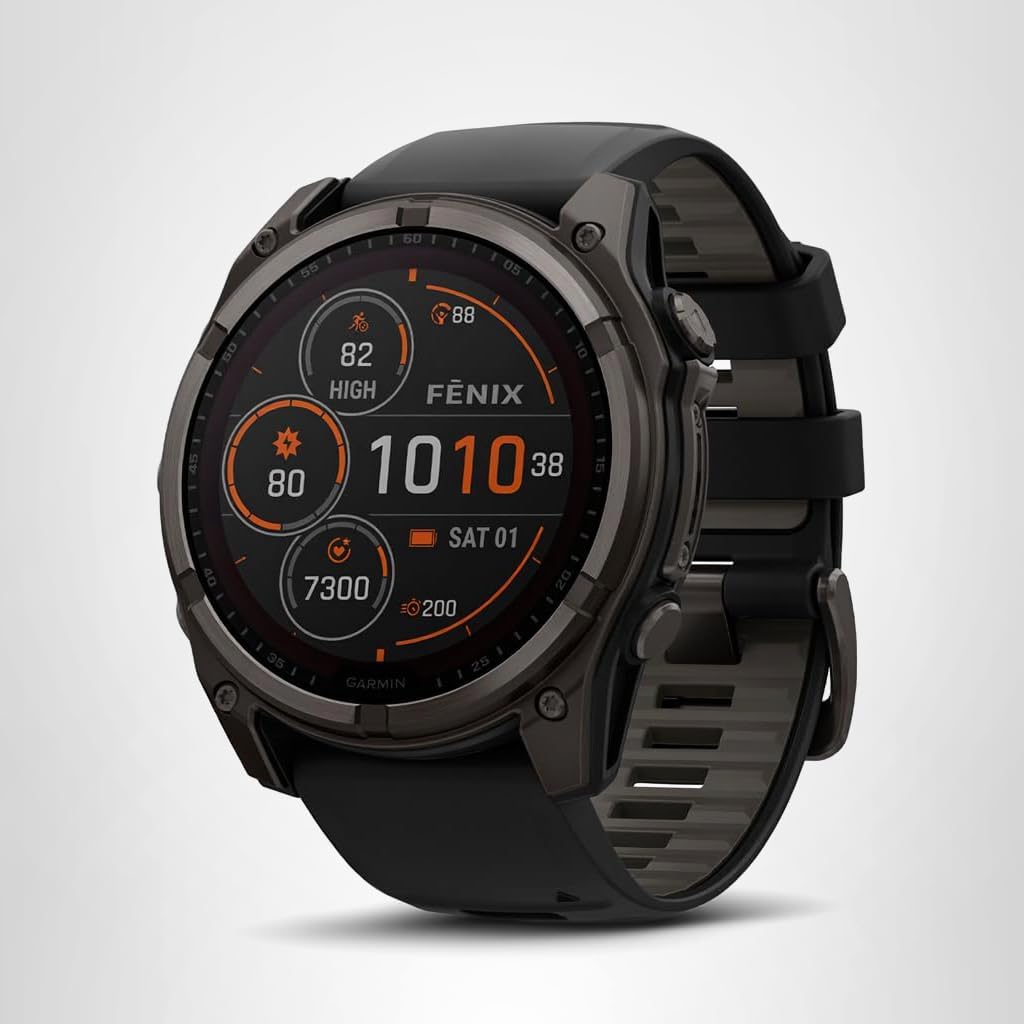
The Garmin Fenix sits at the top of this list because it doesn’t force you to compromise between swim tracking and everything else. It’s built on the same rugged, multisport foundation Garmin uses for its trail running and mountaineering watches, and that toughness translates directly into confidence in the pool and open water alike.
What sets the Fenix apart is how seriously it treats swim data as first-class information rather than an afterthought. In pool mode, it automatically detects stroke type, counts lengths through flip turns and open turns with very few missed counts, and calculates SWOLF (a combined efficiency score of stroke count and time) for every length. In open water mode, its multi-band GPS chip pulls a far cleaner track than older single-frequency watches, which matters enormously if you’re swimming near a marina, under trees along a shoreline, or anywhere satellite signal gets partially blocked.
Battery life is the other reason the Fenix earns the top spot. Where most GPS-heavy swim watches need charging every one to three days, the Fenix can realistically go over a week between charges with typical training, and multiple weeks in battery saver smartwatch mode. That matters more than it sounds — a watch that’s dead on race morning because you forgot to charge it after Tuesday’s swim is a watch that isn’t doing its job.
If you’re deciding between different Garmin models, our dedicated Garmin Fenix 8 review breaks down the newest generation’s specific upgrades in far more detail, including screen options and sizing.
Pros
- Excellent multi-band GPS accuracy in open water
- Class-leading battery life for a GPS swim watch
- Rugged build survives pool decks, gym bags, and travel
- Deep training metrics beyond just swimming
Cons
- Premium price compared to dedicated pool watches
- Larger case size may not suit smaller wrists
- Steeper learning curve for all the available features
2. Apple Watch Ultra — Best for Apple Ecosystem Users

If you already live inside the Apple ecosystem, the Apple Watch Ultra is the easiest recommendation on this list. It combines genuinely strong swim tracking with the seamless notifications, Apple Pay, cellular connectivity, and app integration that made Apple Watch popular in the first place.
Apple’s swim algorithm has matured a lot over the years, and on the Ultra it benefits from a larger, brighter always-on display and dual-frequency GPS that holds a lock far better than earlier Apple Watch generations during open water swims. Depth and water temperature sensors — genuinely useful for open water and even freediving — are a nice touch competitors in this price range don’t always include.
The tradeoff is battery life. Even with its larger battery, heavy GPS use during a long open water swim combined with normal daily smartwatch use will have you charging the Ultra far more often than a dedicated Garmin or Coros watch. If you swim daily and also want multi-day battery life without babysitting a charger, that’s worth weighing carefully. For a full breakdown of this specific model’s swim-focused features, see our complete Apple Watch Ultra 2 review.
Pros
- Seamless integration with iPhone and Apple Health
- Bright, large always-on display readable underwater
- Dual-frequency GPS improves open water tracking
- Depth and water temperature sensors
Cons
- Battery life trails dedicated swim/multisport watches
- iPhone required for full functionality
- Premium price point
3. Coros Pace — Best Lightweight Dual-Frequency GPS

Coros built its reputation among runners and triathletes for packing serious GPS accuracy into a genuinely lightweight package, and the Pace carries that reputation directly into the pool and open water.
The standout feature here is the dual-frequency GPS chip at a price point that historically only single-frequency watches occupied. For open water swimmers who don’t want to spend Garmin Fenix or Apple Watch Ultra money but still want a track that actually resembles the route they swam, the Pace punches well above its price class. Pool tracking is equally competent, with accurate stroke detection and length counting across freestyle, backstroke, breaststroke, and butterfly.
Because the case is noticeably thinner and lighter than most multisport watches, it’s also one of the more comfortable options for swimmers who find bulkier watches dig into the wrist during a strong pull phase. Battery life during GPS-enabled open water tracking is respectable, though not class-leading against the Fenix’s multi-day endurance.
Pros
- Dual-frequency GPS at a mid-range price
- Lightweight, low-profile case is comfortable underwater
- Accurate stroke and length detection in the pool
- Simple, fast interface with minimal learning curve
Cons
- Smaller companion app ecosystem than Garmin or Apple
- Fewer smartwatch features (no app store)
- Screen is less vivid than AMOLED competitors
4. Garmin Swim 2 — Best Dedicated Pool Swimming Watch
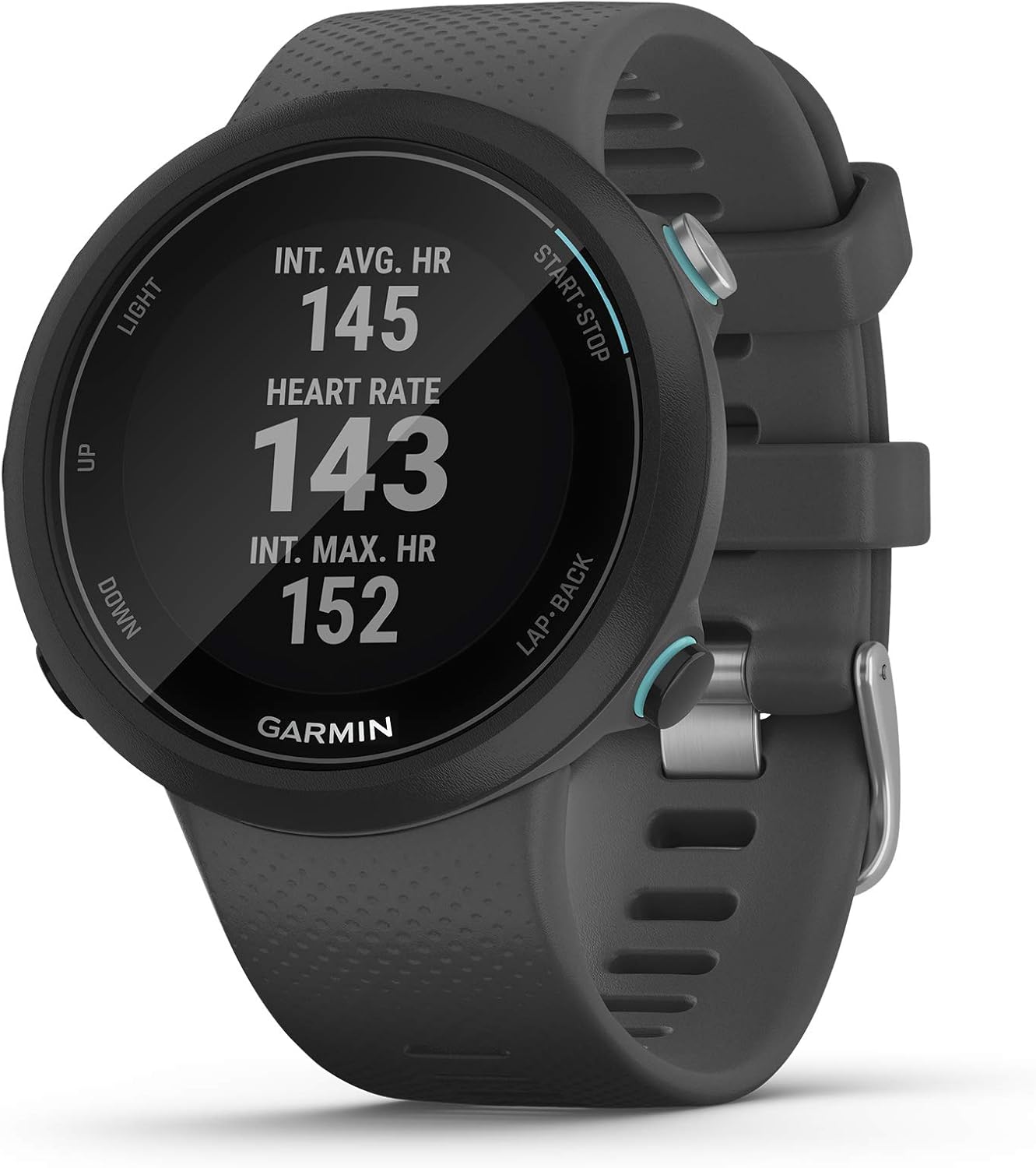
Not everyone needs mapping, music storage, and a full suite of smartwatch apps. If your training is almost entirely pool-based, the Garmin Swim 2 focuses its engineering budget where it actually matters: lap counting, stroke recognition, and rest interval tracking.
Where general-purpose multisport watches sometimes fumble a mixed IM set or a broken 200, the Swim 2’s algorithm is tuned specifically around pool swim patterns, and it shows in how consistently it identifies stroke transitions and counts lengths correctly, even during technique-focused drill sets with unusual arm patterns. It also supports basic open water tracking with standard GPS, which is a nice bonus even though it isn’t the primary use case.
Battery life is another quiet strength. Because the Swim 2 isn’t running a power-hungry always-on AMOLED display or constant background smartwatch processes, it comfortably lasts close to a week of regular training between charges. For swimmers who train five or six days a week and don’t want “did I charge my watch” to be part of their pre-practice checklist, that reliability matters.
If you’re specifically training in open water more often than the pool, though, you may get more value from a watch with stronger GPS — our best open water swimming watch guide covers that scenario in depth.
Pros
- Purpose-built pool swim algorithm with excellent accuracy
- Long battery life for a dedicated swim watch
- Comfortable, low-profile design for the pool
- Tracks drill sets and rest intervals well
Cons
- Standard (not dual-frequency) GPS for open water
- Smaller, lower-resolution display
- Fewer everyday smartwatch features
5. Apple Watch — Best Budget Apple Option

Not everyone needs the Ultra’s ruggedized case and multi-day battery. For swimmers who mostly train in the pool and want Apple’s ecosystem without the Ultra’s price tag, the standard Apple Watch covers the essentials very well.
It carries the same WR50 water resistance rating suitable for shallow-water activities and pool swimming, along with Apple’s Water Lock feature that ejects water from the speaker after a session and prevents accidental screen taps while wet. Pool tracking captures stroke type, calories, distance, and lap count reliably, and syncs immediately with the Health app and any third-party swim training apps you use.
The compromise compared to the Ultra is mostly around durability and open water performance. The standard Apple Watch uses a lighter-duty case that’s less suited to open water swims in rougher conditions, and its GPS, while accurate for casual outdoor tracking, doesn’t match the Ultra’s dual-frequency chip for demanding open water accuracy. For pool-first swimmers, though, that’s rarely a dealbreaker.
Pros
- More affordable entry into the Apple Watch ecosystem
- Reliable pool swim tracking and Water Lock feature
- Lightweight and comfortable for daily wear
- Full Apple Health and app integration
Cons
- Lower water resistance rating than the Ultra
- Shorter battery life, typically under two days
- Less accurate open water GPS tracking
6. Garmin Forerunner — Best for Swim-Run Training

If your training week includes both pool laps and road or trail runs, the Forerunner line’s swim-run heritage makes it a natural fit. It’s designed around structured training plans, and that shows up clearly in how it handles brick-style swim-to-run transitions.
In the pool, it delivers accurate stroke and length detection alongside a colorful, easy-to-read display that stays legible even in bright, glare-heavy natatoriums. Where it really shines is training load and recovery metrics that combine data across swim and run sessions into a single coherent training picture, rather than treating each sport as an isolated silo the way some simpler trackers do.
Battery life comfortably covers a full week of mixed training, and the lighter running-focused case makes it noticeably more comfortable during long runs than bulkier multisport watches like the Fenix. The obvious tradeoff is that dedicated open water swim features and mapping aren’t quite as robust as Garmin’s higher-end multisport line.
Pros
- Excellent combined swim and run training metrics
- Bright, colorful display, readable poolside
- Comfortable for both swimming and running
- Strong week-long battery life
Cons
- Less robust open water mapping than premium multisport watches
- Standard GPS rather than dual-frequency
- Fewer rugged-use features than the Fenix line
7. Samsung Galaxy Watch — Best for Android Users

Apple Watch owners get the Ultra; Android and Samsung phone owners get the Galaxy Watch, and it’s a genuinely capable swim companion rather than a consolation prize.
Samsung’s swim tracking has improved substantially in recent generations, with automatic stroke detection and lap counting that holds up well against dedicated swim watches for typical pool sessions. The built-in coaching features are a standout: real-time guidance during workouts, combined with detailed post-swim breakdowns of pace consistency and stroke efficiency delivered through the Samsung Health app.
Water lock activates automatically when it senses submersion, ejecting water from the speaker afterward, and the watch’s 5 ATM rating comfortably covers recreational and competitive pool swimming. Battery life is strong for a full-featured AMOLED smartwatch, typically lasting a day and a half to two days with normal use, which is respectable given the vibrant always-on display.
The main limitation is ecosystem lock-in: many of its most useful health features require a Samsung phone to unlock their full potential, and non-Samsung Android users may find some functionality restricted.
Pros
- Strong automatic stroke and lap detection
- Real-time coaching and detailed post-swim analysis
- Vibrant AMOLED display with automatic water lock
- Great everyday smartwatch beyond swim tracking
Cons
- Best features require a Samsung phone
- Battery life shorter than dedicated swim watches
- Standard GPS accuracy in open water
8. Polar Vantage — Best for Recovery Tracking

Polar has built its reputation on physiological measurement rather than flashy features, and the Vantage carries that philosophy directly into swim training with some of the most detailed recovery insight on this list.
Beyond solid pool and open water tracking, the Vantage’s standout feature is Training Load Pro and Nightly Recharge, which combine heart rate variability, sleep quality, and training strain into a single recommendation for how hard you should train tomorrow. For swimmers balancing multiple hard sessions a week alongside dryland training, that kind of guidance helps prevent the kind of overtraining that quietly wrecks a season.
Dual-frequency GPS makes open water tracking notably cleaner than older Polar generations, and turn-by-turn navigation is a useful bonus for point-to-point open water swims in unfamiliar locations. Battery life comfortably spans a week or more of mixed training, and the case, while not as widely available in swim-specific colorways as Garmin’s lineup, is genuinely comfortable for extended wear.
Pros
- Industry-leading recovery and training load insight
- Dual-frequency GPS for clean open water tracks
- Strong multi-day battery life
- Turn-by-turn navigation for open water routes
Cons
- Smaller third-party app ecosystem
- Interface less intuitive than Garmin or Apple
- Recovery features require consistent daily wear to be useful
9. Fitbit Charge — Best Budget Fitness Tracker

Not every swimmer wants a full-fledged sports watch, and not every budget stretches to one. The Fitbit Charge covers the essentials of swim tracking in a slim, comfortable band at a fraction of the cost of the watches above it on this list.
Swim tracking here is simpler than the dedicated sports watches above — you won’t get detailed stroke-by-stroke breakdowns — but it reliably logs swim duration, estimated calorie burn, and heart rate through the water using its 5 ATM-rated case. For recreational swimmers who mostly want a broad picture of activity across their week (swimming included) rather than granular lap-by-lap analytics, that’s often plenty.
Where the Charge really earns its keep is everyday wearability. It’s noticeably slimmer and lighter than any watch on this list, has genuinely excellent battery life for its price point, and layers in strong sleep tracking, stress management tools, and a built-in GPS for outdoor workouts beyond the pool. If you’re looking for other affordable options, our cheap swimming watch guide has more budget-friendly alternatives worth comparing.
Pros
- Very affordable relative to dedicated swim watches
- Slim, comfortable band for 24/7 wear
- Strong battery life for the price
- Solid sleep and stress tracking beyond swimming
Cons
- No detailed stroke-type breakdown
- Smaller display than full sports watches
- Less precise lap counting for structured pool sets
10. Garmin Vivoactive — Best Everyday Smartwatch with Swim Tracking

The Vivoactive occupies a comfortable middle ground between a fitness band like the Charge and a full multisport watch like the Fenix. It’s built primarily as an everyday smartwatch that happens to include genuinely capable swim tracking, rather than the other way around.
Its bright, colorful touchscreen display makes navigating swim stats, animated on-screen workouts, and daily health metrics easy without the steeper learning curve of Garmin’s higher-end multisport lineup. Pool tracking covers the fundamentals well: automatic stroke detection, length counting, and rest interval logging, all of which sync cleanly to Garmin Connect for long-term trend analysis.
Battery life is a real strength here, with over a week of typical use between charges even with the always-on display features enabled some of the time. For swimmers who want one watch that handles daily notifications, sleep tracking, stress monitoring, other workouts, and swim sessions without needing a second dedicated device, the Vivoactive is one of the more balanced options on this list.
Pros
- Great balance of everyday smartwatch and swim features
- Bright, easy-to-navigate touchscreen
- Strong battery life for its feature set
- Comprehensive Garmin Connect ecosystem
Cons
- Not as rugged as the Fenix for serious outdoor training
- Standard GPS accuracy, not dual-frequency
- Fewer advanced multisport features
Key Features to Look For in a Swimming Watch
With ten strong options above, it helps to understand which specifications actually matter versus which are just marketing bullet points. Here’s what to actually weigh when comparing swimming watches.
Stroke Detection Accuracy
Every watch on this list claims automatic stroke detection, but not all algorithms are equally reliable, especially during drill sets, mixed-stroke sets, or when your technique deviates from a textbook stroke pattern. Dedicated swim watches like the Garmin Swim 2 tend to outperform general smartwatches here because their algorithms are tuned specifically around pool swim patterns rather than adapted from a broader fitness-tracking codebase.
GPS Type: Standard vs Dual-Frequency
If open water swimming is any part of your training, this is arguably the single most important spec on the list. Standard single-frequency GPS chips can lose lock or produce jagged, inaccurate tracks when your wrist is only briefly above water during each stroke recovery. Dual-frequency (multi-band) GPS chips use two separate satellite signal bands, which dramatically improves the chip’s ability to maintain an accurate lock even with brief, repeated exposure to the sky. If your open water swims matter to you — for training log accuracy, race pacing, or simply peace of mind on a point-to-point swim — prioritize a dual-frequency watch.
Water Resistance Rating
Water resistance ratings can be confusing because they’re expressed in different units depending on the brand — ATM (atmospheres), meters, or IP ratings. We break this down in detail in the section below, but as a rule of thumb, look for at least 5 ATM (50 meters) for regular swimming, and be cautious with watches rated for splash resistance only.
Battery Life
Battery life claims vary wildly depending on which features are active. A watch advertised with “up to 2 weeks” battery life is almost always referring to basic smartwatch mode with GPS and always-on display disabled — turn on GPS for an open water swim and that number drops fast. When comparing battery life, look specifically for the manufacturer’s GPS-mode estimate, not just the headline smartwatch number.
Companion App Quality
The watch on your wrist is only half the experience. Garmin Connect, Apple Health, Samsung Health, Coros app, Polar Flow, and Fitbit’s app all differ meaningfully in how they visualize swim data, track long-term trends, and integrate with third-party training platforms like TrainingPeaks or Strava. If you already use a specific training platform, check compatibility before you buy.
Comfort and Fit
A watch that digs into your wrist during a strong freestyle catch, or that shifts around under a wetsuit sleeve during an open water swim, becomes an annoyance fast. Lighter, lower-profile watches like the Coros Pace or Fitbit Charge tend to disappear on the wrist better than bulkier multisport cases, which matters more than most buyers expect until they’ve swum a few thousand meters with the “wrong” watch.
Pool Swimming vs Open Water Tracking Explained
It’s worth understanding why pool and open water tracking are treated as almost entirely separate engineering problems by watch manufacturers, because it explains a lot of the buying decisions above.
How Pool Tracking Works
In pool mode, your watch isn’t using GPS at all — it can’t, since GPS signals don’t penetrate water and pools are frequently indoors anyway. Instead, it relies entirely on an accelerometer and gyroscope to detect the repeating motion pattern of each stroke type, count how many strokes you take per length, and use the pool length you input (25m, 25 yards, 50m, etc.) to calculate distance. This is why accurate pool tracking requires you to correctly set your pool length before swimming — get that wrong and every distance and pace calculation will be off by the same proportional error.
How Open Water Tracking Works
Open water mode flips the entire approach. Since there are no walls to count, watches rely on GPS to trace your actual path through the water, sampling your position periodically and connecting the dots to estimate total distance. The challenge is that GPS signals only reach your watch during the brief moment your wrist is above the water surface during each stroke’s recovery phase — often less than half a second. This is precisely why dual-frequency GPS chips matter so much for open water accuracy: they’re simply better at locking onto a signal in that tiny window than older single-frequency chips.
Why Some Watches Are Better at One Than the Other
A watch can excel at pool tracking while being mediocre in open water, or vice versa, because the two modes barely share any underlying technology. The Garmin Swim 2, for example, was clearly engineered pool-first, and its open water mode — while functional — doesn’t match the accuracy of watches like the Fenix or Polar Vantage that were built around premium GPS chips from the start. If you split your training evenly between pool and open water, prioritize a watch that scores well in both categories rather than one that’s exceptional at only one.
Battery Life Compared
Battery life is one of the most misleading specs in this category because manufacturers report it under wildly different conditions. Here’s a more realistic breakdown based on actual GPS-enabled swim tracking rather than idle smartwatch mode.
| Watch | Smartwatch Mode | GPS Swim Mode (approx.) |
|---|---|---|
| Garmin Fenix | Up to 2+ weeks | 20+ hours continuous GPS |
| Apple Watch Ultra | Up to 2 days | ~12 hours GPS |
| Coros Pace | Up to 20+ days | ~24 hours GPS |
| Garmin Swim 2 | Up to 5 days | Pool-optimized, minimal GPS drain |
| Apple Watch | Up to 18 hours | ~6-7 hours GPS |
| Garmin Forerunner | Up to 8 days | ~20 hours GPS |
| Samsung Galaxy Watch | Up to 40 hours | ~10-12 hours GPS |
| Polar Vantage | Up to 8 days | ~26 hours GPS |
| Fitbit Charge | Up to 7 days | ~5-6 hours continuous GPS |
| Garmin Vivoactive | Up to 11 days | ~15 hours GPS |
The pattern here is fairly consistent: watches built around a dedicated multisport or endurance-sport chipset (Garmin, Coros, Polar) hold a substantial advantage over general smartwatches (Apple, Samsung) when GPS is running continuously. If you regularly swim long open water sessions of an hour or more, factor that gap into your decision — it’s the difference between charging weekly versus charging every day or two.
Water Resistance and Rating Explained
Water resistance ratings are one of the more confusing parts of shopping for any watch, partly because different brands use different units to describe essentially the same thing.
ATM (Atmospheres)
ATM measures pressure resistance, not literal depth, though it’s often approximated to depth for simplicity. 1 ATM is roughly equivalent to the pressure at 10 meters of static water depth. A watch rated 5 ATM is generally safe for swimming and shallow snorkeling, while 10 ATM offers extra margin for more demanding water sports. Because these ratings are tested under static (non-moving) conditions, manufacturers typically build in a safety margin — a 5 ATM watch is not necessarily unsafe at exactly 50 meters depth, but it also shouldn’t be treated as scuba-diving equipment.
Meters (WR Rating)
Apple uses a slightly different labeling convention — WR50 or WR100 — which functions similarly to ATM ratings but follows Apple’s own testing standards. WR50 (roughly equivalent to 5 ATM) is suitable for shallow water activities and pool swimming, while WR100 (the Apple Watch Ultra’s rating) adds resistance for more demanding open water conditions.
IP Ratings
Some fitness trackers also list an IP (Ingress Protection) rating, like IP68, which describes dust and water resistance under specific lab conditions but doesn’t always translate directly to real-world swim performance the way ATM or WR ratings do. When comparing swim-specific capability, prioritize the ATM or WR figure over a standalone IP rating.
Swimming Watch Accuracy vs Manual Lap Counting
One question we hear constantly from swimmers who’ve never used a dedicated watch before is simple: is a swimming watch actually more accurate than just counting laps yourself? The honest answer is that it depends heavily on the situation, but in most cases, yes — and the gap widens the longer and more demanding the set gets.
Where Watches Reliably Beat Manual Counting
For straightforward freestyle sets — the bread and butter of most masters practices and fitness swimming — modern accelerometer-based tracking is remarkably consistent. A watch doesn’t get tired, doesn’t get distracted by the swimmer in the next lane, and doesn’t lose count because a coach interrupted the set with instructions. Over a long continuous swim of 2,000 meters or more, human lap counters (including the swimmer themselves) start to drift, and a watch simply doesn’t. This is precisely why competitive programs increasingly use watches or touchpad systems as a backup to human counting rather than the reverse.
Where Manual Counting (or a Human Backup) Still Has an Edge
Drill sets are the classic failure case for automatic tracking. A one-arm drill, a catch-up drill, or a kick set with a board doesn’t match the repeating full-stroke pattern the algorithm is trained to recognize, so watches will sometimes undercount, overcount, or misclassify the stroke entirely during these sets. Similarly, very short rest intervals or “broken” swims with irregular pauses can confuse the auto-lap detection on some models, since the watch has to decide whether a pause is a rest interval or the end of the set. In competitive settings where an official lap count genuinely matters — like a coached test set that determines lane placement — cross-checking your watch against a manual count (or a lap counter on the wall) for the first few sessions with a new watch is a smart habit.
Calibrating Your Watch to Your Stroke
Most higher-end watches let you review and, in some cases, manually correct individual lengths after a swim, which both fixes that session’s data and — on some platforms — helps the algorithm adapt to your particular stroke pattern over time. If you’re getting consistent misreads on a particular stroke or drill, check your watch’s companion app for a calibration or stroke-type training feature before assuming the hardware itself is inaccurate.
Heart Rate Monitoring While Swimming
Wrist-based heart rate monitoring is one of the more misunderstood features on a swimming watch, and it’s worth setting realistic expectations before you rely on it for training zones.
Why Wrist HR Is Less Accurate in Water
Optical heart rate sensors work by shining light into your wrist and measuring how blood flow changes the light that bounces back. Underwater, several factors interfere with this: water pressure changes how the sensor sits against your skin, cooler water temperature constricts blood vessels near the surface, and the repetitive flexing of your wrist during a stroke can shift the watch slightly with every cycle. The result is that wrist-based heart rate during swimming tends to be noisier and less precise than the same sensor during running or cycling, even on watches with otherwise excellent HR accuracy on land.
When It’s Good Enough, and When It Isn’t
For general fitness swimmers who want a rough sense of effort — easy, moderate, or hard — wrist HR while swimming is usually good enough. For swimmers doing structured interval training built around precise heart rate zones, the inconsistency can be a real limitation, particularly during high-intensity efforts where zone accuracy matters most. Several of the watches on this list, including the Garmin Fenix and Polar Vantage, support external chest strap heart rate monitors for land-based training, though compatibility with chest straps specifically during swimming varies by model and strap, so check current compatibility before assuming it’ll work underwater.
Getting More Consistent Readings
A snugger (but not painfully tight) fit noticeably improves optical HR consistency in water, since it reduces the sensor’s movement against your skin. Wearing the watch slightly higher on the wrist, away from the wrist bone, also tends to produce steadier readings for most swimmers. If heart rate accuracy during swimming is a top priority for your training, weigh that specifically when comparing models — general HR accuracy claims on a spec sheet are usually based on land-based testing, not swim testing.
Understanding SWOLF and Swim Efficiency Metrics
SWOLF (a blend of “swim” and “golf”) is one of the more useful but least understood metrics a swimming watch reports, and understanding it can meaningfully change how you interpret your training data.
How SWOLF Is Calculated
SWOLF for a single length is calculated by adding the number of strokes taken to complete the length plus the number of seconds it took. A 25-meter length swum in 20 seconds with 15 strokes gives a SWOLF score of 35. Just like golf, a lower score indicates better efficiency — you’re covering the same distance with less total effort, whether that comes from a faster pace, fewer strokes, or some combination of both.
Why Lower Isn’t Always Simply “Better”
It’s tempting to chase a lower SWOLF score every single set, but that can backfire if you do it by artificially slowing down and gliding more, since fewer strokes at a much slower pace can sometimes produce a similar or even lower score than a faster, more powerful stroke. The metric is most useful as a relative measure over time at a consistent effort level — comparing your SWOLF on an easy aerobic set this month against the same set six months ago tells you far more than comparing SWOLF across sets of very different intensity.
Using SWOLF to Guide Technique Work
Coaches often use SWOLF trends to flag when a swimmer’s technique is breaking down under fatigue — a rising SWOLF score in the back half of a long set is a strong signal that stroke length is shortening and stroke rate is climbing to compensate, which is usually a sign of fatigue outpacing conditioning. Watches like the Garmin Fenix and Garmin Swim 2 calculate SWOLF automatically for every length, making it easy to spot these trends in the companion app without any manual math.
Swimming Watches for Kids and Young Swimmers
Parents of age-group swimmers increasingly ask whether it’s worth putting a swimming watch on a younger swimmer, and the answer depends heavily on the child’s age, competitive level, and how they respond to data.
What to Prioritize for Younger Swimmers
For most kids under about 12, simplicity and durability matter far more than advanced GPS or recovery metrics. A smaller, lighter case is important both for comfort and because oversized adult watches can slip around on a narrow wrist during a strong kick. Budget-friendly options with basic swim tracking — total distance, session duration, and simple stroke counts — are usually plenty, and the money saved versus a premium multisport watch can go toward gear that matters more at that stage, like proper-fitting goggles or a well-built suit.
Durability and Strap Considerations
Kids are hard on gear in ways adults generally aren’t — watches get left on pool decks, banged against lane lines, and occasionally used as a toy underwater. A silicone strap with a secure, easy-to-adjust clasp holds up better over a season than a strap designed primarily for adult daily wear, and a slightly more rugged case rated for at least 5 ATM gives reasonable peace of mind against splashing and full submersion during practice.
When to Consider a More Advanced Watch
Competitive age-group swimmers moving into structured interval training, especially those working with a coach on stroke efficiency, can genuinely benefit from SWOLF tracking and more precise lap counting once they’re old enough to understand and act on the data — typically somewhere in the 12-to-14 range, though this varies a lot by individual. At that point, a step up to a watch like the Garmin Swim 2 or a lower-tier Forerunner model tends to make more sense than continuing with an entry-level fitness tracker.
Swim Watch vs General Fitness Tracker: What’s the Real Difference
Not every wrist-worn device that survives a pool session is a “swimming watch” in the meaningful sense, and understanding the distinction helps set the right expectations before you buy.
Purpose-Built Swim Algorithms vs Adapted Fitness Algorithms
Dedicated swim watches like the Garmin Swim 2 were engineered from the ground up around the specific motion signatures of freestyle, backstroke, breaststroke, and butterfly. General fitness trackers, by contrast, often adapt a broader activity-recognition algorithm that was originally built for walking, running, or general workout classification, then extend it to cover swimming as one activity type among many. The practical result is usually a meaningful accuracy gap during technical sets, drills, or mixed-stroke swimming, even if both device types perform similarly during a straightforward continuous freestyle set.
Data Depth
A general fitness tracker will typically report duration, estimated calories, and maybe a basic stroke count for the whole session. A dedicated swim watch reports length-by-length data: stroke type per length, time per length, strokes per length, SWOLF, rest interval duration between reps, and often heart rate correlated to specific portions of the set. If you’re doing any kind of structured training with a coach or a training plan, that length-by-length granularity is usually the entire point of wearing a watch in the first place.
When a Fitness Tracker Is Genuinely the Right Choice
For someone who swims occasionally as one part of a broader fitness routine — alongside walking, weight training, and the occasional run — a general fitness tracker that happens to survive the pool, like the Fitbit Charge, is a perfectly reasonable choice. You’re optimizing for all-day comfort, battery life, and a broad picture of activity rather than swim-specific technical feedback, and paying a premium for length-by-length SWOLF tracking you’ll never actually look at doesn’t make much sense.
Syncing Your Swim Watch with Strava, TrainingPeaks, and Other Platforms
Most serious swimmers eventually want their data to live somewhere beyond the manufacturer’s own app, whether that’s for sharing workouts socially, working with a remote coach, or aggregating training load across multiple sports.
Garmin Connect, Apple Health, and Polar Flow as Hubs
Garmin Connect, Apple Health, and Polar Flow all function as the “source of truth” for their respective watches, and all three support automatic syncing to third-party platforms like Strava once you’ve linked your accounts. Garmin Connect in particular has one of the most mature integration ecosystems, syncing not just to Strava but directly to TrainingPeaks, which is especially useful for swimmers also following a structured multisport training plan that spans swim, bike, and run.
What Actually Transfers Between Platforms
It’s worth noting that not every data point survives the trip between platforms. Basic metrics like distance, duration, pace, and stroke type reliably sync across most integrations, but more granular data like length-by-length SWOLF scores or detailed heart rate zone breakdowns sometimes gets compressed or dropped depending on which two platforms you’re connecting. If a specific metric matters for how you or your coach reviews training, it’s worth doing a test sync early on to confirm it actually shows up where you expect it.
Coaches and Remote Training Plans
For swimmers working with a coach who isn’t on deck every practice, TrainingPeaks compatibility (native on Garmin and Polar, available via third-party connectors for other brands) allows a coach to prescribe a set, review the completed data afterward, and adjust the next session based on what actually happened rather than a verbal recap. If remote coaching is part of your training plan, checking TrainingPeaks compatibility before buying can save a real headache later.
Maintenance and Care Tips to Extend Your Watch’s Lifespan
A swimming watch lives a harder life than almost any other wearable, cycling through chlorine, saltwater, sunscreen, sweat, and repeated pressure changes. A little routine care goes a long way toward avoiding premature seal failure or a fogged-up display.
Rinse After Every Swim
Chlorine and salt residue left to dry on a watch case and strap accelerates wear on gaskets and buttons over time, and can leave a chalky residue that’s genuinely hard to remove once it’s baked on by repeated sun exposure. A quick rinse with fresh water after every pool or open water session, followed by a wipe-down with a soft cloth, takes less than a minute and meaningfully extends the life of the seals.
Avoid Pressing Buttons Underwater Unless Explicitly Supported
Physical buttons create a small point of pressure differential when pressed underwater, and while most swim-rated watches are engineered to handle this within their rated depth, repeated button presses at depth over years of use is exactly the kind of edge case that eventually causes seal wear. Check your specific model’s manual — some watches explicitly support underwater button presses within their rated depth, while others recommend touchscreen-only interaction while submerged.
Watch Your Strap Material
Silicone straps are the standard for swim watches for good reason — they don’t absorb water or chlorine the way leather or fabric bands do, and they resist the skin irritation that can develop from a constantly-wet strap. If you swap to a different band style for daily wear, make sure to swap back (or choose a genuinely swim-appropriate material) before your next session.
Store It Dry, Not Charging Wet
Letting a wet watch sit on its charging cradle, especially for watches that charge via exposed pins rather than a fully sealed wireless puck, can cause corrosion on the charging contacts over time. A quick dry-off before placing it on the charger prevents this entirely and is one of the cheapest habits you can build to protect your investment.
Screen Protection
Pool decks, gym bags, and lane lines are all surprisingly effective at scratching an unprotected watch face over months of regular use. A clear screen protector or a case with a raised bezel — many multisport watches like the Fenix already include a raised bezel by design — meaningfully reduces the risk of a scratched or cracked display without affecting touchscreen responsiveness.
Common Swimming Watch Mistakes to Avoid
A lot of frustration with “inaccurate” swim watches actually traces back to a handful of avoidable setup or usage mistakes rather than a genuine hardware or algorithm limitation.
Forgetting to Set Pool Length
This is by far the most common mistake, and it silently throws off every distance and pace number for the entire session. If your regular pool switches between a 25-yard short course and a 50-meter long course seasonally, double-check your watch’s pool length setting whenever you switch, not just when you first set up the watch.
Starting the Activity Late or Ending It Early
Starting your swim activity after you’ve already swum a warmup length, or stopping it before your cool-down is finished, understates your actual session distance and skews your average pace calculations. Building the habit of starting the activity on the pool deck before you dive in, and not stopping it until you’re physically getting out, removes this as a recurring source of error.
Wearing the Watch Too Loose
A loose-fitting watch shifts on the wrist with every stroke, which degrades both stroke detection accuracy and heart rate sensor consistency. It should be snug enough that it doesn’t rotate freely around your wrist, without being uncomfortably tight.
Ignoring Firmware Updates
Manufacturers regularly ship firmware updates that specifically improve swim-tracking algorithms, sometimes meaningfully, based on aggregated data from thousands of users. A watch that felt inaccurate for drill sets a year ago may have had that exact issue addressed in a subsequent update — it’s worth checking your companion app periodically rather than assuming the hardware itself is the limiting factor.
Not Reviewing Data After a Swim
The most common “waste” of a swimming watch is simply never looking at the data it collects. Spending even two or three minutes after a session reviewing pace trends, stroke consistency, or SWOLF changes across the set turns the watch from a passive lap counter into an actual training tool.
Swim Watches for Triathletes: What Changes
Triathletes have a genuinely different set of priorities than pool-only or even dedicated open water swimmers, because the watch has to perform well across three very different sports without becoming a compromise in any of them.
Transition Speed Matters
A watch with a multisport mode that can switch cleanly from swim to bike to run without a lengthy menu process saves real time in a race setting, and more importantly avoids the frustration of fumbling with settings mid-transition during training. Watches built specifically around multisport workflows, like the Garmin Forerunner and Garmin Fenix, tend to handle this far more smoothly than watches where swim tracking was added as a secondary feature.
Open Water Sighting and Navigation
Beyond basic distance tracking, some multisport watches offer features specifically useful for open water race scenarios — back-to-start navigation, virtual buoy markers, or simple route breadcrumbs that help with sighting in choppy conditions or unfamiliar race venues. These aren’t essential, but they’re a meaningful quality-of-life upgrade for anyone doing point-to-point open water training regularly.
Battery Life Across a Full Race Day
Even a sprint triathlon involves hours of watch use between warmup, the race itself, and any post-race data review, and a half or full-distance race extends that significantly. A watch that can comfortably run GPS continuously for the duration of your longest race distance, with margin to spare, removes one more variable to worry about on race morning. This is one of the clearest reasons the Garmin Fenix’s exceptional GPS battery life earns it particular praise from long-course triathletes specifically.
Combined Training Load Across Three Sports
Because triathlon training stacks fatigue across swimming, cycling, and running simultaneously, a watch that calculates a unified training load or recovery recommendation across all three sports — rather than treating each as an isolated silo — gives a much more honest picture of whether you’re actually recovering between hard sessions. Watches like the Polar Vantage and Garmin Forerunner are specifically built around this kind of cross-sport training load calculation.
Masters Swimmers and Swim Watches
Masters swimmers — typically adults training in organized club programs after their competitive years, or returning to structured swimming later in life — have their own set of practical considerations that differ from both elite training and casual recreational swimming.
Tracking Consistency Over Time
For many masters swimmers, the real value of a swim watch isn’t any single session’s data but the ability to see genuine long-term trends across months and years of training — something that’s nearly impossible to reconstruct accurately from memory or a paper log. A watch with a companion app that makes historical trend review easy, like Garmin Connect’s training history views, tends to be more valuable long-term than one with flashier real-time features but a clunkier historical view.
Balancing Swim Data with Recovery
Masters swimmers often balance swim practice with other responsibilities and other forms of exercise, making recovery tracking genuinely useful rather than a novelty feature. Watches with dedicated recovery insight, like the Polar Vantage’s Nightly Recharge or Garmin’s Training Readiness score, help flag when it’s worth backing off intensity for a session or two rather than pushing through fatigue that a purely subjective read might miss.
Comfort for Longer, Steadier Sessions
Masters practices often emphasize longer continuous aerobic sets over the shorter, higher-intensity efforts common in younger competitive programs, which means wrist comfort over an hour-plus session matters more than it might for a shorter age-group practice. A lighter, lower-profile watch like the Coros Pace can be a genuinely more comfortable choice for masters swimmers prioritizing long aerobic sets over technical sprint work.
When to Upgrade Your Swimming Watch
Swimming watches are durable enough that most swimmers hold onto one for several years, but there are clear signals it’s worth considering an upgrade rather than continuing to work around a watch’s limitations.
Battery Degradation
Lithium-ion batteries in any wearable naturally lose capacity over repeated charge cycles, and a watch that once comfortably lasted a week between charges but now needs daily charging after a few years of regular use is showing normal battery wear rather than a defect. If that degraded battery life is genuinely interfering with your training — dying mid-session, for example — it’s a reasonable signal to consider a replacement.
Outgrowing the Feature Set
A swimmer who started with a basic pool-only watch and has since moved into open water training, triathlon, or more structured interval work built around SWOLF and recovery metrics may simply outgrow their original watch’s capabilities. This is a natural progression rather than a sign the original purchase was a mistake — it just means your training needs have evolved.
Persistent Water Resistance Concerns
Seals and gaskets do wear over years of repeated exposure to chlorine and pressure changes, and a watch that previously handled swimming fine but has started fogging internally or showing moisture under the display glass should be retired from swim duty regardless of how well it otherwise still functions, since continued submersion risks a full failure of the device.
What to Do with Your Old Watch
A watch that’s no longer reliable enough for swimming can often still serve well as a dedicated running or gym watch, or as a simple everyday activity tracker, extending its useful life even after it’s retired from pool and open water duty.
Display Types: AMOLED vs MIP (Memory-in-Pixel)
The screen technology inside a swimming watch has a bigger impact on real-world usability than most buyers expect, and it’s rarely explained clearly on a product listing. Understanding the tradeoff between AMOLED and MIP (transflective memory-in-pixel) displays helps explain why some watches sip battery for weeks while others need daily charging.
AMOLED Displays
AMOLED screens, used on watches like the Samsung Galaxy Watch and higher-end Garmin models, produce vivid colors, deep blacks, and sharp contrast that make workout screens and daily smartwatch widgets genuinely pleasant to look at. The tradeoff is power consumption: each pixel on an AMOLED display generates its own light, so keeping the screen on continuously (an “always-on display” mode) draws meaningfully more battery than a screen that only lights up when you raise your wrist. For swimmers, this matters specifically because a bright, always-visible screen is genuinely useful for checking pace or interval time mid-length without a wrist gesture that might not register well underwater.
MIP (Transflective) Displays
MIP displays, common on Garmin’s Fenix and Forerunner lines as well as most Coros watches, work more like an e-reader crossed with a traditional LCD. They use ambient light reflecting off the display rather than generating their own light for every pixel, which makes them dramatically more power-efficient and, notably, easier to read in bright outdoor sunlight — a real advantage at outdoor pools and open water venues where AMOLED screens can wash out. The visual tradeoff is less vibrant color and lower contrast indoors or in dim lighting, though most MIP watches now include a backlight for low-light situations.
Which Matters More for Swimming Specifically
For pure swim performance, MIP’s outdoor visibility and battery efficiency generally win out — glare off pool water and bright summer sun at open water venues is a real, everyday annoyance with AMOLED screens, and the battery savings compound over a week of daily training. If you value the watch equally as a daily smartwatch with a beautiful screen for scrolling notifications and viewing photos, AMOLED remains the stronger all-around choice, provided you’re comfortable with more frequent charging.
How Swim Watches Calculate Calories
Calorie estimates are one of the most commonly misunderstood numbers a swimming watch reports, and it’s worth understanding the method behind the number before treating it as gospel.
The Estimation Method
Because swimming doesn’t allow for the kind of direct motion-based calorie estimation used for running or cycling (where stride length, cadence, and ground contact time feed fairly well-validated formulas), most swim watches instead estimate calorie burn using a combination of heart rate data, your stored body metrics (weight, age, sex, and sometimes VO2 max estimates), swim duration, and average pace. Some watches also factor in stroke type, since butterfly and breaststroke generally burn more energy per length than freestyle or backstroke at a comparable pace.
Why the Numbers Vary So Much Between Watches
Because each manufacturer uses a somewhat different proprietary formula and weighting of these inputs, it’s common to see calorie estimates for the identical swim session vary by 15 to 30 percent between two different watch brands. Neither number is necessarily “wrong” — they’re both estimates built on incomplete data, since no consumer wearable can directly measure metabolic energy expenditure without a lab-grade metabolic cart.
How to Use Calorie Data Sensibly
Rather than treating the absolute calorie number as precise, it’s more useful to track the relative trend from the same watch over time — did today’s set burn noticeably more or less than a similar set last month, holding effort roughly constant? For anyone using calorie data to inform nutrition planning around training, pairing the watch’s estimate with a broader awareness of overall training load, rather than chasing an exact daily number, tends to produce more sustainable results.
Straps and Bands: What Actually Works for Swimming
The strap on a swimming watch takes as much abuse as the case itself, and choosing the right material and fit meaningfully affects both comfort and sensor accuracy.
Silicone Is the Standard for a Reason
Nearly every purpose-built swim watch ships with a silicone strap by default, and for good reason: silicone doesn’t absorb water or chlorine, resists the buildup of bacteria and odor that can develop in a strap worn wet for hours at a time, and holds up to years of repeated pool and open water exposure without degrading the way leather, nylon, or fabric weave bands eventually do.
Perforated vs Solid Silicone
Some manufacturers offer a perforated (ventilated) silicone strap option alongside a solid one. Perforated straps dry faster and breathe better during long dryland wear, which some swimmers prefer for all-day comfort, though the difference during an actual swim session is negligible since the strap is submerged regardless. Solid straps are generally slightly more durable over the long run since there’s less surface area for grit and residue to collect in.
Getting the Fit Right for Swim Mode
A strap that’s comfortably snug for daily wear is sometimes a touch loose once you’re moving through water with real force behind each stroke. Many swimmers find it worth tightening the strap by one notch specifically before a swim session, then loosening it back for all-day comfort afterward — a small habit that measurably improves both stroke detection consistency and optical heart rate accuracy during the swim itself.
When to Replace a Strap
Watch for small cracks or a chalky, stiff texture developing in the silicone near the buckle or where it flexes most — this is a sign of long-term UV and chlorine degradation, and a cracked strap is more prone to snapping unexpectedly than most swimmers realize. Replacement straps are inexpensive relative to the watch itself and are one of the simplest ways to extend a watch’s comfortable, reliable service life.
Notifications and Alarms in the Water
Smartwatch notifications and interval alarms behave differently underwater than they do on land, and understanding those limitations avoids a frustrating surprise mid-set.
Phone Notifications Don’t Reach You Underwater
Bluetooth doesn’t transmit meaningfully through water, so text messages, calls, and app notifications from your paired phone simply won’t reach your watch while your wrist is submerged, regardless of how good your phone’s signal is on the pool deck. Most watches will queue and display any notifications that arrived during your swim once you resurface and reconnect, but there’s no way around the physics of Bluetooth and water during the session itself.
Interval and Rest Alarms Work Differently
Vibration alerts, commonly used for interval timers and rest notifications, are generally still felt underwater since they’re a mechanical rather than a radio signal, though the sensation is noticeably duller through water and a wetsuit sleeve than it is on dry skin. Audible alarms are essentially useless underwater and are really only relevant for the moment before you dive in or after you finish a rep. If interval training with alarms is a core part of your workouts, test your specific watch’s vibration strength in the water before relying on it for a structured set — some models are noticeably more perceptible underwater than others.
Auto-Rest and Auto-Lap Detection
Most swim-focused watches include an auto-rest feature that detects when you’ve paused at the wall and automatically starts logging rest time, which is genuinely useful for interval sets with variable rest but can occasionally misfire during a long pause for coaching instruction, incorrectly logging it as a completed rest interval. Reviewing and manually correcting these segments in the companion app after a session takes only a moment and keeps your long-term interval data clean.
Solar Charging: Is It Worth It for Swimmers?
Several higher-end multisport watches, including select Garmin Fenix models, offer solar charging as a premium feature, and it’s worth understanding what it realistically adds for a swim-focused athlete specifically.
How Solar Charging Actually Works
A small solar charging ring or panel integrated into the watch face or bezel trickle-charges the battery when exposed to sunlight, extending overall battery life rather than eliminating the need to charge entirely. The effect is meaningfully more noticeable in smartwatch mode with the display mostly idle than during GPS-intensive activity tracking, where the battery drain from the GPS chip and screen far outpaces what solar charging can realistically offset.
Where It Actually Helps a Swimmer
For swimmers who also spend significant time outdoors during the day — training at an outdoor pool, coaching poolside, or simply wearing the watch daily with regular sun exposure — solar charging can meaningfully stretch the interval between full charges in smartwatch mode, sometimes by several extra days. During an actual open water swim, though, the watch is submerged and the display is typically active in GPS mode, so solar charging contributes very little during the swim itself.
Is It Worth the Price Premium
Solar charging models typically carry a real price premium over their non-solar counterparts. For swimmers whose primary battery concern is surviving long open water sessions, that premium is better spent on a watch with a larger base battery and efficient GPS chip rather than solar charging specifically. For swimmers who mostly train in the pool and wear the watch all day outdoors, the convenience of charging less often can genuinely justify the extra cost.
Waterproofing Myths Worth Knowing
A surprising number of swim watch failures trace back to misunderstandings about what “waterproof” actually means for a consumer wearable, so it’s worth clearing up a few persistent myths.
Myth: A Higher ATM Rating Means You Can Dive Deeper
ATM and WR ratings are based on static pressure testing in a lab, not real-world movement through water. The forceful motion of a swim stroke, combined with temperature changes and the flex of pressing buttons, creates conditions that don’t perfectly match the static test. This is why manufacturers build in a safety margin, and why a 5 ATM watch rated for roughly 50 meters of static pressure is not the same thing as a certified 50-meter dive watch — it’s simply rated safely beyond typical swimming and snorkeling depths.
Myth: Waterproofing Never Degrades
The rubber gaskets and seals that keep water out of a watch case are a physical component that wears with age, heat cycling, and repeated chemical exposure, just like a car door seal or a scuba regulator O-ring. A watch that was genuinely waterproof when new can develop microscopic seal degradation after years of chlorine exposure, which is why watches that once handled swimming fine sometimes start fogging internally after several years of heavy use, even with no obvious external damage.
Myth: Hot Water and Showers Are Fine Because They’re “Just Water”
Many manufacturers specifically warn against wearing a swim-rated watch in a hot shower or hot tub, even though it easily handles pool and open water swimming. Rapid temperature changes cause the different materials in a watch case to expand and contract at different rates, which can stress seals in ways that gradual, cooler-water exposure doesn’t. Checking your specific model’s guidance on hot water exposure is worth the two minutes it takes, especially if you’re in the habit of showering with your watch on.
Myth: A Screen Protector or Case Improves Water Resistance
Aftermarket screen protectors and bumper cases are aimed at impact and scratch protection, not water sealing, and in some cases can actually interfere with a touchscreen’s ability to register inputs correctly underwater. The watch’s actual water resistance comes entirely from its factory-sealed gaskets and case construction, not from anything added afterward.
Using Your Watch’s Data to Build a Real Training Plan
Collecting swim data is only valuable if it actually shapes how you train, and a surprising number of swimmers with capable watches never move past glancing at total distance for the week.
Start With a Baseline Week
Before trying to optimize anything, spend one or two weeks simply swimming your normal sessions with the watch recording everything, without trying to hit specific targets. This gives you an honest baseline for pace, SWOLF, and typical session distance that later training decisions can be measured against, rather than comparing yourself to a generic benchmark that may not reflect your actual starting point.
Use Pace Trends to Set Realistic Intervals
Once you have a baseline, your watch’s per-length pace data is far more useful for setting interval targets than guessing. If your easy aerobic pace consistently sits around a certain time per hundred, structuring threshold or interval sets a specific, deliberate percentage faster than that baseline — rather than an arbitrary round number — tends to produce training that’s appropriately challenging without being unsustainable.
Watch for SWOLF Drift as a Fatigue Signal
As covered earlier in this guide, a rising SWOLF score late in a set or late in a training week is one of the more reliable early indicators that technique is breaking down under accumulated fatigue. Reviewing this trend weekly, rather than only during a single session, helps distinguish normal end-of-set fatigue from a longer building pattern that might call for an easier week.
Combine Swim Data with Recovery Metrics
For watches that also track sleep and recovery — Garmin’s Training Readiness score, Polar’s Nightly Recharge, or similar features — cross-referencing a string of below-average recovery scores against upcoming hard sets is one of the more actionable ways to use a swim watch’s data beyond the pool itself. A pattern of poor recovery scores ahead of a planned high-intensity set is a reasonable signal to swap it for an easier aerobic session instead.
Review Monthly, Not Just Daily
Day-to-day swim data is noisy — a single bad night’s sleep, an off day, or a particularly crowded lane can all skew one session’s numbers. Setting aside ten minutes once a month to review pace, SWOLF, and volume trends across the full month gives a much clearer picture of whether your training is actually progressing than reacting to any single day’s data.
Gift Guide: Picking a Swimming Watch for Someone Else
Buying a swimming watch as a gift is trickier than most fitness gear because the right choice depends heavily on details a giver might not know precisely — training volume, whether they compete, and how attached they already are to a phone ecosystem.
Ask (or Notice) Their Phone Type First
If the recipient is a committed iPhone user, an Apple Watch model will integrate far more seamlessly with their existing habits than any competing brand, and vice versa for a dedicated Android or Samsung phone user. Cross-ecosystem gifting — an Apple Watch for an Android user, for instance — is generally best avoided, since it either won’t pair at all or will lose significant functionality.
Match the Watch to Their Actual Training, Not Their Ambitions
It’s tempting to gift the most capable watch on this list, but a swimmer who trains casually twice a week is unlikely to get proportional value from the Garmin Fenix’s advanced multisport and recovery features, and may find the learning curve genuinely off-putting rather than motivating. For casual or recreational swimmers, a simpler dedicated pool watch or capable fitness tracker is often a better-received gift than an expensive multisport computer.
For Competitive or Serious Swimmers
Swimmers training in structured programs, whether masters, age-group, or triathlon-focused, generally get real value from the deeper feature set of watches like the Garmin Swim 2, Forerunner, or Fenix, since they’re more likely to actually use SWOLF tracking, interval alarms, and recovery data in a meaningful way. If you know they’re already using a specific training platform like TrainingPeaks, checking compatibility before buying avoids a mismatched gift.
Consider a Gift Receipt or Return Window
Sizing and comfort preferences for a watch worn for hours at a time are genuinely personal, and even a well-researched gift can turn out to be the wrong case size or strap style for someone’s wrist. Buying from a retailer with a flexible return or exchange window takes the pressure off getting every detail exactly right on the first try.
Wearing a Swimming Watch Under a Wetsuit
Open water swimmers and triathletes training in a wetsuit face a specific fit challenge that pool swimmers never have to think about: how the watch interacts with a tight neoprene sleeve at the wrist.
Sleeve Compression Can Affect Sensor Readings
A wetsuit sleeve compresses the skin around the wrist significantly more than bare skin ever would, and that added pressure can actually improve optical heart rate consistency in some cases by reducing the watch’s ability to shift during a stroke. In other cases, particularly with a very tight sleeve cuff sitting directly over the sensor, it can restrict blood flow enough to reduce reading quality. There’s no universal answer here — it’s worth testing your specific wetsuit and watch combination in open water conditions before race day if HR accuracy under the suit matters to your training.
Positioning the Watch Relative to the Cuff
Most experienced open water swimmers position the watch just above the wetsuit’s wrist cuff rather than underneath it, both for easier visibility mid-swim and to avoid the cuff dragging across the watch face and buttons with every stroke. Some full-sleeve wetsuits include a small cutout or thinner panel specifically designed to accommodate a watch — worth checking for if you’re shopping for a new suit and already own a watch you plan to keep using.
Sizing Wetsuit Sleeves with a Watch in Mind
A wetsuit sleeve that fits perfectly on a bare wrist can feel noticeably tighter and more restrictive once a watch case is factored in underneath or alongside it. If you’re being fitted for a new wetsuit and know you’ll be wearing a chunky multisport watch like the Fenix during races, mentioning that to a fitter (or trying the suit on with the watch already on your wrist) avoids an uncomfortable surprise on race morning.
Lake, River, and Ocean: Does the Water Type Affect Your Watch?
Open water swimmers move between very different environments — calm lakes, moving rivers, and ocean swells — and it’s worth understanding how each affects watch performance differently.
Lakes: The Easiest Open Water Environment for GPS
Calm, flat lake water generally produces the cleanest GPS tracks of any open water environment, since there’s minimal wave action disrupting your stroke rhythm and therefore minimal disruption to how consistently your wrist breaks the surface. Tree cover near the shoreline can still cause temporary signal loss, which is one more reason dual-frequency GPS chips tend to perform noticeably better even in lake settings that seem straightforward on paper.
Rivers: Current Complicates Pace Data
Swimming with or against a current means your GPS-tracked speed reflects your speed relative to the ground, not your actual effort or speed through the water, which can make pace data genuinely misleading for training purposes in a river with meaningful flow. Some swimmers specifically note the presence and approximate strength of current in session notes to contextualize pace data afterward, since the raw number alone can be confusing without that context.
Ocean Swimming: Waves and Salt Both Matter
Wave action in ocean swimming disrupts the consistent, brief GPS-catching window a watch relies on even more than lake chop does, which is where the accuracy gap between dual-frequency and standard GPS chips becomes most noticeable in our testing. Saltwater is also more corrosive to exposed metal components and charging contacts than fresh water over time, making the post-swim fresh-water rinse habit covered earlier in this guide even more important for regular ocean swimmers than for pool or lake swimmers.
Cold Water Considerations
Very cold open water reduces blood flow to the extremities, which can meaningfully degrade optical heart rate accuracy regardless of watch brand, since the sensor depends on detectable blood flow changes near the skin’s surface. Battery performance can also dip slightly in cold water, similar to how phone batteries drain faster in cold weather, so don’t be surprised if a cold-water swim shows marginally higher battery drain than the same duration swim in warmer conditions.
Software Updates and Long-Term Support
A swimming watch’s capabilities aren’t entirely fixed at the moment of purchase — ongoing firmware and app support from the manufacturer meaningfully shapes how well it performs years down the line.
Why Firmware Updates Matter for Swim Accuracy Specifically
Swim-tracking algorithms are refined over time based on aggregated, anonymized data from large numbers of users, meaning a stroke-detection quirk that frustrated early adopters of a particular model is often meaningfully improved in a firmware update released months or even years later. Keeping your watch’s firmware current, typically handled automatically through the companion app when your phone is nearby, is one of the simplest ways to make sure you’re benefiting from these ongoing improvements rather than stuck with the accuracy the watch shipped with.
Companion App Evolution
The mobile and web apps that pair with these watches — Garmin Connect, Apple Health, Samsung Health, the Coros app, and Polar Flow among them — are updated far more frequently than the watch hardware itself, regularly adding new data visualizations, training insights, and integrations that didn’t exist when you first bought the watch. This is part of why a watch purchased several years ago can genuinely feel more capable today than it did at launch, purely through software evolution.
Manufacturer Support Lifespans Differ
Not every brand supports every model indefinitely. Established multisport brands like Garmin and Polar have a strong track record of supporting devices with firmware updates for many years after release, while some budget or newer-to-market brands have shorter support windows before a model is effectively frozen in its shipped state. If long-term software support matters to you — and for a device you’re hoping to use for several years, it should — it’s worth a quick search for how long a manufacturer has historically supported comparable past models before committing to a purchase.
Traveling with a Swimming Watch
Swimmers who travel for meets, training camps, or open water events abroad run into a few practical considerations that don’t come up during normal local training.
Charging Cable Compatibility
Most swim watches use a proprietary charging cable or dock rather than a universal USB-C connector, which means losing or forgetting that specific cable on a trip can leave you without a way to charge mid-travel. Packing the charging cable in a separate bag from the watch itself, or keeping a spare in a travel kit, avoids the common mistake of leaving both in the same easily-forgotten spot.
GPS Satellite System Settings
Many GPS-enabled watches let you choose which satellite systems to prioritize (GPS, GLONASS, Galileo, or multi-band combinations), and the optimal setting can vary slightly by region. If you’re traveling to swim somewhere with historically weaker GPS coverage under your watch’s default settings, checking whether a different satellite system selection improves lock time and accuracy in that specific region is worth the few minutes it takes before an important open water event.
Time Zone and Pool Length Unit Changes
Traveling internationally often means switching between metric and imperial pool length conventions — a 25-yard pool at home versus a 25-meter or 50-meter pool abroad — and forgetting to update your watch’s pool length setting when you switch venues produces exactly the same distance and pace errors covered earlier in the common mistakes section. Building a habit of checking pool length any time you swim in an unfamiliar facility, at home or abroad, avoids this recurring error.
Battery Management for Multi-Day Events
Swim camps and multi-day open water events often involve back-to-back sessions with limited access to reliable charging. Switching to a lower-power GPS or display mode for the duration of a busy event, and charging opportunistically whenever you’re near an outlet rather than waiting for a full battery depletion, helps avoid the frustration of a dead watch partway through a key session.
More Swimming Watch Accuracy Myths, Debunked
Beyond the waterproofing myths covered earlier, a handful of accuracy-related misconceptions come up often enough among swimmers shopping for a first watch that they’re worth addressing directly.
Myth: A More Expensive Watch Is Always More Accurate in the Pool
Price correlates more strongly with the breadth of features — GPS quality, battery life, smartwatch functions, build materials — than with raw pool stroke-detection accuracy specifically. A dedicated mid-range pool watch like the Garmin Swim 2 can match or exceed the pool-specific accuracy of a far more expensive multisport watch, simply because its algorithm was built primarily around pool swimming rather than balancing pool accuracy against a dozen other sports and features.
Myth: The Watch Needs to Be Waterlogged or “Broken In” to Read Accurately
There’s no meaningful break-in period for a swim watch’s sensors — a brand-new watch should track just as accurately on its first swim as it will a year later (setting aside the normal, gradual battery and seal wear covered elsewhere in this guide). If a new watch seems inaccurate immediately out of the box, it’s far more likely to be a pool length setting error, a fit issue, or an unusual stroke pattern the algorithm hasn’t been exposed to, rather than a hardware limitation that will resolve itself over time.
Myth: GPS Watches Are Useless in an Indoor Pool
This one is actually mostly true, but worth explaining precisely: GPS doesn’t function indoors or underwater regardless of chip quality, so an indoor pool session relies entirely on accelerometer-based tracking just like an outdoor pool session would. A GPS-equipped watch isn’t “useless” indoors, though — it simply falls back to the same pool-tracking method every watch on this list uses, and the GPS chip’s presence has zero bearing on indoor pool accuracy one way or the other.
Myth: You Need to Manually Start a New “Lap” at Every Wall Touch
Modern swim watches handle lap (length) counting automatically based on detected turns, so there’s no need to manually press a lap button at every wall. Manual lap presses are generally reserved for marking the start of an entirely new set or rest interval within a single continuous activity, not for counting individual lengths, which the accelerometer-based algorithm handles on its own throughout the swim.
Best Swimming Watch by Use Case
If you’d rather skip straight to a recommendation based on your specific situation, here’s a fast reference guide.
If you’re a triathlete specifically, note that swim-run watches like the Garmin Forerunner and multisport watches like the Fenix will serve you better long-term than pool-only devices, since you’ll need consistent tracking across the swim, bike, and run legs of your training. And if you’re just getting started and want to build a full pool setup rather than just a watch, our guide to best inflatable swimming pools is a useful next read for anyone training at home.
Frequently Asked Questions
What is the best swimming watch overall?
For most serious swimmers, the Garmin Fenix offers the best overall combination of accurate stroke and lap detection, strong open water GPS performance, and industry-leading battery life. It’s a premium pick, but it rarely needs to be replaced by a more capable watch later.
Do I need GPS if I only swim in a pool?
No. Pool tracking relies on accelerometer-based stroke detection rather than GPS, since satellite signals can’t reach underwater or through most indoor pool roofs. GPS only becomes important if you also swim open water, where it’s used to trace your actual route and calculate distance.
What does dual-frequency GPS mean, and do I need it?
Dual-frequency (or multi-band) GPS uses two separate satellite signal bands instead of one, which significantly improves accuracy in challenging conditions — including the brief, repeated signal windows that occur during open water swimming. If open water swimming is a meaningful part of your training, it’s worth prioritizing.
How accurate is automatic stroke detection?
Modern swim watches are generally quite accurate for standard freestyle, backstroke, breaststroke, and butterfly sets performed with reasonably consistent technique. Accuracy tends to dip slightly during drill sets, mixed strokes within a single length, or unconventional technique work, where the watch’s algorithm has less clean data to classify.
What water resistance rating do I need for swimming?
Look for at least 5 ATM (or Apple’s equivalent WR50) for regular pool and recreational open water swimming. Watches only rated for splash resistance are not suitable for submersion during swim workouts.
Can I wear my swimming watch every day?
Yes, and we’d recommend it. Wearing your watch 24/7 unlocks more accurate sleep tracking, resting heart rate trends, and recovery metrics, all of which give useful context to your swim training data over time.
Are budget swimming watches accurate enough for serious training?
For most recreational and even competitive age-group swimmers, yes. Budget options can reliably track duration, stroke count, and basic pace. If you want more granular data like SWOLF efficiency scoring or dual-frequency open water GPS, you’ll typically need to move into the mid-range or premium tier. If you’re comparing budget models specifically, our Parsonver smartwatch review covers one of the more popular low-cost options in detail.
How long do swimming watches typically last before needing replacement?
With proper care — rinsing after chlorine or saltwater exposure and avoiding button presses underwater unless explicitly supported — a well-built swimming watch can easily last several years of regular training before battery degradation or hardware wear becomes noticeable.
Do I need to input my pool length manually?
Yes, and this step is easy to overlook. Since pool tracking relies on counting lengths rather than GPS distance, setting the correct pool length (25m, 25yd, 50m, etc.) before you start swimming is essential for accurate distance and pace calculations.
Can these watches track open water swims without a phone nearby?
Yes, all of the GPS-equipped watches on this list can record open water swims independently using onboard GPS, then sync the data to your phone’s companion app once you’re back in range afterward.
Which watch has the best battery life for long open water swims?
The Garmin Fenix and Polar Vantage both offer strong GPS-mode battery life, comfortably handling multi-hour open water sessions without coming close to running out of charge, which matters for longer marathon-distance swims.
Is a dedicated swimming watch better than a general fitness tracker for swim training?
If swimming is a primary focus of your training, yes — dedicated swim algorithms and, where relevant, dual-frequency GPS chips provide noticeably more accurate and detailed data than general-purpose fitness trackers, which tend to treat swimming as a secondary feature.
Is heart rate accurate while swimming?
Wrist-based heart rate is generally less precise while swimming than on land, since water pressure, temperature, and constant wrist flexion all interfere with the optical sensor. It’s usually good enough for a general sense of effort but less reliable for precise zone-based interval training.
What is SWOLF and why does it matter?
SWOLF combines your stroke count and time for a length into a single efficiency score, where a lower number generally indicates a more efficient stroke. It’s most useful when compared across similar-intensity sets over time rather than as a single standalone number.
Can I use my swimming watch data with Strava or TrainingPeaks?
Most major swim watch platforms — Garmin Connect, Apple Health, Polar Flow, and others — support syncing to Strava, and Garmin and Polar both offer native TrainingPeaks integration, which is especially useful for swimmers following a coached training plan.
What’s the best swimming watch for a young or age-group swimmer?
For younger swimmers, prioritize a smaller case size, a secure and comfortable strap, and at least 5 ATM water resistance over advanced features. Competitive age-group swimmers moving into structured interval training may benefit from stepping up to a watch with SWOLF tracking once they’re old enough to understand and use the data.
Final Verdict
There’s no single “best” swimming watch that fits every swimmer, but the right one for you becomes obvious once you’re honest about how you actually train. If you want one watch to handle everything — pool sets, open water swims, running, and daily wear — the Garmin Fenix earns our top overall recommendation for its accuracy, durability, and battery life. If you’re already living inside Apple’s ecosystem, the Apple Watch Ultra is the easiest and most seamless choice. Budget-conscious swimmers who mostly train in the pool will get excellent value from the Garmin Swim 2 or the Fitbit Charge, while triathletes and multisport athletes should lean toward the Garmin Forerunner or Polar Vantage for their combined swim-run-bike training insight.
Whichever watch you choose, the real value shows up weeks and months down the line, when you can look back at a training log full of real data instead of a fuzzy memory of “that one good practice.” Set your pool length correctly, wear it daily to unlock recovery insight, and let the data do the counting so you can focus on the swimming.