Where to Buy Swim Diapers: The Complete Shopping Guide for Parents
From big-box aisles to online subscriptions, here’s exactly where to find the right swim diaper, how to compare prices across retailers, and what to check before you check out.
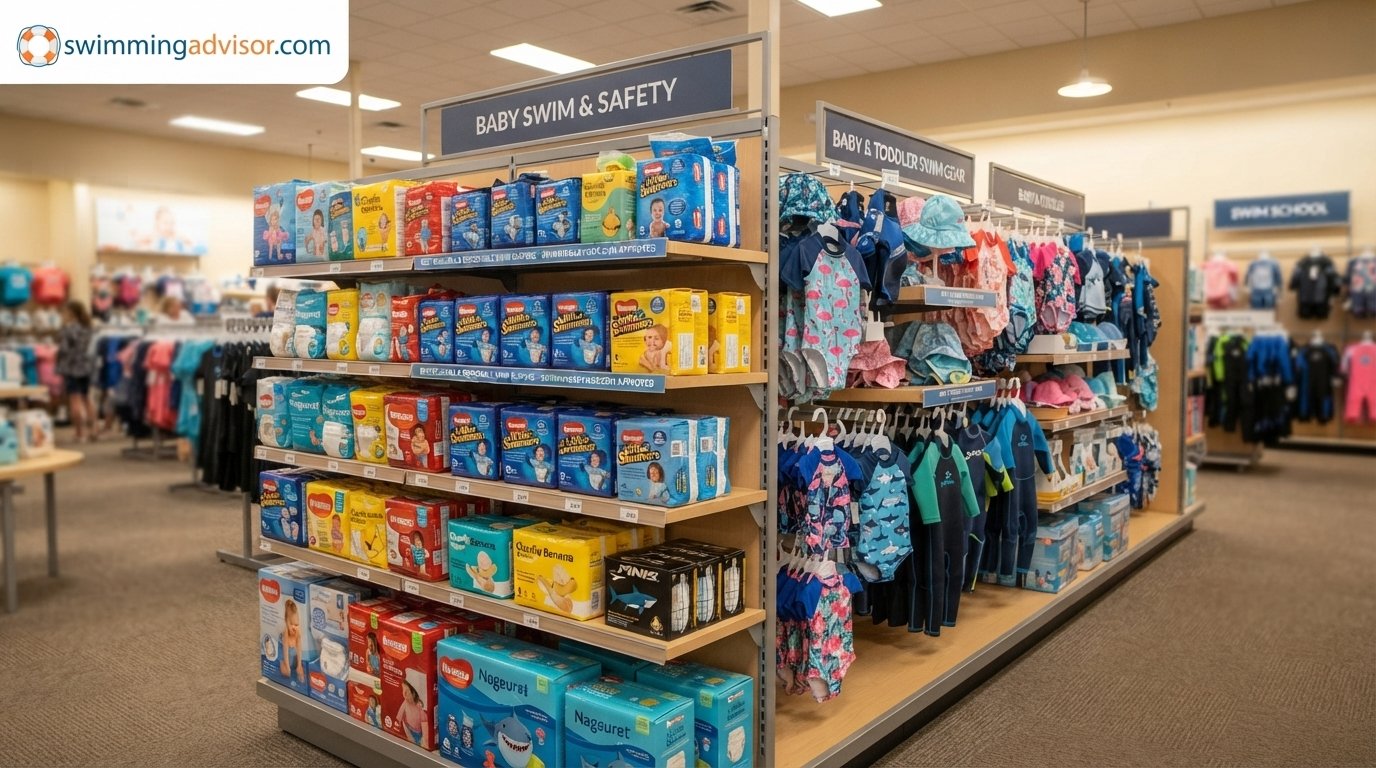
Swim diapers are sold nearly everywhere baby gear is sold — but not every retailer stocks every size, style, or brand.
If you’ve ever stood in a store aisle holding two different swim diaper packages and wondering which one you actually need — or scrolled through a dozen browser tabs trying to figure out where the best deal is — you’re not alone. Swim diapers are one of those small purchases that feel like they should be simple, until you realize how many retailers, sizes, and styles are competing for your attention. Some stores stock a huge selection of disposable and reusable options; others carry only one or two brands and call it a day.
This guide walks through every realistic place you can buy swim diapers, what each option is actually good for, and how to avoid the two most common mistakes: overpaying for a brand you could get cheaper elsewhere, or buying the wrong size right before a pool trip. Whether you’re outfitting a newborn for their first splash class or stocking up before a beach vacation, you’ll find a shopping path that fits your timeline and your budget below.
We’ll also cover the practical side that a lot of shopping guides skip: how pricing actually compares across the retailers most parents already shop at, what to check on a listing before ordering online, and how pool or daycare rules can quietly change which type of swim diaper is even worth buying in the first place. By the end, you should be able to walk into any store — or open any retailer’s app — and know within a minute or two exactly what to look for.
What Are Swim Diapers, and Why Buying the Right One Matters
Swim diapers look similar to regular diapers, but they’re built for a completely different job. A standard diaper is designed to absorb liquid and swell up, which is exactly what you don’t want in a pool. Swim diapers instead trap solid waste while allowing water to pass through freely, so they don’t balloon up, leak, or fall apart in the water. That distinction is also why almost every public and community pool requires a dedicated swim diaper (sometimes layered under a snug swim bottom) rather than a regular diaper or a plain pair of swim trunks for babies and toddlers who aren’t yet potty trained.
Because the entire point of a swim diaper is containment without absorption, the retailer you buy from matters less than the fit and construction quality you end up with. A too-loose leg opening defeats the purpose no matter how much you paid or where you bought it, which is why sizing guidance later in this article is just as important as the shopping list.
Our companion resource on the best swim diapers on the market breaks down specific product picks in more depth if you want side-by-side testing notes before you commit to a brand.
How Swim Diapers Differ From Regular Diapers
The construction difference is small but important. A regular diaper uses a super-absorbent core that pulls liquid away from the skin and locks it inside, which is exactly the mechanism that fails in a pool: the core would absorb pool water rather than skin moisture, expand rapidly, and eventually leak or tear apart in the water. A swim diaper skips the absorbent core almost entirely. Instead, it relies on a snug elastic fit at the legs and waist, plus a mesh or fabric liner that catches solid waste while letting water flow through freely. That’s why a used swim diaper feels wet through and through rather than swollen — it was never designed to hold liquid in the first place.
Who Actually Needs One
Swim diapers are meant for infants and toddlers who are not yet fully potty trained, generally from a few months old up through the early preschool years, though the exact cutoff depends on your child’s development rather than a fixed age. Most pools set the requirement based on potty-training status rather than age alone, so a three-year-old who isn’t fully trained still needs one, while a precocious two-year-old who’s reliably potty trained typically doesn’t. If you’re unsure whether your child still needs one, many facilities will let you ask at the front desk, and erring on the side of bringing one along costs nothing if it turns out you don’t need it.
Disposable vs. Reusable Swim Diapers: Which Fits Your Buying Needs
Before you even think about where to shop, it helps to know which category you’re shopping for, since it changes both the price per use and where you’ll find the best selection.
Disposable swim diapers are the ones you’ll see stacked in the diaper aisle of most big-box and grocery stores, sold in packs that range from single-swim trial packs to jumbo boxes. They’re convenient for travel, daycare drop-off, and situations where you don’t want to deal with rinsing and washing after a swim session. Reusable swim diapers, on the other hand, are made from a water-resistant outer shell with a snap or elastic closure, and they’re washed and reused for months or years. They tend to be sold through specialty baby retailers, swim shops, and online marketplaces rather than grocery store shelves, and while the upfront cost per unit is higher, the cost per wear ends up much lower over a swim season.
Disposable — Best For
- One-off pool trips or vacations
- Daycare and swim class drop-off bags
- Parents who don’t want extra laundry
- Grabbing a pack on the way to the pool
Reusable — Best For
- Regular swim lessons or frequent pool days
- Families who swim weekly or more
- Reducing long-term cost per swim
- Parents comfortable with an extra rinse-and-wash step
Once you know which category fits your routine, the retailer decision becomes much easier — some stores are strong for one type but weak for the other, which is exactly what the next several sections cover.
Cost Per Use: A Rough Breakdown
Numbers help make the disposable-versus-reusable decision concrete. A typical multi-pack of disposable swim diapers runs somewhere in the range of a dollar or a bit more per diaper, depending on brand and pack size, and each one is worn for a single swim session before being thrown away. A reusable swim diaper costs noticeably more per unit up front, but it’s washed and worn dozens of times before it’s retired, which pulls the effective cost per swim down well below a disposable once you pass the break-even point.
| Swim Frequency | Disposable Cost Pattern | Reusable Cost Pattern |
|---|---|---|
| Occasional (few times a year) | Low total cost, no laundry | Rarely worth the upfront cost |
| Weekly swim lessons | Adds up quickly over months | Pays for itself within a few weeks |
| Daily or near-daily pool access | Highest ongoing cost | Clear long-term savings |
Environmental Considerations
Beyond the price tag, some families weigh the disposable-versus-reusable decision on waste as well. Disposable swim diapers are single-use by design, so a busy swim season can generate a meaningful stack of packaging and used diapers headed to the trash. Reusable options cut that down substantially, at the cost of extra water and detergent used for washing. Neither option is waste-free, but if minimizing single-use plastic and packaging is a priority for your household, that’s one more point in favor of a reusable diaper for families who swim often enough to make the math work.
Buying Swim Diapers Online: Amazon and Other E-Commerce Options
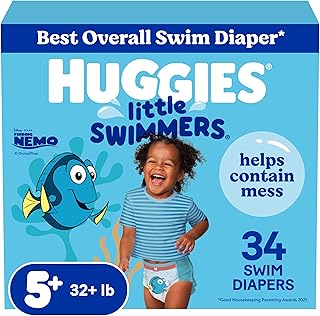
For most parents, online shopping is the fastest route to the widest selection, and it’s usually where you’ll find both disposable multi-packs and reusable brands side by side. Amazon in particular carries an enormous range of swim diaper brands, sizes, and print options, along with customer photos and size feedback that can help you judge fit before you order. Subscribe-and-save style ordering also makes sense here if you know you’ll be buying disposable swim diapers repeatedly through a swim season, since it can shave a meaningful percentage off the price of recurring orders.
Check Prices on Amazon
Beyond Amazon, most major retailers now run their own online stores with swim diaper sections, and they’re worth checking specifically when you want same-day pickup instead of shipping. Target.com, Walmart.com, and Buy Buy Baby’s online catalog all let you filter by size and brand, and checking store inventory online before driving over saves a wasted trip if a particular size is out of stock locally. Specialty retailers like i play. by Green Sprouts and Kushies also sell directly through their own websites, which is useful if you’re chasing a specific print or a size that’s sold out everywhere else.
One thing to watch for when shopping online: third-party marketplace sellers sometimes list swim diapers at steep discounts that turn out to be old stock, mismatched sizes, or products without the manufacturer’s original packaging. Sticking to listings fulfilled directly by the retailer or the brand itself is the simplest way to avoid that headache.
What to Check on a Product Listing Before You Buy
A little bit of listing research goes a long way when you can’t physically hold the product before purchasing. Start with the sizing chart in the listing images rather than relying on the title alone, since titles often just list a broad age range. Next, scan recent reviews specifically for comments about fit at your child’s current weight — a five-star average doesn’t tell you much if most of the reviews are about print quality rather than how the diaper actually performed in the water. Finally, check whether the listing specifies “swim diaper” explicitly rather than a general “swim bottom” or “swim brief,” since some swimwear is designed to be worn over a swim diaper rather than to replace one.
- Confirm the sizing chart matches your child’s current weight, not just their age
- Read reviews for fit feedback, not just star ratings
- Check whether the listing is a true swim diaper versus a swim brief meant to be worn over one
- Prefer listings fulfilled by the retailer or brand directly over unfamiliar third-party sellers
Buying Swim Diapers in Big-Box Stores: Target, Walmart, and Costco
If you need a swim diaper today rather than in two days, big-box retailers are still the most reliable option, and they’re where most disposable swim diapers get sold in practice. Target and Walmart both stock disposable swim diapers year-round in their baby aisles, with wider selection and seasonal endcap displays during spring and summer. Store brands — Target’s Up & Up and Walmart’s Parent’s Choice — are usually the cheapest per-diaper option in these stores and perform close to name-brand disposables for most casual swimmers.
Costco is worth a special mention for families who swim frequently, since it periodically carries jumbo boxes of disposable swim diapers at a noticeably lower per-unit price than grocery or drugstore chains. Availability is seasonal and location-dependent, so it’s not something you can count on stocking year-round, but it’s worth checking before a summer that involves a lot of pool time.
| Retailer | Best For | Selection | Typical Price Position |
|---|---|---|---|
| Target | Same-day pickup, store brand value | Disposable-heavy, some reusable | Mid-range |
| Walmart | Lowest everyday disposable price | Disposable-heavy | Budget |
| Costco | Bulk families, frequent swimmers | Disposable jumbo packs (seasonal) | Lowest per-unit |
| Amazon | Widest brand and size selection | Disposable and reusable | Varies, subscription discounts |
| Specialty baby/swim shops | Reusable brands, hard-to-find sizes | Reusable-heavy | Premium |
| Pool pro shops | Emergency last-minute purchase | Limited, single brand common | Highest |
For weekend pool trips where you’re already running errands, big-box stores remain the most practical stop simply because you can hold the package, check the sizing chart printed on the back, and walk out with it the same day.
Grocery Stores and Drugstore Chains
Grocery chains and drugstores like CVS or Walgreens are a secondary option worth knowing about, mainly for the days when a big-box run isn’t practical. Selection here is usually thinner — often just one or two brands in a limited size range — and prices tend to run slightly higher than Target or Walmart, but the convenience of picking one up alongside a regular grocery trip can be worth the small premium in a pinch. These stores are rarely the best planned purchase, but they’re a reasonable backup if you’re already there and realize you’re out.
Buying Swim Diapers at Specialty and Baby Shops
Specialty baby boutiques and dedicated swim shops carry a narrower selection than big-box stores, but what they do stock tends to be higher quality reusable options with better print variety and more size gradations, including preemie and extended toddler sizes that big-box stores often skip. Staff at these stores are also more likely to have hands-on experience helping parents get the fit right, which matters more for reusable diapers since a snap-style closure needs to sit snugly at the leg and waist to actually work.
Chains like Buy Buy Baby and local baby boutiques typically stock brands such as i play., Kushies, Bambino Mio, and iPlay Green Sprouts, often displayed near swimwear rather than in the general diaper aisle. If you’re outfitting a baby for swim lessons that run for months rather than a single vacation, these shops are worth a visit even if the sticker price is higher, because the extended sizing options reduce the odds of buying twice.
Local Baby Boutiques vs. Chain Baby Stores
Independent local boutiques and larger chains like Buy Buy Baby serve slightly different purposes. A chain store generally has more consistent stock across locations and a return policy backed by a larger company, which is reassuring if you’re unsure about sizing and might need to exchange. A local boutique is more likely to carry smaller, niche brands you won’t find at a chain, along with staff who can speak from direct experience helping other local families with fit questions. Neither is objectively better — it comes down to whether you value consistency and easy returns or a more curated, personal selection.
Buying Swim Diapers at Pool Pro Shops and Community Centers
Community pools, YMCA branches, and swim school pro shops often sell swim diapers directly at the front desk, mainly as a convenience for parents who show up without one and get turned away at the pool deck. This is genuinely the most expensive place to buy a swim diaper — you’re paying for the convenience of an emergency purchase, not a competitive price — but it can save an entire swim lesson or pool visit if you realize you forgot one at home.
If you swim regularly at the same facility, it’s worth asking the front desk which brand they stock, since some pools sell store-branded disposable diapers in single-swim packaging rather than name-brand multi-packs. Buying one here in a pinch and then stocking up online or at a big-box store for regular use is the most cost-effective way to use this option.
If you’re also outfitting a home pool setup for practice sessions between lessons, our guide to the best inflatable swimming pools covers backyard options that pair well with a stocked swim diaper supply.
Keeping a small backup pack of disposables in your pool bag permanently, even if you primarily use reusable diapers, is a simple way to avoid ever needing to pay pro-shop prices in the first place. It costs very little to have a couple on hand at all times, and it eliminates the single most common reason parents end up buying at the highest-priced option available.
Price Comparison: Where You Get the Best Value
Price per diaper or per wear is the number that actually matters, and it varies more than most parents expect depending on where and how you buy. Disposable swim diapers purchased individually or in small packs from a pool pro shop can cost several times more per unit than the same brand bought in bulk online or at a warehouse club. Reusable swim diapers flip this math: the upfront cost is higher than a whole pack of disposables, but once you’ve used one more than roughly ten to fifteen times, it becomes the cheaper option per swim.
- Cheapest per-unit disposable: Warehouse clubs and store-brand multi-packs bought online during a sale or subscription discount window.
- Best balance of price and convenience: Big-box store brands (Target Up & Up, Walmart Parent’s Choice) bought in medium multi-packs.
- Best long-term value: A quality reusable swim diaper from a specialty retailer, used repeatedly across a swim season.
- Most expensive per unit: Single swim diapers purchased at a pool front desk or convenience store.
A practical approach many parents settle on is a hybrid: one or two reusable swim diapers in the size currently fitting your child for regular swim lessons, plus a small pack of disposables kept in the diaper bag for daycare, grandparents’ houses, or unplanned pool visits.
It’s also worth factoring in how much of the “price” is really convenience. A pool front-desk purchase costs more per unit than almost anywhere else, but it also saves an entire wasted trip and a disappointed kid standing at the pool gate. Treating the front desk as an emergency backstop rather than a regular shopping option keeps your overall spending reasonable while still giving you a safety net for the days you forget.
Sizing Before You Buy: Avoiding the Most Common Purchase Mistake
The single most common swim diaper purchase mistake isn’t picking the wrong retailer — it’s buying the wrong size, which leads to leaks regardless of how good the brand is. Swim diaper sizing is typically based on weight rather than age, and it runs differently across brands, so a size that fits perfectly in one line can run snug or loose in another.
Before you buy, check your child’s current weight against the specific brand’s sizing chart rather than relying on the age range printed on the front of the package. For reusable swim diapers, also check the range of adjustment built into the snaps — many are designed to grow with your child across two or three sizes, which can reduce how often you need to reorder. If you’re buying online and can’t try before you buy, look for listings with recent buyer photos and comments mentioning fit at your child’s current weight, since that feedback is usually more reliable than the manufacturer’s chart alone.
Reading a Weight-Based Sizing Chart
Most sizing charts list a weight range rather than a single number, and it’s worth checking where your child falls within that range rather than just confirming they’re inside it. A child sitting right at the top edge of a size’s weight range is a good candidate to size up, especially if they’re due for a growth spurt before the pack runs out. Reusable diapers with adjustable snaps usually list a wider combined range across two or three snap settings, so check whether the current setting or the next one up fits better before committing to a size.
Trying Before You Buy, When You Can
Whenever it’s practical, buying the first one or two of a new size in person — where you can try it on before heading to the pool — is worth the small inconvenience compared to ordering a whole multi-pack online sight unseen. Once you’ve confirmed a specific brand and size fits well, reordering the same size online or in bulk becomes a much safer bet. This approach is especially useful right after a growth spurt, when you’re not entirely sure which size your child has moved into.
Best Times to Buy: Seasonal Sales, Bundles, and Subscription Discounts
Timing your purchase can meaningfully cut the price you pay, especially for disposable swim diapers that you’ll be buying repeatedly. Retailers typically discount swim gear, including swim diapers, in a seasonal wave that starts in late spring as pools open for the season, and again in late summer as stores clear out swim inventory to make room for fall stock. Watching for these windows and buying a season’s worth of disposables at once can be noticeably cheaper than buying pack by pack throughout the summer.
Online subscription and auto-reorder programs are the other lever worth pulling if you know you’ll need a steady supply — many retailers offer a percentage discount plus free shipping on recurring orders, which adds up over a full swim season of weekly lessons. For reusable swim diapers, there isn’t as much of a seasonal discount pattern since they’re a one-time or occasional purchase, but end-of-season clearance sales are still worth checking if you’re buying ahead for the following year in a size your child hasn’t grown into yet.
Stocking Up Ahead of a Growth Spurt
Buying one size ahead during a sale is a reasonable strategy for disposables, since an unopened pack doesn’t expire quickly and you’ll almost certainly need the next size up eventually. This is a riskier move for reusable diapers, though, since sizing between brands isn’t always predictable and a diaper that looks like it should fit “eventually” may end up fitting poorly if your child’s growth pattern shifts. For reusables, it’s generally safer to buy close to when you actually need the size rather than stocking up multiple sizes ahead.
Top Swim Diaper Brands to Look For While Shopping
Knowing a handful of reliable brand names in advance makes comparison shopping much faster, whether you’re standing in a store aisle or scrolling a retailer’s website. On the disposable side, Huggies Little Swimmers and Pampers Splashers are the two most widely available name brands, found in nearly every big-box and grocery store, with store-brand equivalents from Target and Walmart typically performing comparably at a lower price. On the reusable side, i play. by Green Sprouts, Kushies, and Bambino Mio are consistently well reviewed for fit and durability across repeated washes.

Shop Swim Diaper Brands
For a deeper side-by-side comparison, including how these brands performed in leak testing and long-term wash cycles, our dedicated roundup of the best swim diapers is the more detailed follow-up read once you’ve narrowed down disposable versus reusable.
Quick Brand Comparison
| Brand | Type | Known For | Where Commonly Sold |
|---|---|---|---|
| Huggies Little Swimmers | Disposable | Wide availability, familiar fit | Big-box, grocery, online |
| Pampers Splashers | Disposable | Stretchy waistband, snug fit | Big-box, grocery, online |
| Target Up & Up | Disposable | Lower price, comparable performance | Target, Target.com |
| i play. by Green Sprouts | Reusable | Print variety, UPF fabric options | Specialty shops, online |
| Kushies | Reusable | Adjustable snap sizing | Specialty shops, online |
| Bambino Mio | Reusable | Durable lining, quick-dry fabric | Specialty shops, online |
Pool and Daycare Policies: What to Check Before You Buy
Before you commit to a specific swim diaper, it’s worth checking the written policy at wherever your child will actually be swimming, since some facilities have specific requirements that affect which product you should buy. Many pools require a snug-fitting swim diaper worn under a regular swimsuit rather than a swim diaper alone, since the outer swimsuit adds a second layer of containment. Some daycare and swim school programs also specify disposable-only or reusable-only policies for hygiene reasons, so it’s worth a quick check before you stock up on a type they don’t accept.
If your family swims across multiple venues — a home pool, a community pool, and swim lessons at a different facility — it’s common to end up needing both a disposable and a reusable option to satisfy different venues’ rules. Reading each facility’s posted policy (often available on their website or at the front desk) before your first visit avoids a surprise turnaway at the pool deck.
It’s also worth asking whether the facility sells swim diapers on site and, if so, at what price, since that information changes how large a backup stash you actually need to carry with you. A pool that keeps a well-stocked front desk means you can travel lighter; one that doesn’t makes a spare pack in your bag much more important.
Daycare-Specific Rules to Ask About
Daycares tend to have their own layer of rules on top of general pool etiquette, since staff are the ones handling diaper changes throughout the day. Some centers require parents to supply a specific brand or a labeled multi-pack that stays at the facility, while others are fine with whatever you send as long as it’s a proper swim diaper rather than a regular one. It’s worth asking directly during enrollment or before the first water-play day of the season, rather than assuming your usual brand will be accepted without question.
Families that split time between a backyard setup and structured lessons might also find our guide to the best swim paddles useful once your child moves from swim diapers into early stroke practice.
Care, Reuse, and Replacement: Getting the Most from Your Purchase
Once you’ve bought a reusable swim diaper, how you care for it directly affects how long it lasts and whether it continues to fit properly. Rinsing immediately after a swim, washing according to the label (most are machine washable on a gentle cycle without fabric softener, which can degrade the water-resistant lining), and air drying rather than using high heat all extend the usable life of the product. Inspecting the elastic and snaps periodically for wear is also worth doing before every pool season, since a stretched-out leg elastic is the most common reason a reusable swim diaper stops containing properly even though it still looks fine.
For disposable swim diapers, the only real “care” consideration is storage — keeping unopened packs in a cool, dry place preserves the elastic and adhesive components, which can degrade if stored somewhere hot, like a car trunk over a summer. If you’ve bought a bulk pack, checking the expiration or best-by information (when present) before a big trip avoids finding out a diaper has lost its stretch right when you need it.
Knowing when to replace a reusable swim diaper rather than keep using it is mostly a fit question: once a snap-style diaper no longer closes snugly at your child’s current weight, even on its widest setting, it’s time to size up rather than keep stretching it. Buying the next size slightly ahead of when you expect to need it — during an end-of-season sale, for example — is a simple way to avoid a last-minute repurchase at full price.
A Simple Wash Routine
- Rinse solid waste off immediately after removing the diaper, before it dries onto the fabric.
- Machine wash on a gentle or cold cycle, separate from regular laundry if the diaper is heavily soiled.
- Skip fabric softener and bleach, both of which can break down the water-resistant lining over time.
- Air dry rather than using high heat in a dryer, which can weaken elastic and snap closures.
- Check the elastic and snaps for stretch or damage before the next wear, especially at the start of a new swim season.
Shopping for Special Situations: Travel, Twins, and Sensitive Skin
A few shopping scenarios come up often enough to deserve their own quick notes, since the “best” retailer can shift depending on the situation you’re actually shopping for.
Packing for Travel and Vacations
For a beach trip or vacation, disposables are almost always the more practical choice, since there’s no need to rinse, wash, and pack a used swim diaper in your luggage on the way home. Buying a travel-sized pack before you leave, rather than assuming you’ll find the right brand at your destination, avoids the scramble of shopping in an unfamiliar store while on vacation, especially if you’re traveling somewhere without an easy grocery or big-box option nearby. If you’re flying, packing swim diapers in a carry-on rather than checked luggage means you’re covered even if a bag is delayed, which matters more on a trip built around pool or beach time than on an ordinary vacation.
Shopping for Twins or Multiple Kids in Diapers
Families buying for twins or multiple children close in age typically save the most by buying disposables in bulk online or at a warehouse club, where the per-unit price drops the most at higher quantities. If both children are close enough in size to share a swim diaper size, buying one larger multi-pack rather than two smaller ones usually works out cheaper overall.
Sensitive Skin Considerations
If your child has shown sensitivity to certain fabrics or elastic materials in regular diapers, that same sensitivity can show up with swim diapers, particularly around the leg and waist elastic where the fit is snuggest. Name-brand disposables and higher-quality reusable brands tend to use softer elastic and fewer added dyes than the cheapest off-brand options, so it may be worth paying slightly more for a well-reviewed brand rather than defaulting to the least expensive pack on the shelf if skin sensitivity has been an issue before.
Buying for a First-Time Swim Class
If this is your first time buying a swim diaper at all, it’s worth buying a small pack rather than committing to a large multi-pack or a reusable option right away. A first swim class is a low-risk way to confirm which brand and size actually fits your child well before investing in a bigger quantity or a pricier reusable diaper you’re locked into for the season. Once you know what works, switching to bulk buying or a reusable option becomes a much more confident purchase.
A Quick Pre-Purchase Checklist
Before you finalize any swim diaper order or head to the checkout line, running through a short checklist can save you a return trip or a mismatched size showing up at your door.
- Confirmed your child’s current weight against the specific brand’s sizing chart
- Checked whether your pool, swim class, or daycare requires disposable, reusable, or either
- Decided whether disposable convenience or reusable long-term value fits your swim frequency better
- Compared price per unit across at least two retailers, including online subscription pricing
- Kept a small backup pack in your pool bag regardless of which type you primarily use
- Checked return or exchange policy if buying online in case the size doesn’t fit
Running through these six checks takes less than a minute and covers the vast majority of the mistakes parents make when buying in a hurry — whether that’s grabbing the wrong size off a shelf or ordering a pack online that turns out not to be accepted at their specific pool.
Frequently Asked Questions
Can I use a regular diaper instead of a swim diaper?
No. Regular diapers are designed to absorb liquid and will swell with pool water, becoming heavy and potentially disintegrating in the water. Almost every public pool explicitly prohibits regular diapers for this reason, and swim diapers are specifically engineered to let water pass through while still containing solid waste.
Where can I buy swim diapers same-day if I forgot one?
Target, Walmart, and most drugstore chains stock disposable swim diapers year-round during swim season, and many community pools and swim schools sell them at the front desk in a pinch, though at a higher price. Checking store inventory online before driving over can save a wasted trip.
Is it cheaper to buy swim diapers online or in-store?
It depends on the retailer and timing. Online marketplaces like Amazon often beat in-store prices when you use subscription discounts or buy larger multi-packs, while warehouse clubs like Costco can match or beat online pricing on bulk disposable packs when stock is available seasonally.
Do reusable swim diapers really save money over time?
Yes, for families who swim regularly. A reusable swim diaper typically costs more upfront than a whole multi-pack of disposables, but after roughly ten to fifteen uses it becomes cheaper per swim than continuing to buy disposables, assuming it still fits.
What size swim diaper should I buy?
Check the specific brand’s weight-based sizing chart rather than relying on the age range on the package, since sizing varies between brands. If your child is between sizes, most brands recommend sizing up.
Do I need to buy a swimsuit to wear over a swim diaper?
Many pools require a snug swimsuit worn over the swim diaper as an extra layer of containment, in addition to the diaper itself. Check your specific pool’s posted policy, since requirements vary by facility.
Can swim diapers be reused across multiple children?
Reusable swim diapers can be passed down or reused across siblings as long as the elastic, snaps, and lining are still in good condition and the size still fits. Inspect for stretched elastic or worn snaps before reusing one that’s been stored for a while.
Are store-brand swim diapers as good as name brands?
For most casual swimmers, store-brand disposable swim diapers from Target or Walmart perform comparably to name brands like Huggies Little Swimmers at a lower price. Parents of children with more sensitive skin sometimes prefer to stick with a name brand they’ve already tested.
Do specialty baby shops carry better sizes than big-box stores?
Often, yes. Specialty baby boutiques and dedicated swim shops tend to carry a wider range of sizes, including preemie and extended toddler sizes, that big-box stores frequently skip in favor of the most common mid-range sizes.
When is the best time of year to buy swim diapers on sale?
Late spring, as pools open for the season, and late summer, as retailers clear swim inventory to make room for fall stock, are the two most common discount windows for swim diapers at most retailers.
Can I buy swim diapers with a subscription for regular swim lessons?
Yes. Several online retailers, including Amazon, offer subscription or auto-reorder discounts on disposable swim diapers, which can reduce the per-unit cost for families attending weekly swim lessons over a full season.
What should I do if a swim diaper leaks even though it’s the right size?
Double-check that the leg openings are snug against the skin rather than gapping, and confirm the diaper is being worn under a swimsuit if your pool requires it. If leaks continue with a reusable diaper, inspect the elastic and snaps for wear, since stretched components are a common cause of leaking even at the correct size.
Final Thoughts: Choosing Where to Buy Your Next Swim Diaper
There’s no single “best” place to buy a swim diaper — the right retailer depends on how often you swim, whether you need something today or can plan ahead, and whether disposable convenience or reusable long-term value matters more to your family. For most parents, a mix works best: a small stash of disposables from a big-box store or online multi-pack for grab-and-go trips, paired with one or two reusable diapers in the current size for regular swim lessons.
Whichever route you choose, checking the weight-based sizing chart before you buy and confirming your pool or daycare’s specific policy will save you far more frustration than chasing the absolute lowest price. Keep a backup pack on hand, know which brand fits your child well, and you’ll spend far less time thinking about swim diapers and more time actually enjoying the pool.
Browse Swim Diapers on Amazon