Best Vacuums for Inflatable Swimming Pools — Tested & Ranked
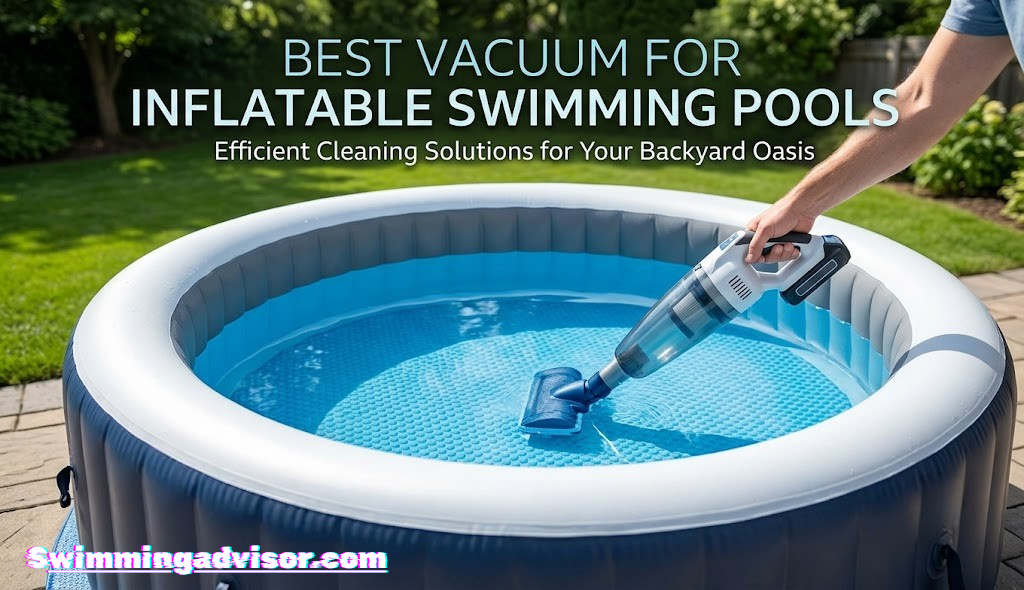

A pristine inflatable pool looks inviting. A murky one does not. Whether your inflatable swimming pool is a compact splash pad for the kids or a full-size above-ground setup for adults, debris settles fast — sunscreen residue, fallen leaves, bugs, dirt tracked in from the yard. Standard pool equipment designed for in-ground or hard-shell pools is far too aggressive for inflatable vinyl liners. What you actually need is a vacuum built for the job.
In this guide, we’ve cut through the noise to bring you the best vacuums for inflatable swimming pools — from handheld rechargeable wands to autonomous robotic cleaners. Every pick has been evaluated for suction power, battery life, filter quality, and crucially, whether it’s gentle enough to not damage soft vinyl walls. We’ve also compiled a full buying guide, a side-by-side comparison table, troubleshooting solutions for every common problem, and a step-by-step usage walkthrough so you can keep your pool water sparkling from the first warm day to the last.
Our Top Picks at a Glance
Why You Need a Dedicated Vacuum for Your Inflatable Pool
Most inflatable pool owners start with a net skimmer. It grabs floating debris, but it can’t touch settled grime on the floor — the fine silt, sunscreen film, and organic matter that slowly clouds your water and feeds algae. Before you know it, the pool turns green, and the only solution is a full drain. If you care about keeping algae out of inflatable swimming pools, a vacuum is the single most effective tool in your arsenal.
There’s another reason purpose-built vacuums matter: your inflatable pool’s liner is vulnerable. Heavy-duty pool vacs with strong bristle brushes can scratch or puncture vinyl over time. The models featured in this guide use either foam pads, soft brush rolls, or purely suction-based collection so the liner stays intact through seasons of cleaning.
If you also rely on pool chemicals to maintain water quality, a vacuum dramatically reduces the chemical load you need by physically removing debris before it decomposes. That means cleaner water with less chlorine — a big win for kids and pets.
Can You Vacuum an Inflatable Pool? (Yes — Here’s Why It Works)
A common question we see is whether inflatable pools are even sturdy enough to be vacuumed. The short answer is absolutely yes, provided you use the right equipment. The vinyl used in quality inflatable pools from brands like Intex and Bestway is engineered to withstand thousands of pounds of water pressure. A pool vacuum — even a robotic one — applies negligible force compared to the hydrostatic pressure the liner already handles every day.
The concern is not the weight or movement of the vacuum but the brush type and suction intensity. Hard-bristle brushes designed for concrete or fiberglass pool surfaces can score soft vinyl over time, creating micro-abrasions that collect dirt and eventually weaken the material. That is why every vacuum in this guide either uses soft foam pads, gentle rubber-tipped brush rolls, or pure suction with no mechanical scrubbing at all. When you use the right vacuum, cleaning your inflatable pool is not only safe — it actually extends the pool’s lifespan by removing abrasive grit and corrosive organic matter before they degrade the liner material.
Another misconception is that vacuuming wastes too much water. In reality, a well-maintained vacuum captures debris in its filter canister with very minimal water loss. You lose far more water to evaporation on a hot summer day than you do in a single vacuuming session. Combined with proper chemical treatment, vacuuming means you drain and refill less frequently, which actually saves water over the course of a season.
What Happens If You Don’t Vacuum
Skipping vacuuming sets off a chain reaction. Debris settles on the floor and begins to decompose, releasing organic compounds into the water. These compounds consume free chlorine, reducing your sanitizer’s effectiveness. As chlorine levels drop, bacteria and algae gain a foothold. The water turns cloudy, then green. At that point, the only remedy is a heavy chemical shock treatment — or a complete drain and refill. Either option costs more, takes more time, and creates more waste than simply vacuuming every few days from the start.
Unvacuumed pools also develop a slippery biofilm on the floor — a layer of bacteria and organic residue that feels unpleasant underfoot and is genuinely unhygienic. This biofilm is particularly dangerous for young children who may swallow pool water accidentally. Regular vacuuming removes the substrate that biofilm needs to form, keeping the pool floor clean and safe between swim sessions.
Types of Inflatable Pool Vacuums Explained
There are three main categories, each with a different use case and price point:
Handheld Manual Vacuums
You guide them along the pool floor. Simple, affordable, and effective for small to mid-size pools. Best for quick spot cleaning.
Cordless Battery-Powered
Rechargeable units that offer suction without being tethered to an outlet. Most practical option for most inflatable pool owners.
Robotic Auto Cleaners
Drop them in and they navigate the floor autonomously. Hands-free convenience, but require sufficient pool depth and flat surfaces.
For most adult inflatable pools, a cordless battery-powered vacuum hits the sweet spot of price, performance, and ease of use. If you have a kids’ inflatable pool under 10 feet in diameter, a handheld is usually sufficient and costs a fraction of the price.
Vacuuming by Pool Shape: Rectangular vs. Round Inflatable Pools
The shape of your inflatable pool has a surprisingly significant impact on how you should approach vacuuming, which vacuum type works best, and where debris tends to accumulate. If you’re still deciding on a pool shape, our detailed comparison of rectangular vs. round inflatable swimming pools covers the full pros and cons beyond just cleaning. But from a vacuuming perspective, here’s what you need to know.
Round Inflatable Pools
Round pools are the most common shape for inflatable models — from small kiddie pools to large 18-foot family pools. The curved walls create a natural “funnel” effect where debris gradually migrates toward the center of the floor. This is actually helpful for vacuuming because you can focus your efforts on the central zone rather than methodically covering every square inch.
However, the curved floor-to-wall seam is where cleaning gets tricky. There are no straight edges for your vacuum head to follow, and the continuous curve means a robotic cleaner may take longer to map its route. Handheld and cordless wand vacuums actually perform well here because you can manually angle the head to follow the curvature. The key technique for round pools is a spiral pattern: start at the outer edge and work inward in a tightening spiral. This follows the natural debris migration pattern and ensures you’re always pushing debris toward the center rather than redistributing it outward.
Round pools also have an interesting depth profile. They’re typically deepest in the center and shallowest at the perimeter where the curved floor meets the side wall. This means a robotic cleaner may function perfectly in the center where it has adequate depth clearance, but struggle at the outer edges where the water is shallower. If you use a robotic vacuum in a round inflatable pool, consider overfilling slightly — just an inch or two above the minimum line — to give the robot enough clearance at the perimeter. That small increase in water volume won’t meaningfully affect your chemical balance but can dramatically improve the robot’s coverage.
Rectangular Inflatable Pools
Rectangular pools — increasingly popular for adults who want more usable swim space — present a different cleaning challenge. Debris doesn’t converge to a single point; instead, it settles in predictable lines along the floor, following the natural water circulation patterns created by the pool’s shape. Debris tends to accumulate most heavily in the corners and along the long edges where the floor meets the side walls.
For rectangular pools, the straight-line vacuuming technique described in our step-by-step section works perfectly because the parallel walls give you clean reference lines to follow. Robotic cleaners also perform well in rectangular pools because the systematic zigzag pattern maps efficiently to a rectangular grid — you get more consistent coverage than in a round pool where the robot may miss the curved perimeter zones.
If you have a large rectangular pool (12 feet or longer), the JESIMAIK cordless vacuum with its 90+ minute runtime is particularly well-suited because you need the extended battery to cover the longer floor in systematic passes without stopping to recharge. Straight-line passes should run along the length of the pool, not the width — this minimizes the number of direction changes and maximizes the efficiency of each battery-powered pass.
Rectangular pools with inflatable walls also tend to develop debris “trails” in the corners where two walls meet the floor at right angles. Unlike round pools where the transition is gradual, these right-angle corners create dead zones where water circulation is minimal and debris accumulates in concentrated piles. Budget an extra minute per corner during your vacuuming routine, using a crevice or narrow attachment if your vacuum includes one.
Irregular and Novelty Shapes
Some inflatable pools come in unusual shapes — oval, hexagonal, or novelty designs like castles and animals. For these, handheld vacuums are almost always the best choice because robotic cleaners rely on predictable geometry to navigate efficiently. A robot released into an irregularly shaped pool may spend excessive time bumping into walls and retracing its path, wasting battery and leaving spots uncleaned.
With an irregularly shaped pool, take extra time along every interior angle and seam. These are the spots where debris settles and where algae takes hold first. A crevice attachment is invaluable here — if your vacuum came with one, use it. If not, the narrow nozzle head works as a substitute for reaching into tight angles. The same applies to pools with built-in seats, cup holders, or other molded features that create additional surfaces where debris can settle.
Pool Depth Variations and Vacuum Selection
Pool depth varies not just by model but by position within the pool. This matters for robotic cleaners, which need minimum depth to operate — typically 15 to 18 inches. In a round pool, the robot may function fine in the center but struggle at the shallow edges. In rectangular pools, depth is generally more uniform but can still vary by an inch or two due to ground settling or how the pool was inflated.
For very shallow pools — those under 12 inches deep — robotic cleaners are simply not viable. Handheld vacuums are your only practical option. The Intex 28620EP works well in these shallow environments because its compact head can operate in as little as 6–8 inches of water. Similarly, the POOLWHALE’s design handles shallow water gracefully thanks to its wand-style form factor that keeps the motor above the waterline while the cleaning head works below.
What to Look for When Buying a Vacuum for an Inflatable Pool
1. Suction Power vs. Liner Safety
More suction isn’t always better. An overpowered vacuum can create enough negative pressure to warp or pull at thin vinyl — especially in shallow pools under 18 inches. Look for adjustable suction modes or units that specifically advertise inflatable pool compatibility. The brushes (if any) should be soft foam or rubber-tipped, never hard plastic bristles that can score the liner surface.
2. Battery Life and Charge Time
A good cordless pool vacuum should run at least 50–60 minutes on a single charge for a mid-size inflatable pool. Larger pools in the 12–18-foot range need 90+ minutes. Pay attention to charge time too — some budget units take 6–8 hours between sessions, which makes daily use frustrating. The best models recharge in 3–4 hours.
3. Filter Type and Filtration Fineness
Most pool vacuums use either a foam filter insert or a fine mesh filter bag. Foam filters are washable and reusable but can miss very fine silt. Filter bags rated to 50–100 microns catch finer particles, resulting in visibly clearer water. If algae is a recurring problem — a topic we cover in our guide to keeping inflatable pools free of algae — fine filtration makes a significant difference.
4. Pool Depth Compatibility
Robotic cleaners need at least 15–18 inches of water depth to move freely without getting stuck. Handheld units work in any depth. If your pool is quite shallow, stick to a handheld or portable cordless wand rather than a floor-crawling robot.
5. Ease of Emptying and Cleaning the Unit Itself
Filter maintenance is the most overlooked buying factor. Some vacuum canisters are awkward to empty without making a mess. Look for top-access or side-access debris canisters with wide openings. Filter inserts should rinse clean under a tap without requiring special tools.
6. Accessories and Attachments
A good set of attachments extends a vacuum’s usefulness. Brush heads for the floor, crevice tools for corners, and extension poles that let you reach the center of a large pool without straining are all worth looking for. Some units like the POOLWHALE also double as a fountain or water-feature pump, adding extra value.
7. Power Source: Battery vs. Corded vs. Pump-Driven
Nearly every vacuum on this list is battery-powered, and for good reason — cords near water create electrocution hazards and tangling frustration. However, some entry-level models use an alternative approach: they connect to a garden hose or a separate pump that provides the suction force through water pressure rather than a motor. These work but have notable drawbacks. You need a hose nearby, the suction force is inconsistent depending on your water pressure, and the debris is typically discharged back into the pool rather than collected in a canister — which defeats the purpose entirely for fine particles.
Stick with battery-powered self-contained units unless you have a specific, compelling reason to deviate. The convenience and safety advantages are decisive.
8. Weight and Ergonomics
Underestimated by most buyers until they’re 20 minutes into a cleaning session: the weight and balance of a pool vacuum matters enormously when you’re holding it at arm’s length, possibly leaning over the pool edge. Look for units under 2.5 lbs for handheld models. Telescoping poles should lock securely without slipping under water pressure. Grip material should be rubberized or textured — plastic-only grips get slippery when wet hands are involved.
9. Storage and Portability Between Uses
Inflatable pools often have limited dedicated storage space nearby. A vacuum that folds down, includes a storage bag, or has a compact footprint when disassembled will spend more time in use and less time getting in the way. Some of the wand-style units break into three sections for compact flat storage — a genuinely useful feature if you’re keeping the vacuum in a garden shed or garage between sessions.
10. Noise Level
If you plan to vacuum while children are napping or in the early morning before neighbors are awake, noise becomes a real consideration. Handheld manual vacuums produce virtually no noise since the only moving parts are internal to the water path. Cordless battery-powered units generate a moderate hum — comparable to an electric toothbrush. Robotic cleaners are the loudest category, though most modern models operate at 50–60 decibels, which is roughly equivalent to a normal conversation. The TALOSBO is specifically noted for quiet operation. If noise sensitivity is a priority, avoid vacuuming during the robot’s wall-climbing mode, which engages the motor at higher RPM and produces more sound than its standard floor-cleaning cycle.
11. Warranty and Replacement Parts Availability
A pool vacuum is a seasonal tool that takes real abuse — repeated exposure to chlorinated water, UV radiation, and physical impacts against the pool wall. Before buying, verify that replacement filters, brush rolls, and batteries are readily available for your model. Intex and Bestway have excellent parts availability because they’re major brands with established supply chains. Third-party brands like WYBOT, JESIMAIK, and TALOSBO have improved their parts support significantly but may have slower fulfillment or limited availability outside of Amazon. A one-year warranty is the minimum you should accept; two-year coverage is preferable for robotic models that represent a larger investment.
DIY and Homemade Vacuum Alternatives for Inflatable Pools
Before you commit to buying a dedicated pool vacuum, it’s worth understanding the DIY alternatives that some pool owners use — and their significant limitations. We get this question frequently: “Can I make my own pool vacuum for an inflatable pool?” The answer is technically yes, but the results vary dramatically depending on the method, and in most cases, a purpose-built vacuum outperforms homemade solutions in every measurable way. Here’s an honest breakdown of what works, what sort of works, and what you should avoid entirely.
The Garden Hose Venturi Method
The most common DIY approach uses the Venturi effect — the same principle that makes carburetors work. You attach a garden hose to a special nozzle (sometimes sold as a “pool jet vacuum” for under $10) that uses water pressure from your hose to create suction. The fast-moving water from the hose creates a low-pressure zone that pulls debris off the pool floor and into an attached mesh bag.
In theory, this sounds effective and cheap. In practice, there are three serious problems. First, the suction generated is inconsistent and heavily dependent on your home’s water pressure. If you’re on a well system or have low municipal pressure, the Venturi effect barely functions. Second, the process consumes enormous amounts of fresh water — potentially 50–100 gallons per cleaning session, which can spike your water bill and requires you to rebalance your pool chemicals after dilution. Third, the mesh bags that come with most Venturi attachments are coarse — they catch leaves and large debris but let fine silt, sunscreen residue, and algae particles pass right through. You end up with a pool that looks cleaner but is still cloudy at the microscopic level.
For a very small inflatable pool (under 8 feet) with mainly leaf debris and minimal chemical treatment, the Venturi method can be a passable stopgap. For anything larger or for owners who care about water clarity, it’s a false economy.
The Siphon Method
This old-school technique requires no equipment beyond a length of garden hose. Fill the hose with water, cap both ends, place one end on the pool floor and the other end lower than the pool water level outside the pool, then release. Gravity creates a siphon that pulls water — and debris — out of the pool. You manually direct the intake end across the floor to suck up settled particles.
The siphon method actually works surprisingly well for removing fine silt and sediment that settles on the floor. The suction is gentle enough to be vinyl-safe and consistent as long as the outlet end remains lower than the pool water level. The massive drawback is water loss: every cleaning session drains a significant volume of water from the pool. For a 12-foot inflatable pool, even a 10-minute siphon session can remove 20–30 gallons. You then need to refill, which again dilutes your chemical treatment. Over a week of regular cleaning, you may inadvertently cycle through most of your pool’s water volume — at which point you might as well have drained and refilled the pool entirely.
The siphon method is most useful as an emergency measure — say, you’ve shocked the pool after an algae bloom and need to vacuum the dead algae off the floor before it re-settles. In that specific scenario, the water loss is acceptable because you’re planning to adjust chemicals anyway. As a routine cleaning method, it’s impractical and wasteful.
Repurposing a Wet-Dry Shop Vac
We address this in our safety section below, but it bears repeating here because the idea is tempting: a wet-dry shop vac has strong suction, a large collection canister, and can handle water. Why not use it to vacuum the pool? The reasons to avoid this are serious. Shop vacs are designed for external use — you’d need to position the unit outside the pool and run a hose over the wall into the water. The suction on most shop vacs is far too aggressive for inflatable pool vinyl; at close range, the intake can create enough negative pressure to pull the vinyl upward, stretching or tearing it. The electrical hazard of having a mains-powered appliance within splash distance of a pool is obvious and not worth the risk under any circumstances.
Additionally, shop vac filters are designed for dry debris or water — not both simultaneously. Wet organic matter clogs standard shop vac filters rapidly, and replacing them with every pool-cleaning session negates any cost savings over buying a purpose-built pool vacuum.
The Bottom Line on DIY Methods
If your budget is genuinely zero, the siphon method is the safest and most effective DIY option for occasional spot-cleaning. But if you plan to maintain your inflatable pool for an entire season, a purpose-built vacuum like the Intex 28620EP (often available for under $30) pays for itself in saved water, reduced chemical costs, and dramatically better cleaning results within the first few weeks. The math is simple: a dedicated pool vacuum eliminates the water waste, safety risks, and mediocre performance that come with every DIY alternative.
1. Intex Rechargeable Handheld Vacuum — Best Budget Pick

Intex 28620EP Rechargeable Handheld Vacuum
The Intex 28620EP is the definitive entry point for inflatable pool vacuuming. Intex makes many of the most popular above-ground and inflatable pools in the world, so it’s no surprise they built a companion vacuum that understands exactly what their liners need. This handheld unit is lightweight, rechargeable via USB, and slips directly into the pool — no cord, no hose, no setup drama.
You simply glide the unit across the pool floor and let the internal motor draw debris into the filter cartridge. The filter is easy to remove, rinse, and reinsert. Battery life sits in the 45–60 minute range depending on debris load, which is adequate for most backyard inflatable pools under 12 feet.
✅ Pros
- Made by Intex — designed for inflatable pools
- USB rechargeable, very portable
- Lightweight and easy to maneuver
- Affordable price point
- Easy-clean filter cartridge
❌ Cons
- Limited suction for heavy debris
- Not ideal for pools over 12 ft
- Manual only — you guide every pass
- Battery not replaceable
Intex Rechargeable Handheld Pool Vacuum
🛒 Check Price on Amazon2. POOLWHALE Portable Underwater Vacuum — Best for Versatility
POOLWHALE Portable Underwater Vacuum
The POOLWHALE stands out because it isn’t just a vacuum — it’s a multi-function water tool. In vacuum mode, it pulls debris through an onboard filter. Switch it around and it becomes a water feature or fountain pump. If you have young children in a kids’ inflatable pool, the fountain mode keeps them entertained while you tidy up, making this the ideal multi-tool for family setups.
Suction is impressively strong for the size. The unit comes with multiple nozzle attachments including a wide flat head for floors and a narrower crevice tool for the seams where debris accumulates. The debris filter is a fine mesh bag that you pull out, empty, and rinse. Included extension rods mean you don’t have to reach across the pool manually.
✅ Pros
- Vacuum + fountain dual function
- Multiple nozzle attachments included
- Extension poles for reach
- Fine mesh filter bag
- Works on medium-sized pools
❌ Cons
- Requires connecting to a hose port
- More parts to manage and store
- Slightly louder motor
POOLWHALE Portable Underwater Pool Vacuum
🛒 Check Price on Amazon3. WYBOT Cordless Automatic Pool Vacuum — Best Overall

WYBOT Cordless Automatic Pool Vacuum
The WYBOT is the vacuum that makes owning an inflatable pool significantly more enjoyable. Drop it in, press the button, and walk away. It navigates the pool floor using a systematic zigzag pattern — no random wandering — covering the entire surface methodically. The soft drive wheels and brush roll are gentle on vinyl, making it one of the few autonomous cleaners genuinely suitable for inflatable pools rather than just hard-shell options.
Battery life is excellent: most users get 70–90 minutes per charge depending on pool size and debris density. The top-load filter compartment opens with one click for easy emptying, and the filter element rinses clean under a tap. For families who want truly maintenance-free pool cleaning, this is the benchmark product in the category.
It pairs exceptionally well with a good cover — check out our recommendations for the best covers for inflatable swimming pools to reduce the frequency you need to vacuum in the first place.
✅ Pros
- Fully autonomous — no manual effort
- Systematic coverage pattern, not random
- Soft brush roll — vinyl safe
- 70–90 min runtime per charge
- One-click filter access
- Powerful dual-suction ports
❌ Cons
- Higher price than manual options
- Needs ≥15 inches water depth
- May struggle with very curved corners
WYBOT Cordless Automatic Robotic Pool Vacuum
🛒 Check Price on Amazon4. Bestway AquaTech Cordless Pool Vacuum — Best Mid-Range Value

Bestway AquaTech Cordless Pool Vacuum
Bestway is one of the two biggest names in inflatable pools alongside Intex, so when they release pool-care accessories, they understand the market deeply. The AquaTech Cordless is a handheld-wand style unit with a built-in rechargeable battery, a telescoping handle, and a large-capacity debris canister that cuts down on emptying frequency during a cleaning session.
The debris canister’s clear window is a particularly thoughtful touch — you can see when it’s full without interrupting your session. Suction is stronger than the Intex handheld, and the telescoping pole means you can clean a 12-foot pool from one side without leaning in. If you find yourself regularly maintaining a medium-size family pool, the AquaTech strikes the best balance of cost and capability below the robotic tier.
✅ Pros
- Telescoping handle for reach
- Clear debris canister window
- Larger capacity than entry models
- Bestway brand reliability
- Competitive mid-range price
❌ Cons
- Still manual — you guide it
- Canister slightly bulkier to empty
- Fewer accessories than POOLWHALE
Bestway AquaTech Cordless Pool Vacuum
🛒 Check Price on Amazon5. JESIMAIK Cordless Vacuum — Best for Longer Runtime

JESIMAIK Cordless Pool Vacuum
If your inflatable pool is on the larger end — think 15 to 18 feet — you need a vacuum that can last the whole job without needing to pause and recharge. The JESIMAIK stands apart in the cordless manual category by offering 90+ minutes of battery life on a full charge, which is meaningful when you’re systematically working through a larger pool floor.
The unit is designed with a ergonomic, grippy handle and multiple cleaning heads including a flat suction pad for floor debris and a brush attachment for cleaning the interior walls. This is one of the few portable vacuums that explicitly says it works on both inground and above-ground inflatable pools, indicating the suction is strong enough for varied debris types but gentle enough for flexible vinyl walls.
✅ Pros
- 90+ minute battery runtime
- Wall and floor cleaning heads
- Ergonomic handle design
- Suitable for larger pools
- Strong suction on full power
❌ Cons
- Heavier than smaller handhelds
- Slightly longer charge time (5–6 hours)
- Less compact for storage
JESIMAIK Cordless Pool Vacuum with 90+ Min Runtime
🛒 Check Price on Amazon6. TALOSBO Cordless Robotic Pool Vacuum — Best Premium Robot

TALOSBO Cordless Robotic Pool Robot
The TALOSBO takes autonomous pool cleaning to a higher tier. While the WYBOT is our top overall pick for a balanced mix of performance and price, the TALOSBO edges ahead in its category with a more powerful motor and a larger debris canister that rarely needs emptying mid-session. The dual rotating brushes on the underside scrub the pool floor as it moves — important for removing embedded sunscreen film that suction alone can’t dislodge.
Navigation is intelligent enough to handle irregular obstacles and the curved walls of inflatable pools. When it reaches a wall, it pivots smoothly rather than getting stuck or repeatedly bumping the liner. The unit is waterproof to IP68 standards, meaning full submersion is no concern. For pool owners who want to drop the robot in every few days and forget about debris entirely, the TALOSBO delivers that experience reliably.
✅ Pros
- Dual rotating floor brushes
- Large debris canister capacity
- Smart wall-detection navigation
- IP68 waterproof rating
- Handles sunscreen film effectively
- Quiet operation
❌ Cons
- Premium price point
- Heavier — harder to lift out
- Overkill for very small pools
TALOSBO Cordless Robotic Pool Robot
🛒 Check Price on AmazonFull Comparison Table: All 6 Vacuums Side by Side
Use this table to find the vacuum that fits your pool size, budget, and cleaning style at a glance:
| Vacuum | Type | Battery Life | Pool Size | Automatic | Price Tier | Best For |
|---|---|---|---|---|---|---|
| Intex 28620EP | Handheld | 45–60 min | Up to 12 ft | ✗ | $ | Budget buyers, small pools |
| POOLWHALE | Cordless Wand | 60 min | Up to 14 ft | ✗ | $$ | Families, dual-use |
| WYBOT Cordless | Robotic | 70–90 min | Up to 18 ft | ✔ | $$$ | Hands-free, all sizes |
| Bestway AquaTech | Cordless Wand | 60 min | Up to 14 ft | ✗ | $$ | Mid-range value |
| JESIMAIK Cordless | Cordless Wand | 90+ min | Up to 18 ft | ✗ | $$ | Larger pools, long sessions |
| TALOSBO Robot | Robotic | 80–100 min | Up to 20 ft | ✔ | $$$$ | Premium, set-and-forget |
Troubleshooting Common Pool Vacuum Problems
Even the best pool vacuum will occasionally misbehave. Most issues have simple solutions that don’t require replacement parts or professional service. Here’s a comprehensive troubleshooting guide for the problems inflatable pool owners encounter most frequently.
Loss of Suction
Cause: Clogged filter, debris in the intake, or low battery. Fix: Remove and rinse the filter under running water. Check the intake nozzle for obstructions like leaves or hair wrapped around the opening. If the battery is below 20%, charge fully before testing again. Persistent suction loss after cleaning the filter indicates a damaged filter medium — replace it.
Vacuum Won’t Stay Submerged
Cause: Air trapped in the housing, or the unit is designed for deeper water. Fix: Tilt the vacuum underwater at a 45-degree angle to release trapped air bubbles before starting. For robotic cleaners, ensure the unit is fully lowered into the water rather than dropped — dropping traps air in the chassis. If the vacuum floats even after purging air, the pool may be too shallow for that model.
Robot Gets Stuck on Walls
Cause: Pool walls are too soft or flexible for the robot’s traction system. Fix: Inflate the pool to maximum firmness so walls are taut. Deflated, saggy walls create folds that trap robotic cleaners. If the problem persists, the pool may be too small for a robotic vacuum to navigate — switch to a handheld model for that pool size.
Streaks of Debris Left Behind
Cause: Moving too fast, or filter is full and reducing airflow. Fix: Slow down your passes to a glacial pace — the speed of a slow walk. Each pass should take 30–45 seconds across a standard inflatable pool. If using a robotic cleaner, the filter may need emptying mid-session when dealing with heavy debris loads.
Battery Drains Too Fast
Cause: Battery degradation from overcharging, cold storage, or age. Fix: Lithium-ion batteries degrade when stored fully charged or fully drained. Store the vacuum at approximately 50% charge in a climate-controlled space. If runtime has dropped below 60% of the original specification after one season, the battery may need replacement. Contact the manufacturer — many offer replacement batteries for models with user-serviceable battery compartments.
Motor Sounds Strained or Loud
Cause: Debris wrapped around the impeller or brush roll, or water ingress into the motor housing. Fix: Remove the vacuum from the water and inspect the impeller chamber and brush roll for tangled hair, string, or fabric fibers. Cut away any wrapped material with scissors. If the motor sounds strained even when clean, the impeller may be damaged — this is usually a warranty claim or replacement scenario.
Filter Clogs After Minutes
Cause: Fine debris like silt, sunscreen, or algae overwhelming the filter. Fix: Pre-skim the pool surface before vacuuming to remove large debris that fills the canister quickly. For persistent fine-particle clogging, consider switching from a foam filter to a fine mesh filter bag if your model supports it. Also check whether the pool has excessive algae — a chemical treatment may be needed before vacuuming becomes effective. Our guide on keeping algae out of inflatable pools covers the treatment protocol.
Vacuum Damages the Pool Liner
Cause: Wrong vacuum type for inflatable use, or worn/damaged brush components. Fix: Immediately stop using the vacuum. Inspect the brush roll or pad for hard bristles, cracks, or exposed metal. Replace worn brushes with manufacturer-approved soft replacements. If the vacuum was never designed for inflatable pools, discontinue use entirely and switch to a vinyl-safe model from this guide.
When to Contact the Manufacturer vs. When to Replace
Most pool vacuum issues fall into two categories: user-serviceable problems (filter clogs, brush tangles, battery care) and hardware failures (motor burnout, cracked housing, dead battery cells). User-serviceable problems can be resolved at home in minutes. Hardware failures, especially within the warranty period, warrant a manufacturer contact. Keep your purchase receipt and note the model number — most manufacturers require both for warranty claims.
If your vacuum is out of warranty and the repair cost exceeds 40–50% of a new unit’s price, replacement is almost always the better economic choice. Pool vacuum technology improves meaningfully every two to three years, so an older unit that needs major repair is often less capable than a current-budget model at the same price point.
Cordless vs. Corded Pool Vacuums: Why Battery Wins
A brief note on the corded vs. cordless question, since it comes up in troubleshooting when battery issues arise. Some pool owners frustrated with battery degradation ask whether a corded electric pool vacuum would be more reliable. The answer is that corded electric pool vacuums designed for above-ground pools do exist, but they’re built for rigid-wall above-ground pools, not inflatable models. The cords create a tripping hazard, restrict your range of motion, and — most critically — present an electrical safety risk near water that no amount of convenience justifies. Modern lithium-ion batteries are reliable for 300–500 charge cycles, which translates to multiple seasons of pool vacuuming before degradation becomes noticeable. Stick with battery-powered models and practice good battery hygiene.
How to Vacuum an Inflatable Swimming Pool (Step by Step)
Even the best vacuum gives mediocre results if you use it incorrectly. Follow these steps for consistently clean results that don’t disturb the water chemistry you’ve worked to balance. This process pairs well with our full guide on how to clean inflatable swimming pools for a complete maintenance picture.
Step 1 — Let the Water Settle First
After any disturbance — people swimming, windy conditions, chemical treatment — wait 30–60 minutes before vacuuming. This allows suspended particles to sink to the floor, where your vacuum can actually collect them. Vacuuming cloudy water in motion is far less effective and wastes battery life.
Step 2 — Pre-Skim the Surface
Use a skimmer net to remove any large floating debris — leaves, insects, grass clippings — before vacuuming. If you skip this, large items may clog the vacuum intake or fill the canister before you’ve finished the floor, forcing an interruption mid-session.
Step 3 — Charge and Prepare Your Vacuum
Ensure the battery is fully charged before starting. Attach the correct cleaning head — wide flat pad for floors, brush head for walls. If your unit has adjustable suction, start on a lower setting to avoid disturbing settled debris, then increase if needed for stubborn material.
Step 4 — Work in Overlapping Straight Lines
Systematic cleaning beats random sweeping every time. Start at one end of the pool and move toward the other in straight overlapping passes. Each pass should overlap the previous one by about 4–6 inches to ensure no strips of debris are left behind. Move slowly — approximately the pace of a slow walk — to give suction time to capture particles rather than pushing them aside with water current.
Step 5 — Focus on Seams and Corners Last
Debris concentrates in the seams and floor-edge transitions of inflatable pools. After completing your straight passes, run the vacuum slowly along the perimeter where the floor meets the side wall. Switch to a crevice or narrow attachment if your unit includes one. These areas often hold 30–40% of the total debris even though they represent a small fraction of the pool floor area.
Step 6 — Empty and Rinse the Filter Immediately
Once cleaning is done, remove the vacuum from the pool and empty the debris canister immediately. Debris left in a wet filter begins to smell and can clog the filter medium if it dries. Rinse the filter under clean running water, shake out excess water, and allow it to dry before storing. This simple habit extends filter life and maintains suction performance for every future session.
After vacuuming, it’s also a good time to check your water chemistry. If you’re finding heavy debris buildup frequently, consider what’s coming into your pool — organic material from nearby trees, or maybe it’s time to look into a cover for your inflatable swimming pool to cut down on debris between swim sessions.
Keeping Your Inflatable Pool Clean All Season Long
A vacuum is only one piece of the maintenance puzzle. Getting the most from it means building it into a broader pool care routine that keeps the water clear, safe, and pleasant without excessive chemical dependency.
Vacuum Frequency
For pools in regular use, vacuuming every 2–3 days is ideal. If you’re in a heavy-leaf zone or the pool is near a garden, daily passes may be necessary during peak debris seasons. Pools with a cover can sometimes go 5–7 days between vacuum sessions.
The Floor-Surface-Chemistry Loop
Think of pool maintenance as a cycle: vacuum the floor → skim the surface → test and adjust chemistry. Doing them in this order matters. You vacuum first so you’re not stirring settled debris into the water column right after balancing your chemicals. Learn which chemicals your inflatable pool actually needs — you may be using more than necessary if the vacuum is doing its job.
Seasonal Drain and Reset
No matter how good your vacuum is, a full pool drain and clean is worthwhile at the start and end of the season, and mid-season for heavy-use pools. Our guide on how to drain inflatable swimming pools quickly covers the fastest methods for getting the water out without damaging the liner. After draining, inspect the vinyl for wear, micro-cracks, or early signs of the kind of damage that needs inflatable pool repair.
Protecting the Liner Between Sessions
What you put under your inflatable pool matters as much as how you clean it. Rough or uneven ground creates stress points in the liner. See our recommendations for what to put under inflatable swimming pools to protect the floor from punctures that eventually require vacuuming up the debris of a slow leak.
Temperature and Algae
Warm water encourages algae growth. If you’re in a hot climate and the pool heats up significantly during the day, algae can become a persistent problem that makes vacuuming feel futile. There are ways to naturally moderate inflatable pool temperature using shade, timing, and covers. Less heat means slower algae growth, which means less work for your vacuum.
Water Volume and Refilling Considerations
One less-discussed consequence of vacuuming is minor water displacement. Every session removes a small amount of water along with the debris — mostly captured in the filter, but some is lost. Over repeated vacuuming sessions, this accumulates. Keep an eye on your water level, and top up as needed. This is also a good moment to recheck chemical balance since adding fresh water dilutes your existing treatment. Our reference on how much water goes in inflatable swimming pools can help you calibrate the right starting volume by pool size, so you always know where your level should be.
Recognizing When to Replace the Filter
Filters degrade over time even with diligent rinsing. The tell-tale sign is a noticeable drop in suction that persists after a thorough rinse and dry cycle. Fine filter media develops micro-tears that reduce efficiency — the vacuum pulls air through the gaps rather than forcing water through clean media. Most replacement filters are inexpensive and available on the manufacturer’s website or Amazon. Keep a spare on hand so you’re not mid-session with a clogged filter and no replacement available. Plan to replace filters every 1–2 seasons depending on use frequency.
What to Do When Your Pool Turns Green
Green water is an algae bloom — and vacuuming alone won’t fix it, though it’s part of the solution. The protocol for a green pool is: shock treatment first (a high-dose chlorine dose to kill the algae), then run your filter or do manual water changes, then vacuum the dead algae off the floor once it has settled over 12–24 hours. Trying to vacuum a green pool before treating it is inefficient because live algae particles are too small and numerous for the vacuum filter to capture meaningfully. Once treated and settled, the vacuum removes the dead matter cleanly. For the full breakdown, read our guide on how to keep algae out of inflatable swimming pools.
Best Practices for Pet Owners
Dogs shed fur at a rate that can overwhelm a standard pool vacuum filter within a single session. If your inflatable pool doubles as a pet pool — and many do, especially the larger foldable styles covered in our foldable pet swimming pools guide — take two precautions. First, rinse your dog before they enter the pool to remove loose fur and dirt. Second, clean the vacuum filter mid-session rather than waiting until the end, since fur mats densely and reduces suction quickly. A fine-mesh filter bag (as found on the POOLWHALE) performs better than foam for pet hair, since hair threads through foam but gets caught in the bag weave. For more on this topic, see whether inflatable swimming pools are safe for dogs in our dedicated guide.
Vacuuming Specific Debris Types: Sand, Sunscreen, Leaves, and More
Not all pool debris is created equal. Different types of contamination require slightly different approaches to vacuum effectively. Understanding what you’re dealing with helps you choose the right technique and vacuum setting for the job.
Sand and Grit
Sand is one of the most common debris types in inflatable pools, especially those set up on or near grass, dirt, or sandboxes. Children track sand into the pool on their feet and swimsuits, and it settles quickly on the floor as a thin, even layer. Sand is heavier than water, so it reaches the floor within minutes of entering the pool — making it one of the easiest debris types to vacuum once it settles. The challenge is that sand grains are small enough to pass through coarse filter media. Use a vacuum with a fine mesh filter (50-micron or finer) for sand removal. The WYBOT and TALOSBO both handle sand effectively. Move slowly over sandy areas — the heavier grains need more time under suction to lift off the floor compared to lighter organic debris.
Sunscreen and Oily Residue
Sunscreen creates a particularly stubborn form of pool contamination. Chemical sunscreen ingredients are oil-based, and they leave a thin film on the water surface and pool walls that standard suction alone cannot remove. This film also coats the pool floor as swimmers move through the water, creating a slippery residue that combines with other debris to form a sticky layer. The TALOSBO’s dual rotating brush rolls are specifically effective against sunscreen film because the mechanical scrubbing action breaks up the oily layer before suction pulls it into the filter. For manual vacuums, use a brush attachment rather than a flat suction pad when dealing with sunscreen buildup. Scrub the walls and floor with the brush first, then follow with a suction-only pass to pick up the loosened residue. Reducing sunscreen use in the pool — or having swimmers apply it 15–20 minutes before entering so it absorbs into skin rather than washing off — also reduces the cleaning burden significantly.
Leaves and Organic Debris
Leaves, grass clippings, flower petals, and similar organic debris are the most visible contaminants and the easiest to remove with any vacuum type. The main concern with organic debris is volume — a single windy day can deposit enough leaves to fill a vacuum canister multiple times over. Pre-skimming with a net before vacuuming is essential for heavy leaf loads. If you skip this step and try to vacuum a leaf-covered pool floor, you’ll empty the canister after every few passes and the session becomes tedious. Organic debris also decomposes in water, releasing tannins that stain vinyl and consuming chlorine. Remove leaves promptly — don’t let them sit overnight. A pool cover is the single most effective prevention measure for leaf-heavy environments.
Algae and Biofilm
Algae in its early growth stages appears as a greenish tint to the water or a slippery film on pool surfaces. At this stage, vacuuming can physically remove some of the growth, but it won’t eliminate the problem — algae reproduges faster than a vacuum can collect it. Chemical treatment must come first. Once you’ve shocked the pool and killed the algae, it dies and settles to the floor as a fine greenish-brown sediment. This dead algae is what your vacuum is designed to collect. The key is timing: wait 12–24 hours after shock treatment for the dead algae to fully settle, then vacuum thoroughly. Use the slowest possible speed to avoid stirring the sediment back into the water column. Multiple passes may be necessary, with filter rinsing between passes, because dead algae generates an enormous amount of fine particulate that clogs filters quickly.
Hair, Fur, and Fibers
Human hair, pet fur, and clothing fibers wrap around vacuum impellers and brush rolls, creating tangles that reduce cleaning efficiency and strain the motor. After every vacuuming session, flip the unit over and check for wrapped hair or fibers around the brush roll or intake. Cut away tangles with scissors — don’t pull, as this can damage bristles or bearings. Pet owners should check more frequently, as a single dog swim can deposit enough fur to require mid-session cleaning of the vacuum’s intake mechanism.
Insects and Small Organic Objects
Dead insects, flower buds, seeds, and other small organic objects are common in outdoor inflatable pools. Most are easily captured by any vacuum type, but some — particularly flying ant wings and seed husks — are light enough to float in the water column rather than settling to the floor. Skim these from the surface before vacuuming. If they’ve already waterlogged and sunk, a standard vacuuming pass will collect them without issue.
- Vacuum every 2–3 days for pools in regular use
- Always vacuum before adjusting pool chemicals
- Use a pool cover when the pool is not in use
- Rinse the vacuum filter after every session
- Drain and full-clean at the start and end of season
- Inspect the liner for damage during cleaning sessions
- Keep shade over the pool to limit algae-boosting heat
- Address ground preparation to prevent liner damage beneath
- Top up water levels after repeated vacuuming sessions
- For pet pools, clean the filter mid-session to prevent clogging
- Replace filter media every 1–2 seasons for consistent suction
Seasonal Vacuuming Guide: Spring, Summer, and Fall
Your vacuuming needs change dramatically across the pool season. Adapting your approach to the calendar saves time, preserves battery life, and keeps the pool in better condition year-round.
Spring: Opening Your Pool
If you stored your pool over winter and are setting it up for the new season, begin with a thorough inspection before adding water. Check the vinyl for cracks, thin spots, or rodent damage — especially if the pool was stored in a garage or shed. Small repairs made now prevent the headache of discovering leaks after you’ve filled the pool. Our guide on how to repair holes in inflatable swimming pools covers patching techniques for common damage types.
Once the pool is filled and has circulated for 24–48 hours, perform an initial vacuum session even if the water looks clear. Microscopic debris from the hose, air, and initial filling process settles within the first two days. This “opening vacuum” establishes a clean baseline for the season. Check your ground preparation as well — if the pool has shifted or the ground beneath has settled unevenly during winter, address it before heavy use begins. Our guide on what to put under inflatable swimming pools provides material recommendations that protect the liner and provide a stable base.
Summer: Peak Maintenance
Summer is the season of maximum pool use and maximum debris accumulation. Sunscreen application is daily, swim frequency is high, and warm temperatures accelerate both algae growth and organic decomposition. This is when your vacuum earns its keep. Vacuum every 2–3 days at minimum, more often if the pool sees heavy use or is surrounded by vegetation.
Summer is also when you’ll notice the biggest difference between a good vacuum and a mediocre one. Battery life matters most during peak season because you’re cleaning more frequently and often dealing with heavier debris loads. If your current vacuum can’t complete a full session on a single charge, consider upgrading to a longer-runtime model like the JESIMAIK (90+ minutes) or one of the robotic options that handle the entire pool autonomously.
During the hottest weeks, pay special attention to algae prevention. High water temperature combined with sunlight creates ideal conditions for rapid algae growth. A daily 5-minute vacuum pass during a heat wave can prevent an algae bloom that would otherwise require chemical treatment and a 24-hour pool shutdown. Keeping the pool covered when not in use during peak heat hours also dramatically reduces both algae growth and debris accumulation — saving vacuum battery and chemical costs.
Fall: Closing and Winterizing
As pool season winds down, leaf fall intensifies and pool use decreases. This is a critical period because debris left in the pool over winter accelerates vinyl degradation. Before draining your pool for storage, perform a final thorough vacuum session. Pay special attention to the walls — film and biofilm that accumulated over summer should be scrubbed off before the pool is dried and stored. Leaving organic residue on vinyl during months of storage leads to staining, odor, and material breakdown that shortens the pool’s usable life.
After the final vacuum, drain the pool using our quick draining guide, wipe down all surfaces with a mild solution, and allow the vinyl to dry completely before folding and storing. Store your vacuum separately in a dry, climate-controlled location. Remove the battery (if removable) and store it at approximately 50% charge in a room-temperature environment. This preserves battery health for the following season.
Pool Floats, Toys, and Accessories: Their Impact on Cleanliness
If your inflatable pool doubles as a play zone — and for most families it does — the accessories you bring into the water directly affect how much vacuuming you’ll need to do and how effective each session will be.
How Pool Floats Create Debris
Pool floats, rafts, and inflatable toys are notorious debris generators in ways most people don’t realize. First, they shed micro-particles of their PVC or vinyl material as they rub against the pool walls, other floats, and swimmers. Over a season, this contributes a fine, invisible layer of plastic particulate to the pool floor. Second, floats left in the pool when not in use collect organic debris underneath — leaves, insects, and sunscreen residue accumulate in the shadow zones beneath large floats where water circulation is minimal.
The practical solution is to remove all floats and toys from the pool before vacuuming. This gives you unobstructed access to the entire floor and prevents the vacuum from getting tangled around float tethers or wedged under larger items. After vacuuming, rinse floats with a garden hose before returning them to the pool — this removes the surface debris they’ve accumulated and prevents it from immediately settling back onto your freshly cleaned floor. For more detailed cleaning techniques specific to inflatable pool accessories, see our guide on how to clean pool floats.
Choosing and Maintaining Pool Floats
Not all pool floats are created equal when it comes to debris generation. Cheaper, thinner PVC floats degrade faster and shed more material. Higher-quality floats with thicker walls and welded seams last longer and contribute less particulate. If you’re choosing new floats for your inflatable pool, our guide to the best pool floaties covers options that balance comfort, durability, and ease of cleaning.
Proper inflation matters too. Under-inflated floats flex and crease more, which accelerates material breakdown and creates folds where debris hides. Over-inflated floats are more prone to seam stress and premature failure. Use a proper pump — our guide on how to blow up pool floats covers techniques for achieving the right firmness. After each use, deflate and rinse floats rather than leaving them inflated in the pool. This also prevents the common problem of floats drifting into the vacuum’s path during robotic cleaning sessions.
For larger adults who use pool floats for relaxation, choosing a float rated for your weight is important not just for comfort but for pool cleanliness — an overloaded float sits lower in the water, contacts more pool surface, and generates more friction-based debris. Our recommendations for pool floats for heavy adults include models with reinforced construction that resist material breakdown.
Proper Float Storage Between Uses
How you store pool floats between swim sessions affects both the floats’ lifespan and your pool’s cleanliness. Floats left crumpled in a damp pile develop mildew, which transfers to the pool water the next time they’re used. The best practice is to deflate, rinse, and hang floats to dry in a shaded area before storing. UV exposure degrades PVC over time, so avoid leaving floats in direct sun when not in use. Our complete guide to how to store pool floats covers storage solutions from simple hooks to dedicated storage bags that protect your investment and keep your pool water cleaner.
Swim Diapers for Young Children
If you have toddlers or infants using the inflatable pool, swim diapers are not optional — they’re essential for hygiene and for reducing the cleaning burden on your vacuum and filter. Regular diapers disintegrate in water, releasing absorbent gel particles that are extremely difficult to filter out and can clog vacuum intakes. Purpose-built swim diapers contain solid waste without absorbing pool water, keeping the pool cleaner and your vacuum functioning properly. Disposable swim diapers are convenient for occasional use, while reusable swim diapers are more economical for frequent swimmers. Our guide on the best swim diapers compares top options, and we also cover where to buy swim diapers at the best prices. Even with swim diapers, always vacuum the pool after a swim session involving young children — micro-particles and organic matter still enter the water despite the diaper’s containment.
Extending the Life of Your Pool Vacuum
A quality pool vacuum should last multiple seasons, but only if you treat it well between uses. Most premature vacuum failures come from neglect during storage rather than damage during use.
Battery Care for Cordless Models
Lithium-ion batteries — used in every cordless vacuum on this list — have specific care requirements that significantly affect their lifespan. The two worst things you can do to a lithium-ion battery are storing it fully charged for extended periods and storing it fully drained. Both accelerate chemical degradation inside the cell. The optimal storage charge level is 40–60%. If you vacuum every 2–3 days during peak season, you don’t need to worry about this — the natural charge-and-use cycle keeps the battery in its healthy range. The concern is off-season storage: before packing your vacuum away for winter, charge or discharge it to approximately 50% and store it in a climate-controlled environment (ideally 50–77°F / 10–25°C). Extreme cold damages lithium-ion cells, as does sustained heat above 95°F (35°C).
Avoid leaving the vacuum on the charger continuously between sessions. While most modern chargers have overcharge protection, keeping the battery at 100% for days at a time still causes slow degradation. Charge the vacuum fully before a cleaning session, use it, then unplug the charger once full. This habit alone can extend battery lifespan from two seasons to four or more.
Filter Maintenance Schedule
After every session: rinse the filter under running water until the water runs clear. Monthly during peak season: soak the filter in a 50/50 water and white vinegar solution for 30 minutes to dissolve mineral deposits and sunscreen residue that regular rinsing doesn’t remove. End of season: deep clean the filter, allow it to dry completely, and store it in a sealed plastic bag to prevent dust accumulation. Replace the filter when you notice a persistent suction drop that doesn’t improve after cleaning, or when visible tears or deformation appear in the filter media.
Physical Storage
Store the vacuum in a dry location where it won’t be exposed to temperature extremes or direct sunlight. UV radiation degrades plastic housing, rubber seals, and foam components over time. A garden shed that bakes in summer sun is a poor storage location; a garage shelf or indoor closet is ideal. If your vacuum came with a storage bag or case, use it — it protects against dust, accidental impacts, and curious children or pets who might damage the unit.
When to Buy Replacement Parts vs. a New Unit
Replacement filters are almost always worth buying — they’re inexpensive ($5–15 typically) and extend the life of the vacuum significantly. Replacement brush rolls and pads are also worthwhile if the originals show wear. Battery replacement is the tipping point: if the battery is user-replaceable and a replacement costs less than 30% of a new vacuum, go for it. If the battery is not user-replaceable or the replacement cost approaches half the price of a new model, it’s time for an upgrade. Pool vacuum technology improves each generation, and a current mid-range model often outperforms a premium model from three years ago.
Safety Considerations When Vacuuming Inflatable Pools
Pool vacuuming involves water, electricity (in battery-powered devices), and often young children or pets nearby. A few basic precautions prevent accidents and keep the experience safe for everyone.
Electrical Safety
Battery-powered pool vacuums are inherently safer than corded alternatives, but basic precautions still apply. Never charge the vacuum near the pool — charge it indoors or in a dry area away from any water source. If the charging port shows signs of corrosion, moisture intrusion, or damage, stop using the vacuum and contact the manufacturer. Never attempt to charge a wet vacuum. Even though these units are designed to be submerged, the charging circuitry is exposed to air and must be completely dry before connecting to power.
Child Safety During Vacuuming
Children are naturally curious about anything that moves in the water, and a pool vacuum — especially a robotic one — is fascinating to young observers. Establish a firm rule: no one enters the pool while the vacuum is operating. Robotic cleaners can pull on hair, swimsuits, or loose fabric if a child gets too close. For handheld vacuums, the risk is more about tripping over the cord or extension pole. Keep the work area clear and supervised.
If children are helping with pool maintenance as a chore, give them the skimming net rather than the vacuum. Skimming teaches pool care responsibility without the risks associated with powered equipment near water.
Pet Safety
Dogs are often more interested in pool vacuums than children are — the moving device in the water triggers prey drive in many breeds. A robotic cleaner can startle a dog, causing panic that leads to scratching the pool liner or injuring the animal. Remove pets from the pool area during vacuuming sessions. If your dog uses the pool regularly, establish a routine where vacuuming happens at a consistent time (e.g., early morning before the dog’s swim window) so the pet learns not to expect pool access during that period.
Lifting Robotic Vacuums Out of the Pool
Robotic pool vacuums with water-filled filter canisters can be surprisingly heavy when you lift them out — the TALOSBO, for instance, can weigh several pounds more wet than dry due to water retained in the housing. Lift with your legs, not your back, and have a towel or drip tray ready beneath the unit as you remove it. Water will drain from the housing for several seconds after removal. Place the unit on a stable surface rather than balancing it on the pool edge, where it can slide back in or fall to the ground.
Eco-Friendly Pool Cleaning: Reducing Chemicals Through Mechanical Maintenance
One of the most overlooked benefits of regular pool vacuuming is the dramatic reduction in chemical consumption it enables. Every gram of organic debris that your vacuum physically removes from the pool is debris that doesn’t need to be broken down by chlorine or other sanitizers. This relationship is more significant than most pool owners realize.
A clean, regularly vacuumed inflatable pool can maintain adequate sanitation with 50–70% of the chlorine required by a pool that relies on chemical treatment alone. This means fewer trips to the store for chlorine tablets, less chemical handling (important for families with children), lower risk of over-chlorination that irritates skin and eyes, and less chemical discharge when you eventually drain the pool. If environmental sustainability is a priority for your household, investing in a good pool vacuum is one of the highest-impact changes you can make to reduce your pool’s chemical footprint.
Beyond chlorine reduction, regular vacuuming also reduces the need for algaecides, clarifiers, and flocculants — specialty chemicals that address problems created by debris accumulation in the first place. A pool that’s vacuumed every 2–3 days rarely needs any treatment beyond basic chlorine maintenance and occasional pH adjustment. This simplified chemical regimen saves money, reduces plastic packaging waste from chemical containers, and creates a gentler swimming environment for sensitive skin.
For households that practice natural or low-chemical pool maintenance, vacuuming becomes the primary sanitation method rather than a supplement to chemicals. While we don’t recommend eliminating sanitizers entirely from any pool that people swim in, a well-vacuumed pool with minimal chemical load offers the best balance of hygiene, comfort, and environmental responsibility.
Pool Vacuum vs. Other Cleaning Methods: What Actually Works
A pool vacuum is the most effective single cleaning tool, but it’s not the only option. Understanding how it compares to alternative methods helps you build the most efficient cleaning routine for your situation.
Vacuum vs. Skimmer Net
A skimmer net removes floating surface debris — leaves, insects, pollen, grass clippings. It does nothing for settled floor debris. A vacuum removes floor debris — silt, sand, algae sediment, sunscreen film. It does nothing for floating surface debris. These tools are complementary, not competitive. The ideal routine is skim first, then vacuum. Together, they address the full water column from surface to floor.
Vacuum vs. Chemical Treatment Alone
Chemicals (primarily chlorine) kill bacteria and algae but don’t remove the resulting dead matter from the pool. That dead organic material sits on the floor, decomposes further, and consumes more chlorine in a vicious cycle. A vacuum breaks this cycle by physically extracting the material. A pool that relies on chemicals alone will always require higher doses and more frequent water changes than one that combines chemical treatment with regular vacuuming.
Vacuum vs. Pump Filtration System
Some larger inflatable pools and most above-ground pools can be equipped with an external pump and sand or cartridge filter system that circulates and filters the entire water volume. These systems are effective for maintaining water clarity but they primarily filter suspended particles — they don’t scrub settled debris off the pool floor. A pump filter system and a floor vacuum serve different purposes. Many above-ground pool owners use both: the pump maintains general water clarity while periodic vacuuming addresses the floor specifically. For most inflatable pools under 15 feet, a pump filtration system is overkill and a vacuum alone is sufficient.
Vacuum vs. Draining and Refilling
The nuclear option: drain the dirty pool, scrub it, and refill with fresh water. This works but wastes enormous amounts of water (a 12-foot round pool holds roughly 1,400 gallons), requires chemical re-balancing, and means hours of waiting for the new water to reach a comfortable temperature. Regular vacuuming eliminates the need for all but seasonal drains. Over a full summer, a well-maintained vacuum saves thousands of gallons of water compared to the drain-and-refill approach many resort to when debris gets out of control.
Swimming Accessories That Elevate Your Pool Experience
Once your inflatable pool is clean and well-maintained, you might want to enhance the swimming experience itself. Whether you use your pool for casual cooling off, serious exercise, or family play, the right accessories make a meaningful difference.
Swimming Watches and Fitness Trackers
If you use your inflatable pool for exercise — swimming laps in a current or doing water aerobics — a swimming watch tracks your workout metrics automatically. Modern swimming watches count laps, measure stroke rate, track calories burned, and monitor heart rate underwater. For casual pool users, a basic waterproof fitness tracker suffices; for dedicated swimmers, specialized devices offer advanced metrics like SWOLF efficiency scores and stroke type detection. Our comprehensive guide to the best swimming watches covers every category from budget to premium. If you’re looking for an affordable entry point, our review of cheap swimming watches identifies models that deliver reliable tracking without the premium price tag.
For Garmin enthusiasts, the brand’s swim-specific features are among the best in the industry. Our picks for the best Garmin swimming watch break down which models offer the most value for pool swimmers specifically. If you venture beyond the inflatable pool into open water — lakes, rivers, ocean swimming — you’ll want GPS tracking and open-water specific algorithms. The best open water swimming watches guide covers devices designed for those environments.
The Apple Watch Ultra 2 has become a popular choice for swimmers who want a single device for fitness, notifications, and pool tracking. For those seeking a budget-friendly alternative, our Parsonver smartwatch review covers a surprisingly capable budget option. And for the serious multisport athlete, the Garmin Fenix 8 review explores the flagship that handles everything from pool laps to trail running.
Swim Paddles for Pool Exercise
If your inflatable pool is large enough for actual swimming (12+ feet), swim paddles are an excellent training tool that increases upper body resistance and improves stroke technique. Paddles create more surface area on your hands, requiring greater force per stroke — which builds strength faster than swimming without them. Our guide to the best swim paddles covers sizing, material choices, and which designs work best for different skill levels. If you’re new to paddle training, our article on the benefits of hand paddles for swimming explains the science behind why they’re so effective. And for a foundational overview, what do swim paddles do covers the mechanics in detail.
A note on using swim paddles in inflatable pools: paddles generate significant force, and if your pool’s walls are soft or under-inflated, vigorous paddle strokes can push against and stress the vinyl. Ensure the pool is inflated to maximum firmness if you plan to use paddles, and avoid pulling directly against the pool wall during turns or push-offs.
Frequently Asked Questions
Can I use a regular shop vac to clean my inflatable pool?
No. Shop vacs are not designed for submersion and pose a serious electrical hazard near water. Even wet-dry shop vacs used externally with a suction hose will generate too much suction for thin inflatable vinyl and won’t filter fine particles effectively. Always use a vacuum specifically rated for underwater pool use.
How often should I vacuum my inflatable swimming pool?
For pools in regular daily use, every 2–3 days is recommended. In particularly leafy environments or after heavy use, a daily quick pass keeps the floor clean. Using a pool cover whenever the pool is not in use can extend the interval to 5–7 days by significantly reducing debris accumulation.
Will a pool vacuum damage the vinyl liner of my inflatable pool?
A vacuum designed for inflatable pools will not damage vinyl when used correctly. The risk comes from using vacuums with hard bristle brushes, excessive suction power, or equipment designed for hard-shell pools. All six vacuums in this guide are either approved for inflatable pool use, feature soft brush rolls, or use purely suction-based collection that is safe for flexible vinyl liners.
Do robotic pool vacuums work in inflatable pools?
Yes, robotic vacuums work well in inflatable pools with a few conditions: the pool should be at least 15–18 inches deep for the robot to maneuver freely, the pool floor should be relatively flat, and the robot should have soft drive wheels rather than hard treads. Our picks — the WYBOT and TALOSBO — are specifically suited for this use case.
What is the minimum pool depth needed for a robotic vacuum?
Most robotic pool vacuums need a minimum of 15 to 18 inches of water depth to function correctly. In shallower pools, the unit may tip over, expose its motor, or get stuck trying to navigate the curved floor transition. For pools under 15 inches deep, a handheld or cordless wand-style vacuum is a better choice.
How do I clean the filter on a pool vacuum?
Remove the filter cartridge or mesh bag according to your model’s instructions (usually a twist-lock or clip mechanism). Empty the debris into a garbage bin, then rinse the filter thoroughly under a garden hose or tap. Do not use soap or household cleaners, which can leave residue that foams in the pool water. Allow the filter to air-dry before reinstalling. Replace filters when rinsing no longer restores adequate suction.
Can I use these vacuums on an Intex or Bestway inflatable pool?
Yes. The vacuums in this guide are suitable for all major inflatable pool brands including Intex, Bestway, Summer Waves, and others. The Intex 28620EP is specifically made by Intex and designed for their pool range. The Bestway AquaTech is Bestway’s own pool vacuum. The others are third-party units with universal compatibility across standard inflatable pool vinyl types.
How long does a cordless pool vacuum battery last?
Battery life varies by model and debris load. Entry-level handheld units run 45–60 minutes per charge. Mid-range cordless wands like the JESIMAIK offer 90+ minutes. Robotic units like the WYBOT provide 70–90 minutes. Charge times range from 3 hours (best case) to 6–8 hours for budget models. Always fully charge before starting a cleaning session to avoid interruptions.
Can a pool vacuum remove algae from an inflatable pool?
A vacuum can physically remove loose algae particles and settled algae debris from the pool floor, which helps prevent further growth. However, vacuuming alone won’t kill or eliminate an active algae outbreak — that requires appropriate chemical treatment. Think of vacuuming as removing the fuel source; chemicals address the root cause. See our guide on keeping algae out of inflatable pools for a complete treatment approach.
Is the WYBOT Cordless Robotic vacuum worth the price for an inflatable pool?
If you have a pool larger than 10 feet in diameter and you swim in it regularly, yes — the WYBOT saves significant time and effort over the season. The convenience of autonomous cleaning, combined with its gentle vinyl-safe brush roll and 70–90 minute runtime, makes it a sound investment for families who use their pool frequently. For smaller casual pools, the Intex handheld or POOLWHALE will serve you well at a lower cost.
What’s the difference between the WYBOT and TALOSBO robotic vacuums?
Both are excellent robotic pool vacuums, but they serve slightly different needs. The WYBOT is our top overall recommendation due to its proven track record, efficient systematic cleaning pattern, and balance of features to price. The TALOSBO edges ahead in raw suction power, debris canister capacity, and dual rotating brushes that scrub the floor more aggressively — making it better for pools with embedded sunscreen film or persistent algae residue. If budget is not a concern and you want the most thorough clean, the TALOSBO is worth the premium.
Can I vacuum my inflatable pool while my kids are swimming?
It’s not recommended. While the vacuum itself poses minimal physical risk, operating any powered device in occupied water introduces unnecessary variables — children may interfere with the vacuum path, robotic cleaners can startle young swimmers, and the stirred-up debris reduces water clarity during the session. Establish a routine where vacuuming happens before or after swim time, not during.
Do I need to vacuum a brand-new inflatable pool before first use?
Yes, though lightly. A brand-new pool accumulates dust from manufacturing and packaging, microscopic debris from the hose water used to fill it, and airborne particles during the filling process. After filling your new pool, let it circulate for 24 hours, then do a quick, gentle vacuum pass to pick up any settled particles. This first cleaning establishes a clean baseline and lets you test your vacuum’s performance before the pool sees real use.
How do I vacuum an inflatable pool without a pump?
You don’t need a separate pump to vacuum an inflatable pool. The vacuums in this guide are self-contained units with built-in motors and filters. Simply charge the battery, submerge the vacuum, and guide it across the pool floor. If you’re looking for a complete pump-free cleaning approach, our guide on how to clean inflatable swimming pools without a pump covers every technique from skimming to chemical management.
What accessories should I buy alongside a pool vacuum?
A skimmer net (for pre-vacuum surface cleaning), a pool cover (to reduce debris between sessions), replacement filters (keep a spare on hand), and a proper storage location for the vacuum. If you have children, swim diapers are essential for hygiene — see our guide on the best swim diapers. For exercise swimmers, swim paddles add resistance training value — our guide to the best swim paddles covers the options.
The Bottom Line: Which Vacuum Is Right for You?
If you want hands-free convenience and have a pool over 10 feet, the WYBOT Cordless Robotic Vacuum is the best all-around choice — it saves time, is gentle on vinyl, and delivers consistently clean results. On a tighter budget or with a smaller pool, the Intex Rechargeable Handheld gets the job done reliably at a fraction of the price. For families with kids who love the fountain feature, the POOLWHALE adds bonus fun. And if you have the largest inflatable pools and want truly industrial-level performance, the TALOSBO Robotic Vacuum is worth every cent of its premium price.
Whatever you choose, vacuuming consistently is the single best thing you can do for water clarity, chemical efficiency, and the longevity of your liner. Pair it with a good cover, proper chemistry, and a seasonal drain, and your inflatable pool will be a joy to maintain all season long.
Explore All Our Inflatable Pool Guides →
Pingback: How to Improve Swimming Technique: Step-by-Step Guide
Pingback: Does Swimming Build Muscle? What the Pool Really Does