Garmin Swim 2 Review: The Dedicated Swim Watch That Finally Got Heart Rate Right
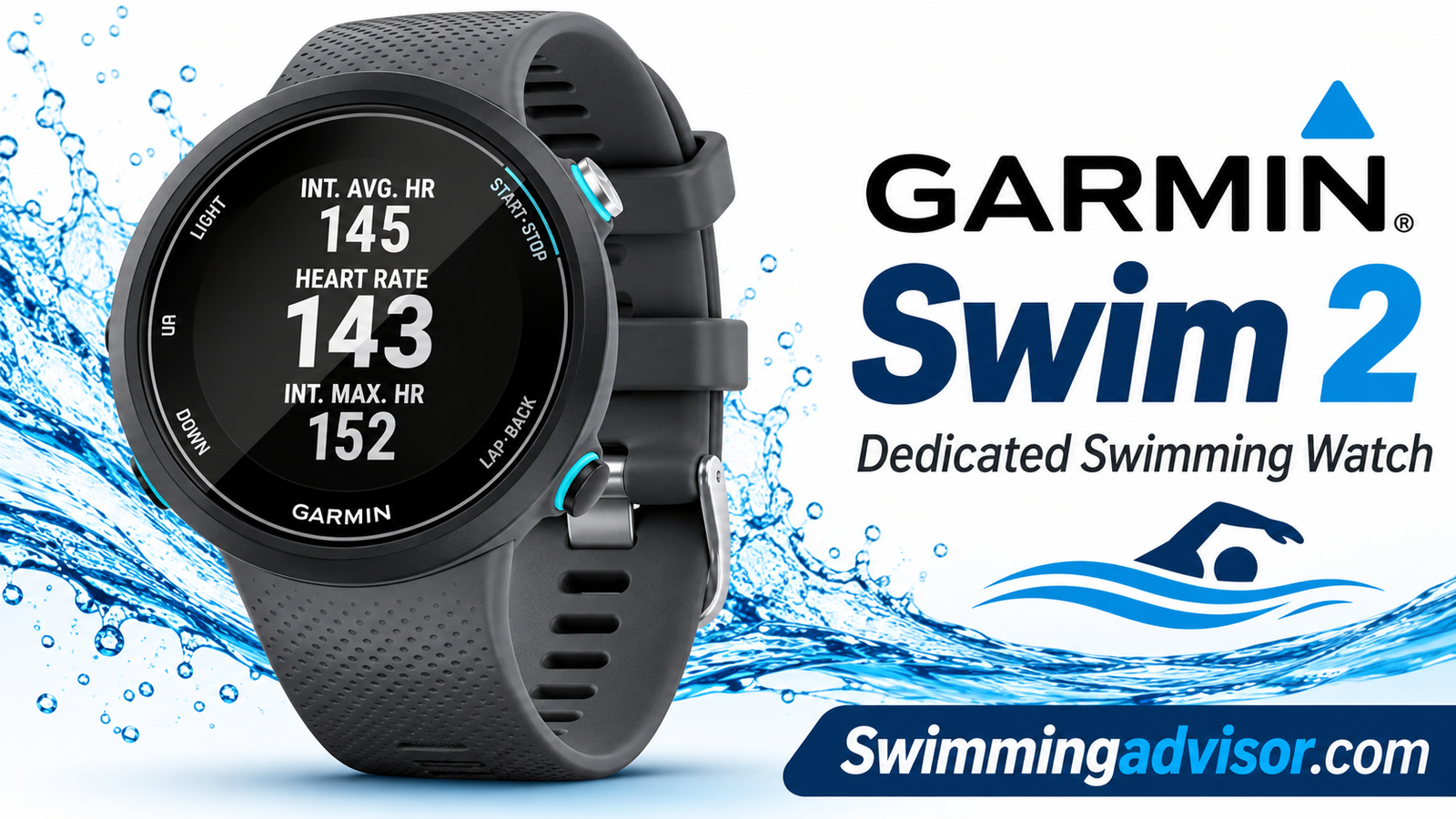
We spent weeks swimming with Garmin’s purpose-built swim watch — in chlorinated lanes, in open water, and on dry land — to find out whether a watch designed for swimmers alone still earns a place on your wrist in a world of do-everything wearables.
Why Anyone Would Want a Watch That Only Swims
Most wearable technology is designed around the assumption that you do a bit of everything: a run on Monday, a gym session on Wednesday, a swim on Friday. That approach produces wonderfully capable all-rounders, but it also produces a very specific frustration for people whose training lives in the water. Running-first watches treat swimming as an afterthought — a mode tucked into a sub-menu, with metrics that stop at “distance and time” and a heart rate sensor that gives up the moment you push off the wall.
The Garmin Swim 2 was built the other way around. It starts with the swimmer and asks what a wrist computer actually needs to do when your arms are rotating through four different stroke types, when your hands are entering the water at speed, and when you would really, genuinely like to know what your heart is doing during the main set rather than guessing afterwards.
That single-minded focus is the whole argument for this watch. It is not trying to be a running coach, a golf rangefinder or a contactless wallet. It is trying to be the best possible companion for the hour you spend in the water — and then to be light and unobtrusive enough that you forget it is there for the other twenty-three.
In this review we cover the physical design and comfort, the pool swimming experience and its metrics, open water tracking, the underwater optical heart rate system, the training tools like critical swim speed and drill logging, the everyday smartwatch features, battery endurance and water resistance, the wider Garmin Connect data ecosystem, and — most importantly — an honest look at who should buy this watch and who is better served by a multisport alternative. If you are comparing swim watches more broadly, our guide to the best swimming watches is a good companion read.
The Short Version
- A genuinely swim-first watch: pool and open water modes with rich stroke, interval and efficiency data.
- Wrist-based heart rate that continues to read while you swim — a rarity in this category.
- Light, slim and comfortable enough to wear all day and all night.
- Deliberately simple smartwatch features; this is a training tool, not a phone replacement.
- Best value for committed pool swimmers; triathletes may want more multisport depth.
Throughout this review we deliberately avoid quoting prices, star ratings or review counts, because those numbers move constantly and we would rather give you durable observations than a snapshot that goes stale the week after publication. Where we do reference a technical figure, it is drawn from the manufacturer’s published information rather than our own guesswork.
Design, Build Quality and All-Day Comfort
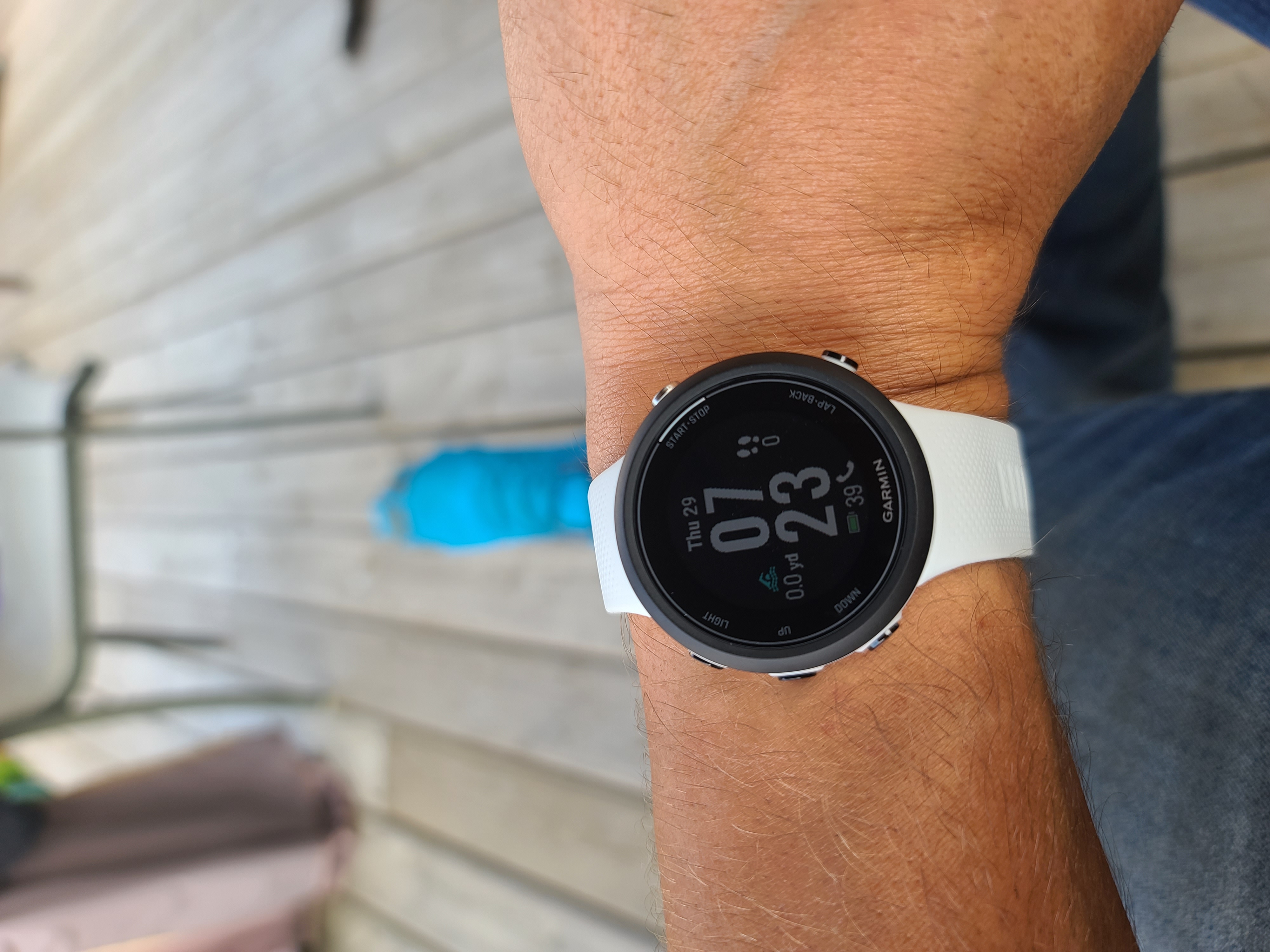
Pick the Swim 2 up and the first thing you notice is how little of it there is. Modern sports watches have been getting bigger and heavier for years, driven by larger displays and bigger batteries. This one goes the opposite direction: a compact round case, a slim profile that slides under a wetsuit sleeve or a jacket cuff, and a weight you genuinely stop noticing after the first day.
A case designed for the pool, not the boardroom
The case is a fibre-reinforced polymer — the same practical, scratch-tolerant, impact-friendly material used across Garmin’s sports range. It does not pretend to be jewellery. It is matte, it resists fingerprints, and it shrugs off the sort of accidental knocks that happen when you are shunting a kickboard around a busy lane. The bezel is understated, and the display sits slightly recessed so that the glass is not the first thing to meet a tiled wall.
The strap deserves special mention. Silicone swim straps are notoriously poor at staying put — they slip when wet, they stretch, and they leave a red ring on your wrist. The strap here is soft, flexible and long enough to sit comfortably above the wrist bone, which is exactly where a swim watch should sit for the optical sensor to maintain contact. It also drains and dries quickly, which matters far more than it sounds: a strap that stays damp all afternoon is a strap that smells by the end of a season.
The display: legible in the places that matter
The screen uses a sunlight-visible, low-power display technology rather than the bright, glossy AMOLED panels found on lifestyle smartwatches. That is a deliberate trade. Outdoors — around an open-air pool, on a boat before a lake swim — this type of screen gets more readable as the sun gets brighter, whereas AMOLED screens fight glare. Indoors under harsh pool lighting it is clear and calm, with high-contrast digits that you can read mid-stroke without squinting.
The trade-off is that there is no vivid colour and no flashy animations. If you want a watch that looks like a smartphone on your wrist, this is not it. If you want to glance at your split while your heart rate is at threshold and actually see the number, this is exactly right.
Buttons over touchscreens — the right call for swimmers
Every interaction is handled by physical buttons. This might look old-fashioned next to a touchscreen, but in the water it is not even a contest. Touchscreens misbehave when wet, register phantom taps from water droplets, and are unusable with gloves. Physical buttons with positive tactile feedback let you start, stop, lap and scroll through screens with wet hands, in the rain, or mid-set. Once you have used buttons in a pool, going back to a touchscreen feels like a downgrade.
What the design gets right — and what it gives up
The compact size is excellent for smaller wrists and for anyone who hates the feeling of a slab of plastic rotating around their arm during a stroke. But a smaller case means a smaller display and a smaller battery, so the trade-offs are real: you will scroll through more data screens than you would on a big triathlon watch, and the battery figures, while very good, do not match the multi-week endurance of Garmin’s largest adventure watches. We cover the real-world battery picture in Section 7.
- Lightweight case and strap you genuinely forget you are wearing
- Sunlight-visible display that improves rather than worsens outdoors
- Fully button-operated controls that work with wet hands and gloves
- Quick-release strap so you can swap bands without tools
- Low-profile shape that fits under wetsuits and long sleeves
Want the Slimmest Swim Watch in Garmin’s Line-Up?
See sizing, band colours and what is included.
Check Price on AmazonPool Swimming: The Metrics That Actually Matter
This is the reason the watch exists, so it is where we spent most of our testing. Pool swimming is deceptively hard for a wrist computer. Your hands accelerate, decelerate and stop dead on every wall. Your arms rotate through predictable patterns. You rest between intervals — sometimes deliberately, sometimes not. A good swim watch has to sort all of that noise into clean, useful numbers, and a bad one produces a workout summary you spend ten minutes correcting.
Automatic length and interval detection
The Swim 2 detects pool lengths automatically based on your push-offs from the wall, and it does a remarkably tidy job of separating one interval from the next. Rest periods are picked up and logged, so your main set appears as a proper structured series of swims and recoveries rather than one long undifferentiated blob. For anyone who has ever tried to reconstruct a session from a watch that simply recorded “42 minutes of swimming”, this is transformative.
Pool length is configurable, which matters enormously if you train in a 20-metre hotel pool on holiday and a 50-metre competition pool at home. Set it correctly and the distance numbers are trustworthy; set it wrong and nothing downstream makes sense. It sounds obvious, but it is the single most common cause of “my watch is inaccurate” complaints we hear from swimmers.
Stroke detection and stroke metrics
The watch recognises the four competitive strokes — freestyle, backstroke, breaststroke and butterfly — and logs stroke count and stroke rate for each length. That is genuinely useful data. Stroke count is one of the purest measures of efficiency in swimming: swim the same distance with fewer strokes and you are, by definition, moving more efficiently. Pair that with pace and you can watch your technique improve over a season in a way that simply “how far did I swim” never reveals.
Automatic stroke-type detection is not flawless. Mixed-stroke sets, drill lengths where your arm pattern is deliberately unusual, and kick-only work can confuse the algorithm. That is what the drill logging feature is for — more on that in Section 5.
SWOLF: the efficiency score worth watching
SWOLF — your time for a length plus your stroke count — is the swimmer’s equivalent of running cadence combined with pace. Lower is better. It is a slightly blunt instrument, since it changes with pool length and with the stroke you are swimming, but tracked consistently in the same pool over months, it is one of the most motivating numbers a fitness swimmer can follow. The Swim 2 calculates it automatically, which means you get it for free without having to think about it.
| Metric | Pool Swim | Open Water | Why Swimmers Care |
|---|---|---|---|
| Distance & pace | Automatic length counting with interval splits | Satellite-based track and distance | The foundation of every session summary |
| Stroke count & rate | Per length, per stroke type | Per interval, with stroke rate | Direct window into stroke efficiency |
| Stroke type | Auto-detected, correctable in the app | Mostly freestyle in practice | Keeps mixed-stroke training honest |
| SWOLF | Calculated per length and per set | Calculated per interval | Efficiency trend line over time |
| Rest & intervals | Auto rest detection and rest timer | Manual lap button only | Turns a log into a real workout record |
| Heart rate | Wrist-based, continuous underwater | Wrist-based, continuous | Ties effort to pace for the first time |
Accuracy in practice
How accurate is it? In a standard 25-metre pool with consistent push-offs and a clean turn, length counting was reliable to the point where we stopped checking. The two failure modes we encountered were predictable: long gliding push-offs in a short pool, where a strong underwater phase can occasionally be misread, and stopping mid-length to adjust a goggle or chat to a lane-mate. Neither is a design flaw so much as a reality of the sensor problem — and both are easy to correct afterwards in the app.
Open water is a different animal, and it gets its own section next. For pure pool work, this watch sits at the top of what we have tested in terms of clean, structured data with minimal babysitting. If you are building a swim-focused setup around it, pairing the watch with sensible training tools helps enormously — see our round-ups of the best swimming kickboards, the best swim paddles and the best swim snorkels if you want to structure drills the watch can log properly.
Track Every Length, Stroke and Split
The pool metrics are the strongest reason to own this watch.
Check Price on AmazonOpen Water Swimming: GPS, Track Quality and Sighting
Plenty of watches handle pool swimming and quietly fall apart the moment you leave the black line behind. Open water removes every convenient reference point. There are no walls to push off, no lane ropes, no predictable turns. All the watch has is satellite positioning — which struggles when your wrist spends half of every stroke cycle submerged — and an accelerometer trying to make sense of a stroke pattern that varies with waves, currents and fatigue.
How the tracking works
The Swim 2 records an open water swim as a GPS track with distance, pace, stroke rate and heart rate overlaid. In calm water on a straightforward out-and-back course, the track followed our actual route closely and the distance came out where we expected it to. That is the good news.
The honest news is that all wrist-based open water swimming has a characteristic quirk: the watch can only take satellite fixes while your arm is out of the water, so the track is reconstructed from a series of intermittent points. Straight lines in calm conditions reconstruct beautifully. Sighting-heavy courses, choppy water, and swims where you spend long stretches rolling to breathe on one side produce more wandering. If you swim the same lake route regularly, the trend data is perfectly usable; if you need survey-grade accuracy for a specific crossing, treat any wrist GPS as an estimate rather than a measurement.
Practical tips for better open water tracks
- Give it a moment before you push off. Satellite acquisition before entering the water produces a much cleaner start than launching straight in.
- Wear the watch snug. A watch that slides around your forearm during the stroke gives the sensor a worse view of the sky and a worse read on your pulse.
- Swim a known loop when you can. Repeating one route makes it far easier to judge whether a given day’s distance was real or inflated.
- Use the lap button at landmarks. Manual laps at buoys or turn points give you hard segments to compare week over week.
Safety and peace of mind
Open water carries real risk, and we would be doing you a disservice to review a swim watch without mentioning it. Telling someone on shore where you are going and when you expect to be back is not optional — it is the baseline. The Swim 2 includes connected safety and tracking tools that work when your phone is nearby, which adds a useful extra layer for shoreline swims. But a watch is not a buoyancy aid, not a tow float and not a substitute for a swim buddy.
A word on open water safety. Wear a brightly coloured tow float, swim with a partner whenever possible, check conditions before you get in, and never swim somewhere you cannot exit safely if the weather turns. A GPS track is useful after the fact; a float and a buddy keep you safe in the moment.
For swimmers who spend most of their time in lakes, rivers and the sea rather than lanes, we have a dedicated guide to the best open water swimming watches that compares the specialist options in more depth. The short version: the Swim 2 handles open water competently and its swim-specific data is excellent, but if open water is your only discipline and you want the most robust satellite performance and safety features available, there are watches built explicitly for that mission.
From the Lane Line to the Lake
One watch that handles both environments without fuss.
Check Price on AmazonUnderwater Heart Rate: What It Does Well and Where It Fights You
This is the headline feature and the one most likely to influence your purchase, so it deserves a careful, unsentimental look. Optical heart rate sensors work by shining light into the skin and measuring how much light is reflected back as blood pulses through the capillaries. On dry land that is a solved problem. Underwater, it is genuinely hard: water changes how light travels, the sensor must maintain steady contact while your wrist flexes and rotates, and cold water constricts surface blood flow exactly when you want a reading.
Why this watch can do it at all
Most optical sensors simply give up during swimming because the signal is unreliable and a bad reading is worse than no reading. Garmin’s approach here is to keep sampling continuously and to combine the optical signal with motion data from the accelerometer, so the algorithm can smooth out the moments when contact is poor. In practice, that means you get a continuous heart rate trace through the whole session rather than a gap-filled estimate built from your warm-up and cool-down.
What we observed in real sessions
During steady aerobic freestyle sets — the kind of long, rhythmic work that makes up the bulk of fitness and endurance swimming — the trace was smooth and believable. It tracked effort the way you would expect: easy warm-up, a clear rise through the main set, a drop during recovery intervals, a spike on sprint work.
During high-intensity interval work, the watch showed a small lag behind what a chest strap would report. That is inherent to optical measurement: blood flow changes at the wrist slightly after the change in cardiac output, so instantaneous readings during rapid transitions smooth out the peaks and valleys. If you are chasing precise heart rate zones during short, sharp sets, expect the wrist data to be directionally right but slightly conservative at the extremes.
We also noticed that fit makes an outsized difference. A snug, consistent position above the wrist bone gave us the cleanest data; a looser strap during backstroke or when pushing off produced more noise. This is not a defect of the watch — it is the physics of the measurement — but it is worth knowing before you decide the sensor “doesn’t work”.
Should you add a chest strap?
For most swimmers, no. The convenience of wrist-based underwater heart rate — no strap to rinse, no contact patches to maintain, nothing to forget in your bag — is the entire point. If you are a data-driven athlete who trains precisely to heart rate zones and wants maximum fidelity during interval work, a compatible chest strap is a worthwhile add-on for the sessions where accuracy matters most. For everyone else, the wrist sensor is more than good enough to see whether you were actually working hard.
| Session Type | What the Wrist Sensor Does | Practical Takeaway |
|---|---|---|
| Long steady freestyle | Smooth, continuous and highly believable trace | Ideal use case — trust the data |
| Threshold & interval sets | Correct trend, slightly softened peaks | Great for zones; consider a strap for precision |
| Drills & kick sets | Generally fine, occasionally noisy on kick-only work | Focus on effort rather than exact numbers |
| Open water in cold conditions | Some dropouts early until circulation improves | Wear it snug; data settles after a few minutes |
The bigger picture is that heart rate in swimming has been the missing piece for years. Pace alone tells you what you did; heart rate tells you what it cost. Seeing both together changes how you structure a session — and it makes easy days genuinely easy, which is one of the fastest ways to improve. If you want to dig into that training side of things, our guide on how to increase swimming endurance and our piece on how to improve swimming technique pair very well with the data this watch produces.
Heart Rate in the Water, Without the Strap
Continuous underwater tracking on the wrist.
Check Price on AmazonTraining Tools: Workouts, Critical Swim Speed, Pacing Alerts and Drills
Recording what you did is table stakes. The feature that separates a swim watch from a swim trainer is whether it helps you decide what to do next — and then holds you to it. This is where the Swim 2 quietly outperforms expectations for a device at its size and price point.
Structured workouts you can build and follow
You can create custom swim workouts — warm-up, drills, main set, cool-down, with target distances, paces and rest intervals — and send them to the watch. Once you start, the watch walks you through the session step by step on the display: what to swim, how far, how long to rest, and whether you are on pace. Anyone who has spent a main set squinting at a laminated whiteboard on the pool deck will immediately understand the appeal. You look at your wrist, you swim, you rest, you swim again. No arithmetic, no forgotten fourth repeat.
Critical swim speed: your sustainable pace, measured
Critical swim speed is a concept borrowed from coaching: the pace you could hold indefinitely in theory — the boundary between aerobic and anaerobic work. It is derived from a hard effort over a set distance, and it is one of the most useful training anchors in swimming because it gives you a number to base every set around.
The Swim 2 estimates it for you automatically from your swimming history. That is a genuinely valuable feature because it removes the need for a formal testing protocol: swim hard, swim often, and the watch builds a picture of your current capability. As your fitness improves, the estimate updates, and your training zones move with it. If you are curious about the physiology behind this kind of training, our explainer on whether swimming is a good workout covers why structured effort matters so much in the water.
Pacing alerts and distance alerts
Two small features that punch well above their weight:
- Pace alerts tell you when you are drifting faster or slower than your target, mid-length. This is the difference between hitting your planned pace and unknowingly swimming the first repeat too hard and the last one falling apart.
- Distance alerts buzz at set distances — useful for long unbroken swims where you lose track of lengths and for open water where there are no walls to count.
Drill logging: the feature that fixes auto-detection
Drill work is essential to improvement — single-arm freestyle, catch-up, sculling, kick sets — but it destroys automatic stroke detection because you are deliberately moving your arms abnormally. The drill mode lets you log those lengths manually, entering distance as you go, so the workout total stays accurate and your efficiency metrics are not polluted by lengths where you were not swimming normally.
It takes a few sessions to get into the rhythm of switching in and out of drill mode, and yes, sometimes you will forget. But once it becomes habit, your data becomes far cleaner. If you are looking for drill inspiration to fill those logged lengths, our guide to what swim paddles do and the benefits of hand paddles for swimming will give you plenty to work with, and how to use a kickboard for swimming rounds out the kick side.
Interval and rest handling
Rest timer functionality is quietly excellent. Start a rest and the watch counts it down; when you push off again it recognises the start of the next swim and logs it as a separate interval. Over a long main set this produces a genuinely professional-looking workout file at the end, complete with swim and rest splits, average pace per repeat and heart rate through the whole thing.
Turn Every Session Into a Structured Workout
Build it on your phone, swim it on your wrist.
Check Price on AmazonBeyond the Pool: Everyday Smartwatch Features
A swim watch you only wear in the pool is a swim watch you will eventually stop wearing. The most useful thing about a training device is the habit it builds, and habits are built on the twenty-three hours between sessions just as much as on the hour in the water. So what is the Swim 2 like as an ordinary, everyday watch?
Surprisingly competent at the basics
It tells the time clearly. It shows phone notifications, calendar alerts and weather. It tracks steps, general activity and sleep. It handles alarms and timers. All of this works predictably, with the same low-power display that makes it legible in bright light. Battery anxiety essentially disappears in everyday use — we cover the numbers in Section 7, but the headline is that you can wear it all week without hunting for a cable.
What it deliberately leaves out
This is a focused device, and focus means subtraction. You will not find the sprawling app ecosystem, the voice assistant, the on-wrist keyboard or the huge colour touchscreen of a lifestyle smartwatch. It keeps its smart features deliberately simple rather than loading up on extras like on-wrist payments or on-board music storage — the sort of things that live on Garmin’s higher-end multisport watches.
If those features matter to you, that is a legitimate reason to look elsewhere. Our Garmin Forerunner 955 swimming review, our Garmin Fenix 8 review and our Apple Watch Ultra 2 review all cover watches that do swimming and everything else, at the cost of size, weight and price.
The activity tracking question
General activity tracking here is competent but not the main event. Step counts are reasonable, sleep tracking is present and useful for seeing whether your recovery is keeping up with your training load, and the move reminders are the usual nudge to get up from your desk. None of it is best-in-class; all of it is good enough that you never have to take the watch off and swap to something else.
Who this everyday simplicity suits
People who want one device that does the swimming brilliantly and the rest adequately. People who find big smartwatches distracting. People who want to wear something to bed for sleep and recovery data without a slab on their arm. And people who simply want to stop thinking about their watch.
A note on expectations. If you are coming from a full smartwatch, the first few days may feel sparse. Give it a week. The absence of noise is the feature — and the swim data you get in exchange is worth far more than another notification screen.
For swimmers trying to work out whether a swim-focused watch or a general smartwatch is the better fit, our comparison of the best swimming watches lays out the trade-offs clearly, and our look at the Parsonver smartwatch covers the budget end of the everyday-smartwatch market.
One Watch, All Day, Every Day
Light enough to live in — capable enough to train with.
Check Price on AmazonBattery Life, Charging and Water Resistance
Three practical questions decide whether a swim watch becomes part of your life or a gadget in a drawer: how long does it last, how annoying is it to charge, and can it survive the environment it lives in?
Battery endurance across modes
The manufacturer quotes different endurance figures depending on how you use the watch, which is the honest way to report it — GPS tracking and continuous heart rate measurement are power-hungry in a way that telling the time simply is not. Here is how the published figures line up, alongside what they mean in practice.
| Usage Mode | What the Manufacturer Quotes | What That Means Day to Day |
|---|---|---|
| Everyday smartwatch use | Up to around a week between charges | Wear it all week, charge it once at the weekend |
| Pool swim sessions | Many hours of pool tracking | Weeks of normal swim training on one charge |
| Open water with GPS | Many hours of satellite tracking | Comfortably covers long events and long lake swims |
In our own use, the practical pattern was simple: charge it while you shower or while you sit at your desk after a session and you will essentially never run out. The small case means a smaller battery than the multi-week monsters in the adventure-watch category, but it also means a watch that charges quickly and never feels like a permanent fixture on your arm.
The charging connector
Garmin uses a clip-style charging cable that attaches to contacts on the back of the case. It is secure and it works, but it is proprietary — which means the cable you lose is the cable you must replace. Our standard advice for any watch with a proprietary charger: buy a spare and keep one in your swim bag. Nothing derails a training week faster than a dead watch and a cable sitting at home.
Water resistance: what the rating actually means
The watch carries a water resistance rating suitable for swimming and surface water sports — meaning pool swimming, open water swimming, showering and rain are all fine. What that rating does not cover is high-velocity water impact or deep submersion: think jet skis, diving from height into deep water, or scuba. Water resistance is also not permanent — seals age, and repeated exposure to chlorine, salt and heat accelerates that. Rinse the watch in fresh water after every swim and you dramatically extend the life of the seals.
- Multi-day battery in everyday use with regular swim sessions
- Long endurance in GPS mode for extended open water swims
- Fast top-ups that fit naturally around training
- Water resistance rated for swimming and surface sports
- Fresh-water rinse after every session keeps seals healthy
Looking after the rest of your gear matters too — see our advice on whether chlorine is bad for your hair for the other half of the post-swim routine.
Garmin Connect: The Data Platform Behind the Watch
Hardware gets the attention; software is what makes the purchase worthwhile over years. A swim watch produces data, and if that data lands in an app you never open, it might as well not exist. The Garmin Connect platform is the reason a swim-specific watch can still be a genuinely powerful training tool.
What you see after every swim
Open the app and each session appears as a structured record: total distance, moving time, average pace, stroke count and rate, SWOLF, interval splits, rest periods and a continuous heart rate graph. For pool swims you also get length-by-length breakdowns, stroke type per length and a visual of your pacing consistency across the set. For open water you get the GPS track overlaid on a map.
That depth is what makes trends visible. One swim is a data point; three months of swims is a story about whether your technique is improving, whether your aerobic base is growing and whether your hard days are actually hard enough.
Insights, badges and the habit engine
Connect includes the usual motivational machinery — weekly activity summaries, personal records, badges, challenges. It sounds trivial. It is not. The single biggest predictor of whether a swimmer improves is simply how consistently they show up, and anything that nudges you back to the pool for one more session this week is delivering real training value.
Training status and load
Because the watch captures heart rate in the water, the platform can build a picture of your overall training load rather than treating swims as invisible. That means the classic endurance-athlete mistake — hammering every session because easy sessions feel unproductive — becomes visible in your data. Seeing that your “easy” swim was actually moderate effort is the kind of quiet correction that prevents weeks of stagnation. We go deeper into this in our guides to whether swimming is good for weight loss and whether swimming builds muscle, both of which depend heavily on training consistency and intensity management.
Third-party compatibility
For swimmers who already live in a different training ecosystem, the data is portable. Activities can be exported and shared with other platforms and tools, which means you are not locked into one app forever. That openness matters more than most buyers realise on day one — and rather less than they expect once they have a year of history built up in one place.
Where the software could be better
Connect is powerful and occasionally dense. New users often report that the sheer volume of screens and metrics is overwhelming at first, and finding a specific setting can take hunting. Our advice is simple: ignore most of it. Focus on three things — distance, pace and stroke count per length — for the first month. Add heart rate when that feels natural. Everything else is there when you want it, and wanting it later is far better than drowning in it on day one.
Your Swimming, Fully Mapped
Every session logged, analysed and ready to build on.
Browse Swim Watches on AmazonReal-World Use Cases: Who This Watch Is Really For
Specifications describe a device; use cases describe a purchase. Here is how the Swim 2 stacks up against the swimmers we actually see at the pool — because the right watch depends almost entirely on which one of these you are.
The dedicated fitness swimmer
You swim two to four times a week, you follow a structured session, and you care about getting faster and more efficient. This is the sweet spot. The pool tracking is excellent, the workout builder keeps you honest, the pacing alerts prevent you from ruining your own main set, and the heart rate data finally tells you whether your easy sessions were actually easy. Nothing else in the category does more for this swimmer at this size.
The technique-focused improver
You are working on your catch, your body position, your breathing. Stroke count and SWOLF are exactly the metrics you need, because they reward efficiency rather than brute effort. Combine the watch with drills and tools — paddles for feel, a kickboard for body position, a snorkel for breathing work — and you have a complete feedback loop. Start with our guide on how to improve swimming technique to structure the work.
The triathlete in training
You swim seriously, but you also bike and run. Here the calculation changes. The Swim 2 will do the swim leg of your training beautifully, but it will not give you the full multisport picture — no cycling power, no running dynamics, no triathlon mode that flows from one discipline to the next. Many triathletes will be better served by a multisport watch with excellent swim tracking. Our Garmin Forerunner 955 swimming review and Coros Pace 3 swim review cover the two strongest alternatives.
The open water enthusiast
You swim lakes, rivers and the sea, and the pool is just where you train in winter. The Swim 2 handles open water respectably and its swim data is far richer than a generic sports watch’s. But if open water is your whole world, dedicated open water watches and a good tow float should both be on your list — see our best open water swimming watch guide.
The casual or returning swimmer
You want to swim more and you want something that makes you want to swim more. The watch is simple enough to use without a manual, light enough to be unthreatening, and the data is encouraging rather than judgemental. If budget is the main constraint and you want to dip a toe in before committing, our look at the cheap swimming watch category is worth reading first.
Who should probably skip it
Runners who occasionally swim. Golfers. Anyone who wants a large colour touchscreen and a phone on their wrist. Anyone who needs advanced running or cycling metrics as a priority. None of these are failures of the watch — they are simply outside its mission.
| If You Are… | Best-Fit Choice | Why |
|---|---|---|
| A regular lap swimmer | The dedicated swim watch | Richest pool metrics in the smallest package |
| Training for a triathlon | A multisport watch | One device across swim, bike and run |
| Mostly open water | An open-water specialist | Stronger satellite and safety focus |
| Buying for a first try | A budget swim watch | Prove the habit before investing |
| Wanting pool and everything else | A premium multisport watch | Swim tracking plus full smartwatch features |
Whichever route you take, the habit matters more than the hardware. Regular swimming delivers outsized health returns — see our explainers on whether swimming is good for your back, whether swimming is good for arthritis and whether swimming is good for seniors — and consistency is exactly what a good watch encourages.
Built for People Who Actually Swim
Purpose-made for the pool, not adapted from a running watch.
Check Price on AmazonHow It Compares: Swim Watch vs Multisport Watch vs Smart Goggles
No watch exists in isolation. Before you buy, it is worth understanding the three genuinely different philosophies available to swimmers right now — because the “best” option depends entirely on what you are optimising for.
Philosophy one: swim first, everything else second
That is the Garmin Swim 2. Small, light, swim-dedicated, with metrics that no general watch matches at this size. The compromise is limited multisport capability and simpler everyday smartwatch features.
Philosophy two: multisport first, swim as one of many modes
That is the territory of the Garmin Forerunner 955, the Coros Pace 3 and the Garmin Fenix 8. You get superb swim tracking alongside cycling, running, mapping and training analysis. The compromise is size, weight, price and an interface built for a thousand features rather than one job.
Philosophy three: heads-up data in the goggles
That is the approach taken by Form’s smart swim goggles, which project data onto the lens so you see your pace and heart rate without lifting your wrist at all. It is a genuinely different experience and some swimmers find it transformative. The compromise is that goggles wear out, fit is personal, and you do not get an all-day watch.
| Option | Primary Focus | Swim Tracking | Everyday Use | Best For |
|---|---|---|---|---|
| Garmin Swim 2 | Pool & open water swimming | Deep swim metrics plus underwater heart rate | Light, simple, all-day comfort | Committed swimmers |
| Garmin Forerunner 955 | Running & triathlon | Excellent swim modes within a full multisport suite | Full-featured training watch | Triathletes |
| Coros Pace 3 | Multisport on a light frame | Strong pool and open water support | Light, long battery life | Value-focused multisport |
| Smart Swim Goggles | Heads-up display in the water | Real-time metrics on the lens | Water-only device | Data-driven pool swimmers |
| Apple Watch Ultra 2 | Premium everyday smartwatch | Capable swim app with solid metrics | Best-in-class smartwatch features | iPhone users wanting one device |
The honest recommendation
If swimming is your primary sport — the one you organise your week around — buy the swim-first watch. Specialisation wins when the specialism is your main event. If swimming is one of two or three sports you train seriously, buy a multisport watch and accept that the swim data, while very good, is a mode rather than a mission. If you are fascinated by data and want it in the moment rather than afterwards, try the goggles.
For broader context across the whole market, our guide to the best swimming watches and the best Garmin swimming watch are the natural next reads.
Setup, Care and Maintenance for a Longer Watch Life
Swimming equipment lives in one of the harshest everyday environments a gadget can face: chemically treated water, humidity, salt, sunscreen, and constant wet-dry cycling. The good news is that a swim watch is tougher than it looks. The better news is that five minutes of routine care will keep it performing properly for years.
First-time setup: do these five things
- Set your pool length correctly. This single setting determines the accuracy of every distance and pace figure you will ever see.
- Set up your personal profile. Age, weight and resting heart rate feed the calorie and heart-rate-zone calculations.
- Pair your phone. Syncing is what turns raw numbers into useful history.
- Learn the buttons before you swim. Five minutes on dry land beats twenty minutes of squinting at a manual between sets.
- Plan your charging habit. Pick a routine — after your Sunday swim, or while you shower — and stick to it.
After every single swim: the rinse
Fresh water for thirty seconds. That is the whole ritual, and it is the single most valuable thing you can do. Chlorine and salt both leave residue that attacks seals, degrades strap material and builds up around the sensor on the back of the case. Rinse it, shake it off, dry it with the rest of your kit. If you swim in open water, rinse it even more carefully — sand and grit are worse for seals than chlorine.
This is also worth applying to everything else in your bag. See our guides on how to clean pool floats and how to store pool floats if you look after family pool gear as well — the same wet-dry-cleanup logic applies.
Weekly: clean the sensor and the strap
Turn the watch over and wipe the optical sensor window with a soft, slightly damp cloth. Sunscreen, skin cells and sweat residue all dull the sensor and can affect heart rate accuracy. Take the strap off and clean underneath — this is where smells start. Let everything air-dry fully before reassembling.
Storage and travel
- Store somewhere dry and out of direct sunlight; heat degrades batteries and seals.
- Do not leave it sealed in a wet bag or a plastic pouch — that is a mould incubator.
- Travel with the charging cable in a fixed pocket of your swim bag so it is never the thing you forget.
- For open water trips, keep it with your float, goggles and towel in one kit so you never arrive without essentials.
Longevity: what actually wears out
Straps wear first. They flex thousands of times a week and they take the brunt of the chlorine. Because the strap uses a standard quick-release fitting, replacing it is cheap and takes seconds — far cheaper than replacing the watch. The sensor window can scratch if you are careless, so avoid tossing the watch loose into a bag with keys and coins. Seals and battery chemistry are the slow-burn items, and both benefit from the rinse-and-dry habit described above.
Keeping the rest of your swimming sustainable
Looking after yourself is part of the same picture. Hair care matters for regular swimmers — again, our piece on chlorine and your hair covers the practical protection. And if you swim daily, it is worth understanding the balance between consistency and overload; our article on whether swimming every day is bad for you explains how to make daily swimming work in your favour.
Accessories, Straps and Swim Gear
Keep your watch and your kit in good shape.
Shop Swim Accessories on AmazonThe Full Review Block: Features, Pros, Cons and Our Verdict
Garmin Swim 2
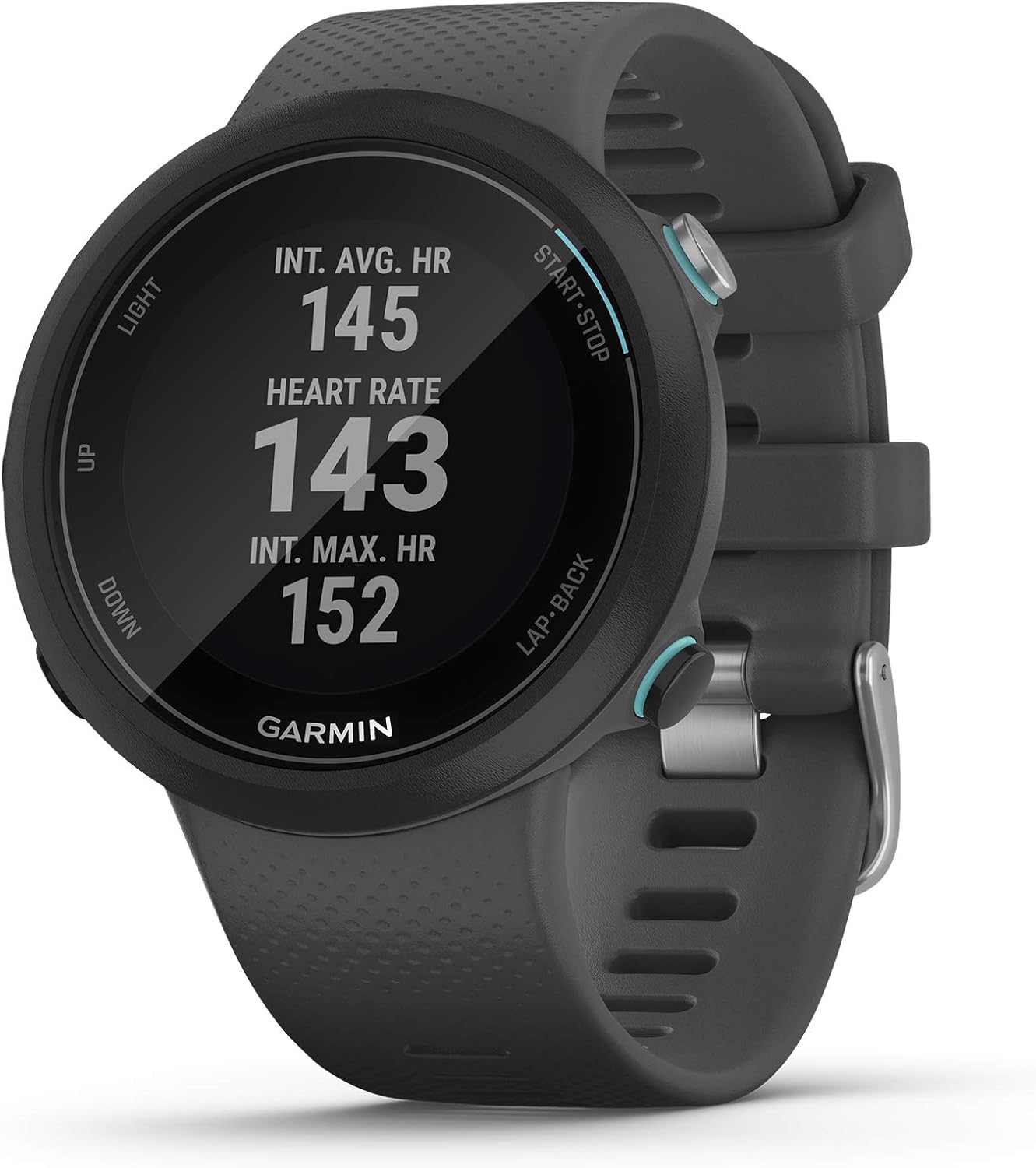
A dedicated swim watch with pool and open water modes, underwater wrist-based heart rate, structured workout support and the kind of slim, comfortable build you can wear around the clock. It is a specialist tool that does its specialism exceptionally well — and if swimming is your main sport, that is exactly what you want.
Key Features
- Pool swim mode with automatic length, interval and rest detection
- Open water swim mode with satellite-based distance and track
- Wrist-based heart rate that keeps reading underwater
- Stroke count, stroke rate, stroke type recognition and SWOLF scoring
- Drill logging for technique work and kick sets
- Customisable swim workouts with on-screen guidance
- Critical swim speed estimation for setting training paces
- Pace and distance alerts to keep you on target mid-set
- Slim, lightweight case with a soft, quick-release silicone strap
- Sunlight-visible display with full button control
- Everyday activity and sleep tracking with smart notifications
- Connected safety and tracking features when paired with your phone
What We Like
- Underwater heart rate actually works and adds real training value
- Best-in-class pool metrics in a compact, comfortable case
- Structured workouts and pacing alerts keep sessions honest
- Drill logging keeps data clean during technique work
- Excellent battery life in everyday use
- Simple, button-driven interface that works with wet hands
- Swim-specific features that general watches simply do not have
What Could Be Better
- Limited multisport support for serious triathletes
- Deliberately simple smartwatch feature set
- Optical heart rate lags slightly during very sharp intervals
- Small display means more scrolling through data screens
- Open water GPS has the usual wrist-tracking limitations
- Proprietary charging cable is easy to misplace
Who It Is Best For
Committed pool swimmers who train regularly and want honest data on pace, technique and effort. Fitness swimmers building consistency. Technique-focused improvers who want stroke and efficiency feedback. Open water swimmers who also train in the pool. And anyone who wants a genuinely light watch they can wear all day without noticing it.
Who Should Look Elsewhere
Triathletes who need one watch across swim, bike and run. Swimmers who want a large colour touchscreen and full smartwatch features. Complete beginners who are not yet sure the habit will stick — try a budget option first. And anyone whose primary sport is not swimming.
One week with it: what actually changed
The interesting thing about a good swim watch is not what it measures on day one — it is what changes by day thirty. In our first week, three things shifted noticeably. We stopped guessing at rest times and started hitting our target paces consistently, because the watch told us when we were drifting. Our easy sessions actually became easy, because heart rate made effort visible rather than assumed. And we started swimming drills properly instead of half-heartedly, because logging them felt like part of the session rather than admin afterwards.
None of that is magic. It is the predictable result of having good feedback at the moment you need it. And it is the strongest possible argument for a swim-first device rather than a do-everything one.
The value question
We are not going to quote a price, because prices move and we would rather this review stay useful. What we will say is how to think about the value. If you swim regularly — genuinely regularly, multiple times a week — then the cost per session across a year or two of ownership becomes very small, and the training benefit is real. If you swim twice a month, the same money buys a lot of swim coaching, pool entries and equipment that would probably improve your swimming more.
That is the honest frame: this is an investment in a habit you already have, not a purchase that creates one.
Ready to Upgrade Your Lane Sessions?
The swim watch built for swimmers, not adapted for them.
Check Price on AmazonFrequently Asked Questions
Is the Garmin Swim 2 only for swimming?
It is designed around swimming, but it is still a perfectly good everyday watch. It tells the time, shows notifications, tracks general activity and sleep, and handles alarms and timers. What it does not do is deliver the deep running, cycling and multisport analysis of Garmin’s higher-end watches. If swimming is your main sport and you want something light to wear all day, that trade works beautifully. If you train across several sports seriously, a multisport watch will serve you better.
Does the heart rate monitor work underwater?
Yes — that is one of its defining features. The optical sensor on the back of the case keeps sampling while you swim and combines that signal with motion data to produce a continuous heart rate trace. During steady swimming it is smooth and believable. During very sharp interval work it tends to soften the peaks slightly compared with a chest strap, which is normal for wrist-based measurement. Fit matters a lot: wear it snugly above the wrist bone for the cleanest readings.
How accurate is the distance tracking in a pool?
Very accurate when your pool length setting matches the actual pool and your turns are reasonably consistent. Length counting was reliable in testing during normal swim sets. The usual causes of errors are an incorrect pool length setting, very long underwater push-offs in short pools, and stopping mid-length. Most of these are easy to correct afterwards in the app.
Can I use it for open water swimming?
Yes, it has a dedicated open water mode that records satellite-based distance, pace and heart rate along with a GPS track of your route. In calm conditions on a straightforward course the track is clean. As with all wrist-based open water tracking, choppy water, heavy sighting and long periods with your arm submerged will make the track wander more. For repeat routes the trend data is very useful.
Does it track different stroke types?
Yes, it recognises freestyle, backstroke, breaststroke and butterfly and logs stroke count and stroke rate for each length. Automatic detection is generally good during normal swimming but can be confused by drills and mixed-stroke work — that is exactly why drill logging exists. You can also review and correct stroke types in the app after your swim.
What is SWOLF and should I pay attention to it?
SWOLF combines your time for a length with your stroke count — lower is better. It is a rough efficiency score rather than a precise science, and it changes with pool length and stroke. But tracked consistently in the same pool over weeks and months, it is one of the best ways to see whether your technique is actually improving rather than just your fitness.
How long does the battery last?
It comfortably lasts multiple days of normal wear with regular swim sessions, and considerably longer when you are not using GPS tracking heavily. In practice, charging it once during a weekly routine — after a swim, or while you shower — keeps it running without you ever thinking about it. GPS-enabled open water sessions use more power, so plan ahead if you are doing a very long swim.
Can I build my own workouts on it?
Yes. You can create structured sessions with warm-up, drills, main sets and cool-down, specifying distances, targets and rest intervals, then send them to the watch. It walks you through the workout on the display as you swim. It also estimates your critical swim speed, which gives you a sensible pace to base those targets on.
Is it suitable for smaller wrists?
Very much so. The compact case and slim profile are among its strengths, and it sits comfortably on smaller wrists where a large multisport watch would rotate and catch. The strap is soft and adjustable, and the quick-release design makes swapping to a different size straightforward.
Do I need a chest strap for accurate heart rate?
For most swimmers, no. The wrist sensor is convenient and accurate enough for training purposes, and the fact that there is no strap to rinse and maintain is a genuine daily advantage. If you train precisely to heart rate zones and want maximum fidelity during short, hard interval work, adding a compatible chest strap for those sessions is worth considering.
How do I keep the watch in good condition?
Rinse it in fresh water after every swim and dry it before storing. Wipe the sensor window on the back regularly, and clean the strap separately — that is where residue and odour build up. Avoid leaving it sealed in a wet bag, keep it out of prolonged direct sunlight, and replace the strap when it starts to degrade rather than waiting for it to fail.
Is it a good choice for a beginner swimmer?
It can be, if you are confident the habit will stick and you want data that helps you improve. The interface is simple and the immediate feedback on pace and stroke count is genuinely encouraging. If you are still testing whether swimming is for you, starting with a budget swim watch makes sense — you can always upgrade later once you know exactly what you want from a device.
Still Comparing Options?
Browse a wider range of swim watches and gear.
Browse Swim Watches on AmazonThe Verdict: A Specialist That Earns Its Place
There is a particular kind of product that only makes sense once you use it. A watch built exclusively for swimming sounds like a limitation until you spend a month with one and realise that every generic sports watch you have used before was quietly compromising on the one thing you actually do.
The Garmin Swim 2 is that product. It counts your lengths cleanly, understands your strokes, scores your efficiency, guides you through structured workouts, keeps you honest on pace, and — the feature that makes it special — shows you what your heart is doing while you do it. It is light enough to live on your wrist, tough enough for daily pool chemistry, and simple enough that you never think about the device itself.
It is not the right watch for everyone, and we would be doing you a disservice to pretend otherwise. Triathletes need multisport depth. Smartwatch enthusiasts want colour screens and extra features. Casual swimmers may not need the data at all. But if you swim because you love swimming, and you want to swim faster and more efficiently with less guesswork, this is one of the most sensible investments you can make in your training.
Our recommendation: if swimming is your main sport, buy the swim-first watch. Specialisation wins when the specialism is your main event — and the training data you get back will keep paying for itself every time you push off the wall.