Best Open Water Swimming Watch: The Complete Buyer’s Guide
Pool walls forgive a lot. Open water forgives nothing — no black line, no wall to push off, no way to know your pace except the watch on your wrist. Here’s how to pick one that won’t let you down halfway across the lake.

The Watch You Wear in a Pool Is Not the Watch You Want in a Lake
Somewhere between the boat ramp and the first orange buoy, most swimmers discover the limits of their gear the hard way. A watch that tracked laps beautifully at the local pool suddenly can’t tell you how far you’ve actually swum, the heart rate reading is bouncing around like static, and by the time you’re back on shore the battery is flashing red. Open water is an unforgiving test environment: no black line to follow, no wall to trigger an automatic lap, no Wi-Fi to sync mid-swim, and often no cell signal if something goes wrong.
That’s the gap this guide is built to close. Rather than repeating spec sheets, we’ve pulled apart what actually matters for swimming in lakes, rivers, bays, and open ocean — GPS accuracy without walls to correct it, water ratings that hold up to real submersion, battery life long enough for a marathon swim plus the paddle back, and safety features that matter when you’re a long way from the shore. If you want the broader picture across every swimming watch category, our complete guide to the best swimming watches is a useful companion to this one; here, we’re narrowing in specifically on what open water swimmers need.

We tested claims against real-world reports from open water swimmers, triathletes, and long-distance racers, then weighed each watch on accuracy, durability, comfort under a wetsuit sleeve, and whether the safety features are genuinely useful or just marketing copy. Seven watches made the final list, spanning premium multisport computers down to a genuinely affordable option that still gets the fundamentals right.
Why Open Water Needs a Different Watch
Pool swimming and open water swimming look similar from the outside — same stroke, same breathing pattern, same general fitness demand — but the way a watch has to work behind the scenes is completely different. In a 25 or 50 meter pool, the watch’s job is comparatively simple: count wall touches, measure the time between them, and multiply by the known pool length. Even a mediocre GPS chip doesn’t matter much indoors because GPS barely functions through a roof anyway; the watch is really just a very good stopwatch with an accelerometer.
Open water strips away every one of those crutches. There’s no wall to correct for drift, no fixed distance to anchor the math, and no guarantee you swam in a straight line. Everything the watch reports — distance, pace, route, and often safety information — depends on how well it can hold a GPS signal at wrist height while your arm is underwater half the time. That’s a genuinely hard engineering problem, and it’s the single biggest reason cheap fitness trackers and even some higher-end everyday smartwatches fall apart in open water tracking even though they perform fine in the pool.
The Four Failure Points Unique to Open Water
Talk to enough open water swimmers and the same four complaints keep surfacing, almost regardless of brand or price point. First, GPS drift: a wrist that dips below the surface with every stroke loses signal lock repeatedly, and a weak chip struggles to reacquire cleanly, which shows up as a jagged, inflated distance track. Second, optical heart rate accuracy: cold water constricts blood vessels near the skin, and a wetsuit sleeve can shift the sensor’s contact point, both of which degrade the wrist-based heart rate reading precisely when you might want it most. Third, battery endurance: an open water session often includes a walk or paddle to the start point, the swim itself, and a walk back, all with GPS active, which can drain a weaker battery faster than swimmers expect. Fourth, orientation and safety: without landmarks, sighting toward a buoy or shoreline is a skill in itself, and a watch with a working compass, breadcrumb trail, or live tracking feature becomes genuinely protective rather than a nice-to-have.
None of this means open water swimming requires exotic equipment. It means the watch needs to be chosen with these four points specifically in mind, rather than assuming that “GPS watch” is a single undifferentiated category. The next section breaks down exactly which specifications correspond to solving each of these problems.
What to Look For Before You Buy
Before comparing individual watches, it helps to have a short checklist of the specifications that actually move the needle for open water swimming. Marketing pages love to bury the important numbers under a wall of unrelated features, so here’s what to isolate.
Multi-Band or Dual-Frequency GPS
This is the single biggest upgrade over older single-frequency GPS chips. Multi-band GPS pulls signal from more satellite frequencies simultaneously, which makes it far more resistant to the kind of signal bounce and momentary loss caused by a wrist repeatedly dipping underwater. If you take away only one specification from this entire guide, make it this one.
Water Rating That Matches Real Swimming
Look specifically for a 5 ATM (50 meter) water resistance rating or better, and ideally a rating that explicitly mentions swim tracking rather than just “splash resistant.” Some fashion-oriented smartwatches quietly avoid swim certification altogether, which is a dealbreaker regardless of how good the rest of the feature set looks.
Battery Life in GPS-Active Mode
Manufacturers often advertise a headline battery number based on smartwatch mode with GPS off, which is close to meaningless for swimmers. Instead check the specific “GPS on” or “all-satellite” battery estimate, since that’s the number that reflects what actually happens during a tracked swim.
Swim-Specific Metrics
Stroke count, stroke type detection, SWOLF score, and open water pace per 100 meters are the metrics that tell you whether your technique is actually improving over time, as opposed to just logging that a swim happened. Not every watch calculates all of these the same way, so it’s worth checking whether open water mode gets the same metric depth as pool mode, since some watches quietly simplify open water tracking.
Safety and Navigation Features
Live tracking that lets a partner follow your position from shore, an incident detection or SOS beacon, and a simple breadcrumb trail back to your entry point are the features that matter when conditions change unexpectedly. These are especially worth prioritizing for anyone swimming solo or in open water without a support kayak nearby.
Comfort Under a Wetsuit Sleeve
A watch that’s excellent on paper but digs into the wrist under a tight wetsuit cuff becomes a genuine annoyance over a long swim. Case size, band material, and how flush the watch sits against the skin all affect this more than most buyers expect going in.
| Buying Factor | Why It Matters in Open Water | Look For |
|---|---|---|
| GPS Chip | Prevents inflated or jagged distance tracking | Multi-band / dual-frequency |
| Water Rating | Confirms the watch is actually swim-safe | 5 ATM or higher, swim-certified |
| GPS-On Battery | Covers the swim plus travel time | 15+ hours in full GPS mode |
| Swim Metrics | Tracks technique, not just duration | SWOLF, stroke type, open water pace |
| Safety Tools | Protects solo or remote swimmers | LiveTrack, SOS, breadcrumb navigation |
| Fit | Comfort under a wetsuit for long sessions | Low-profile case, soft strap |
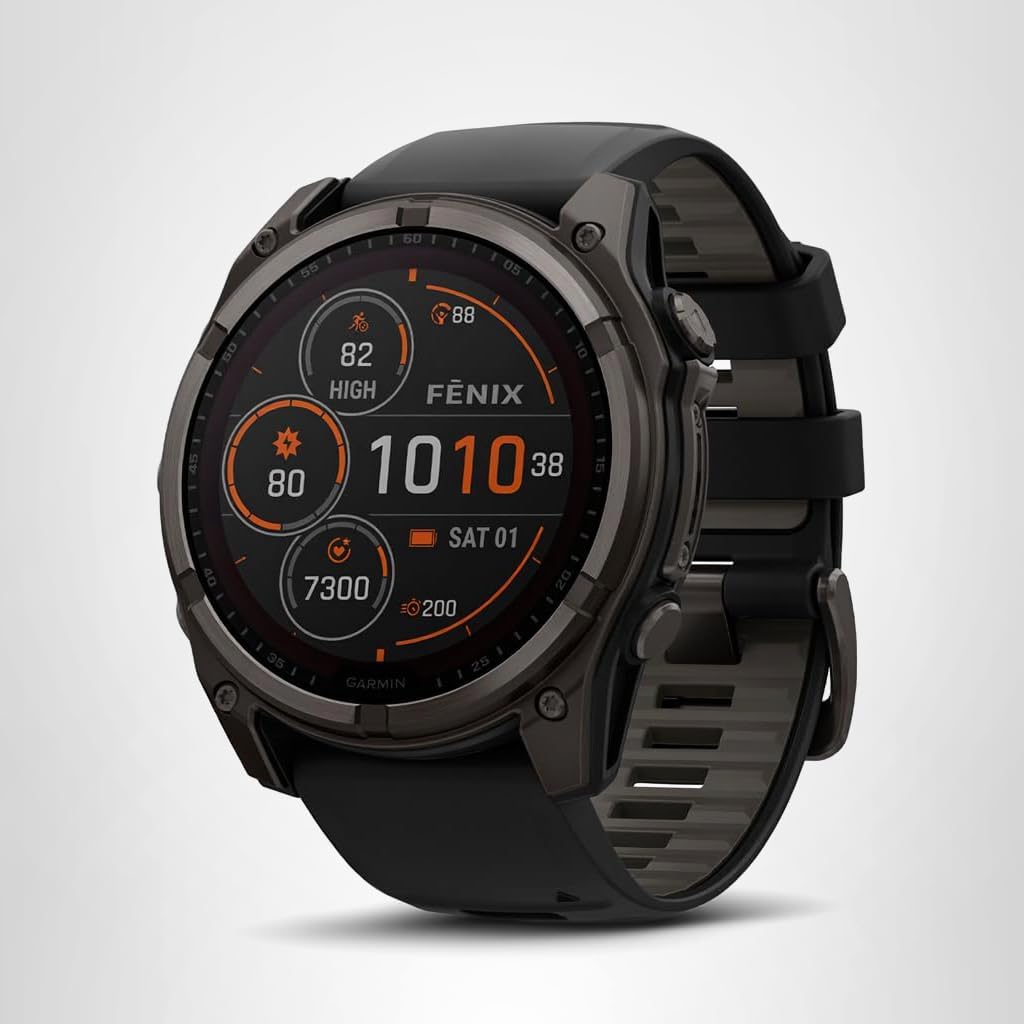
Garmin fēnix — Best Overall Open Water Swimming Watch

The Garmin fēnix line sits at the top of the multisport watch category for a reason that becomes obvious the first time you take one into open water: nothing here feels like it’s compromising to fit swimming in alongside running, cycling, hiking, and everything else. Multi-band GPS holds a signal cleanly even through choppy conditions, the titanium and sapphire build shrugs off saltwater and sand without complaint, and the sheer depth of swim-specific data — stroke type detection, SWOLF, open water pace, drill recognition — matches what dedicated swim watches offer, which isn’t a given for a do-everything multisport device.
What separates this from a merely competent swim watch is how it handles the transition moments — walking down to the water, the swim itself, and the recovery period afterward — as a single tracked activity if you want it to be, which is a small but meaningful convenience for triathletes and open water racers doing brick sessions. The flashlight feature, unusual for a swim-focused watch, has genuine practical value for early morning or dusk swims near the shoreline where visibility matters. If you’re specifically researching Garmin’s swim-focused lineup in more depth, our dedicated best Garmin swimming watch guide and our full Garmin fēnix review go further into the software side of things.
Pros
- Multi-band GPS holds signal well through chop and turns
- Rugged titanium and sapphire construction handles saltwater
- Deep swim metrics rival dedicated swim-only watches
- Long GPS-on battery life covers marathon swims comfortably
- Doubles as a serious multisport and outdoor watch
Cons
- Premium price relative to swim-only competitors
- Larger case may feel bulky on smaller wrists
- Deep feature set has a learning curve early on
Apple Watch Ultra — Best for Apple Ecosystem Swimmers

For swimmers already living inside the Apple ecosystem, the Apple Watch Ultra is the rare crossover device that genuinely holds its own in open water without abandoning everything that makes Apple Watch convenient day to day. The depth gauge and water lock feature are more than novelty additions — they reflect real engineering aimed at swimmers and divers rather than a fitness watch that merely tolerates getting wet. GPS accuracy is strong, though it stops just short of the dedicated multi-band performance seen on the top multisport watches from Garmin and Suunto.
Where the Ultra genuinely pulls ahead of dedicated swim watches is software polish and third-party app support; if you already use Apple Fitness or a favorite open water tracking app on iPhone, the sync experience is close to seamless. Battery life in continuous GPS mode is respectable but not class-leading, so multi-day open water training camps may require a midday top-up that fēnix or Suunto owners can usually skip. We cover this watch in far more depth, including long-term durability notes, in our standalone Apple Watch Ultra review.
Pros
- Purpose-built depth gauge and water lock for swimming
- Excellent display brightness for sighting in bright sun
- Seamless integration for existing Apple ecosystem users
- Strong build quality with a titanium case option
Cons
- Shorter GPS-on battery life than dedicated multisport rivals
- Requires an iPhone to unlock full functionality
- Swim-specific metrics are slightly less detailed than Garmin’s
COROS PACE — Best Value Multisport Watch

COROS built its reputation with endurance athletes who wanted Garmin-level GPS accuracy without the Garmin-level price tag, and the PACE line continues that approach for open water swimmers. Dual-frequency GPS delivers track quality that’s genuinely competitive with far more expensive watches, and the lightweight polymer case is barely noticeable under a wetsuit sleeve during long sessions — a real advantage for anyone who finds heavier titanium cases fatiguing over a multi-hour swim.
The trade-off compared with the fēnix or Suunto is a smaller third-party app ecosystem and a slightly less polished companion app, though the core training and swim-tracking experience covers the fundamentals well. For swimmers who train seriously but don’t need every premium extra, COROS PACE tends to land as the best value-to-performance ratio in the multisport category, offering many of the accuracy benefits of flagship watches at a noticeably lower price point.
Pros
- Dual-frequency GPS rivals far pricier competitors
- Exceptionally lightweight and comfortable for long swims
- Strong battery life relative to price
- Clean, distraction-free training interface
Cons
- Smaller app and accessory ecosystem than Garmin or Apple
- Fewer built-in maps and navigation extras
- Companion app is functional but less refined
Garmin Forerunner — Best for Structured Swim Training

The Forerunner line has historically been Garmin’s running-first watch, but recent versions have closed the gap with the fēnix on swim tracking specifically, while staying noticeably lighter and less expensive. For swimmers building structured training plans — interval sets, pace targets, and periodized open water programs — the built-in training load and recovery metrics translate cleanly from running and cycling into swim sessions, which is genuinely useful for multisport athletes managing overall training stress.
The built-in flashlight is a small but genuinely appreciated addition for swimmers doing early dawn sessions before sunrise, useful for the walk to and from the water even if it’s rarely needed mid-swim. Swim-specific data depth is very good, though it trails the fēnix slightly on the most advanced multisport-specific extras, which makes the Forerunner the better pick for swimmers who prioritize structured training features over maximum ruggedness.
Pros
- Excellent structured workout and interval support
- Training load metrics carry over cleanly across sports
- Lighter and less bulky than the fēnix line
- Useful built-in flashlight for early or late sessions
Cons
- Slightly less rugged casing than fēnix or Instinct
- Fewer advanced multisport extras out of the box
- Battery life shorter than the flagship multisport tier
SUUNTO — Best for Long-Distance Navigation

Suunto’s long history building dive computers shows up clearly in how this watch handles depth, navigation, and route breadcrumbing for open water and marathon swimmers. The touchscreen remains genuinely usable underwater, which is not something every touchscreen watch can claim, and the offline maps and breadcrumb trail features are particularly valuable for swimmers navigating unfamiliar lakes, bays, or coastline routes without a fixed buoy course to follow.
Battery life stretches impressively in extended GPS modes, which matters for swimmers attempting marathon distances or multi-hour crossings where a typical smartwatch would tap out well before the finish. The trade-off is a steeper learning curve for the menu system compared with Garmin’s more familiar button-and-app layout, and the overall aesthetic leans more toward function than everyday smartwatch styling, which is a fair trade for swimmers who prioritize navigation and endurance over daily wear versatility.
Pros
- Touchscreen remains reliably usable underwater
- Strong offline navigation and breadcrumb trail features
- Excellent battery life in extended GPS modes
- Dive-grade build quality and water resistance
Cons
- Steeper learning curve than Garmin’s interface
- Less everyday-smartwatch styling
- Smaller third-party app catalog
Garmin Swim — Best Budget Open Water Watch
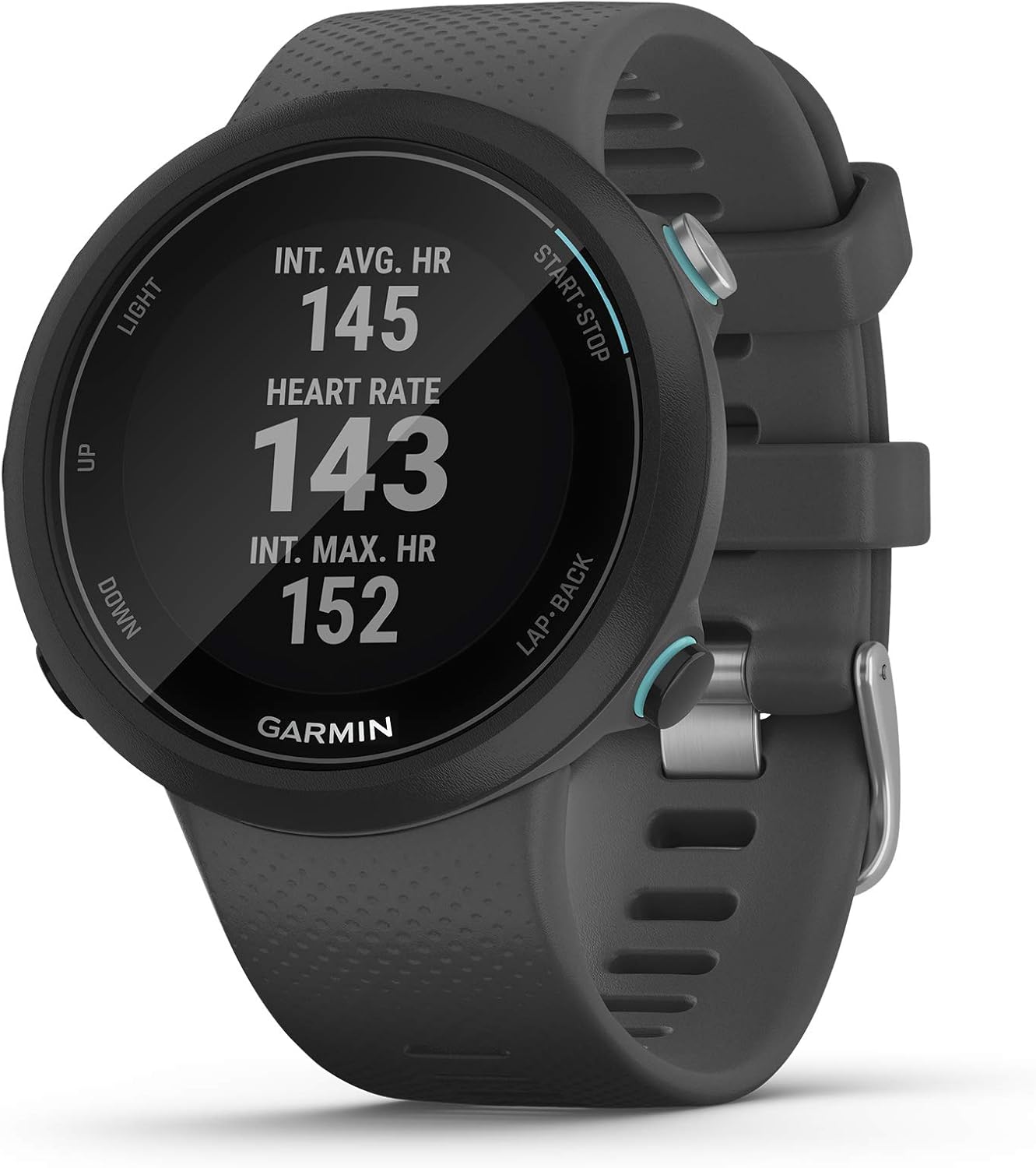
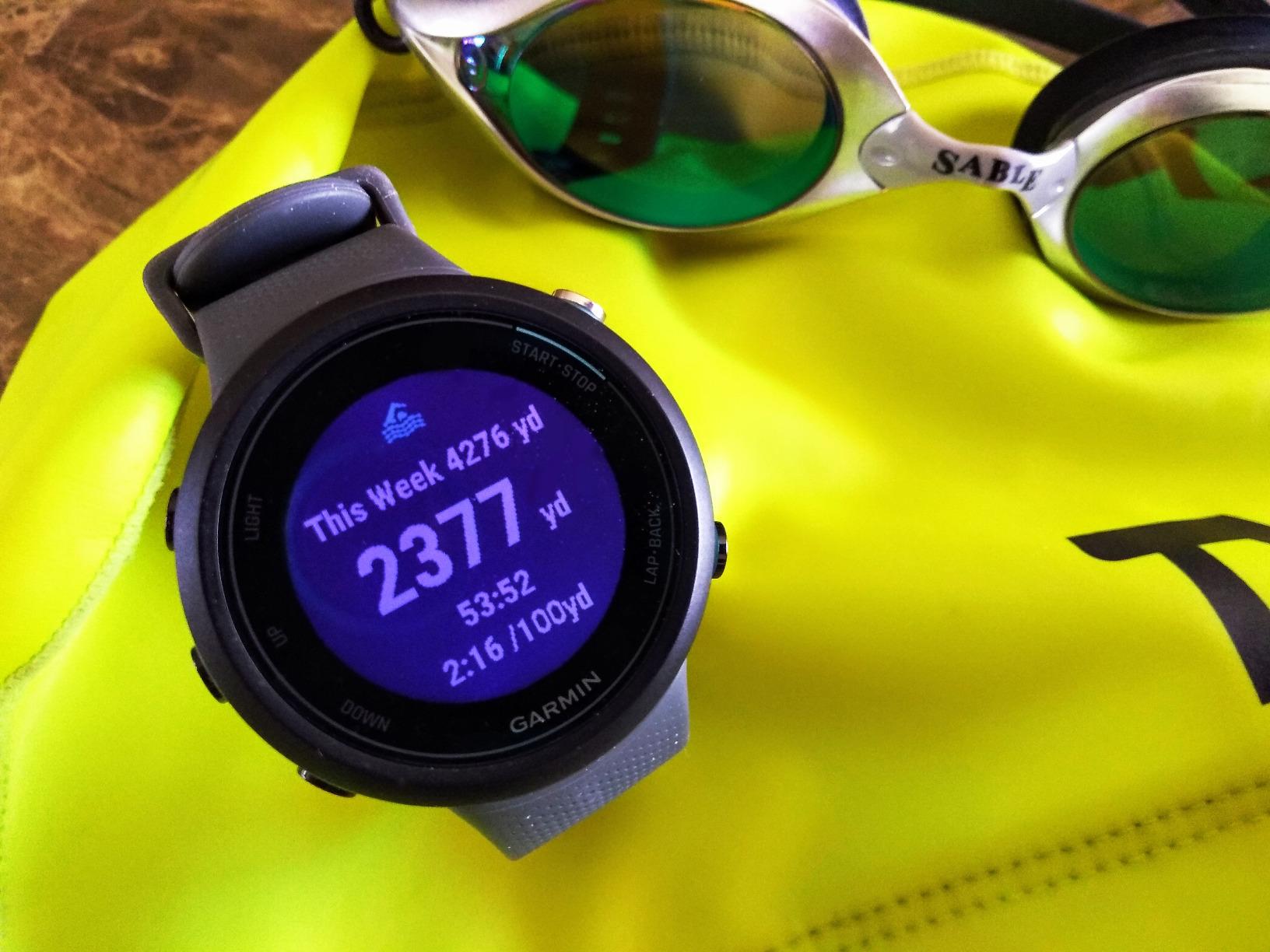
Not every open water swimmer needs a full multisport computer, and the Garmin Swim exists precisely for that audience: swimmers who want reliable distance tracking, stroke detection, and heart rate monitoring without paying for cycling maps, golf scoring, or hiking navigation they’ll never touch. It strips the feature set down to what matters for swimming specifically, and does that core job well at a price point that’s genuinely accessible.
GPS accuracy is solid rather than exceptional, since it relies on a standard single-frequency chip rather than the multi-band systems found on premium models, so expect slightly more variance in distance readings during choppy swims. For swimmers on a tighter budget, or those who simply want a reliable, no-frills swim tracker without paying for extras they won’t use, this remains a genuinely sound choice — and it pairs well with our broader cheap swimming watch guide if budget is the top priority.
Pros
- Significantly more affordable than multisport flagships
- Simple, swim-focused interface with no clutter
- Reliable stroke and distance tracking for the price
- Comfortable, low-profile case for wetsuit wear
Cons
- Single-frequency GPS is less precise in choppy water
- Fewer navigation and safety extras than premium models
- Limited smartwatch features outside of swimming
Garmin Instinct — Best Rugged, Long-Lasting Build

The Instinct trades a bit of screen resolution and swim-metric depth for something a lot of open water swimmers quietly care about most: a case that shrugs off rocks, boat ramps, sand, and the general abuse of getting in and out of open water repeatedly. The metal-reinforced bezel and MIL-STD build rating give it real durability credibility, and the multi-day battery life in smartwatch mode means it can go weeks of casual swim sessions without needing to think about charging.
Swim-specific metrics are solid without matching the absolute depth of the fēnix, but for swimmers who prioritize a watch that can be worn constantly — pool, open water, trail, and everyday life — without babying it, the Instinct’s toughness-first design philosophy is a genuinely compelling trade-off. The flashlight and solar charging combination also make it a strong pick for swimmers who do a lot of pre-dawn open water sessions in remote locations.
Pros
- Exceptionally rugged, MIL-STD tested build
- Long battery life, extended further with solar charging
- Built-in flashlight useful for early or remote swims
- Handles rough handling and rocky entry points well
Cons
- Lower-resolution display than premium competitors
- Swim metrics slightly less detailed than the fēnix
- Bulkier case may not suit smaller wrists
Full Comparison Table
With seven strong candidates on the table, it helps to see the core specifications side by side. The table below focuses specifically on the factors that matter for open water swimming rather than the full spec sheet of each device.
| Watch | GPS Type | Water Rating | Best For | Battery (GPS On) |
|---|---|---|---|---|
| Garmin fēnix | Multi-band | 10 ATM | Best overall | Long / multi-day |
| Apple Watch Ultra | Standard GPS | Water lock + depth gauge | Apple ecosystem | Full-day |
| COROS PACE | Dual-frequency | Swim-rated | Best value | Extended |
| Garmin Forerunner | Multi-band | Swim-rated | Structured training | Multi-day |
| SUUNTO | Multi-band | Dive-grade | Navigation-heavy swims | Extended |
| Garmin Swim | Standard GPS | Underwater-safe | Best budget pick | Multi-day |
| Garmin Instinct | Standard / GPS | MIL-STD rugged | Rugged everyday use | Multi-week standby |
A quick way to read this table: if raw GPS accuracy through chop and repeated wrist submersion is your top priority, the multi-band watches — the fēnix, Forerunner, and Suunto — will consistently outperform standard single-frequency GPS chips. If ecosystem convenience or price is the deciding factor instead, the Apple Watch Ultra and Garmin Swim respectively cover those priorities well.
Who Should Buy Which Watch
Rather than declaring one single universal winner, it’s more useful to match the watch to the type of open water swimmer using it, since the “best” choice genuinely depends on priorities that differ swimmer to swimmer.
The Competitive Open Water Racer or Triathlete
Garmin fēnix is the clear pick here, thanks to multi-band GPS accuracy that holds up during mass-start chaos, deep multisport data for brick training, and a battery that survives race day plus the warmup and cooldown swims around it.
The Apple Ecosystem Swimmer
If your phone, laptop, and daily habits already live inside Apple’s ecosystem, the Apple Watch Ultra removes friction that a cross-platform watch would introduce, and its swim-specific hardware genuinely holds up in open water.
The Budget-Conscious Swimmer
Garmin Swim delivers the fundamentals — accurate stroke and distance tracking, reliable water resistance, simple interface — without charging for features aimed at cyclists, golfers, or hikers. Pair this with our cheap swimming watch guide for more budget-first options across the category.
The Long-Distance or Marathon Swimmer
SUUNTO’s navigation tools and extended battery modes make it the strongest choice for swimmers tackling channel crossings, marathon distances, or unfamiliar open water routes where breadcrumb navigation genuinely matters.
The Structured-Training Athlete
Garmin Forerunner suits swimmers who live inside interval sets, pace zones, and periodized training blocks, translating training load data cleanly from running and cycling into the pool or open water.
The Rough-and-Tumble Everyday Swimmer
Garmin Instinct is built for swimmers who don’t want to think twice about rocky entry points, boat decks, or forgetting to charge for a few days — durability first, with swim tracking that’s more than good enough for most training needs.
Open Water Tips & Watch Care
Buying the right watch is only half the equation; how you use and maintain it in open water conditions determines how well it performs and how long it lasts.
Rinse After Every Saltwater Swim
Saltwater residue left in the crevices around buttons and the case back accelerates corrosion over time, even on watches rated for saltwater use. A quick freshwater rinse and towel dry after every ocean or bay swim meaningfully extends the life of buttons, gaskets, and the charging port contacts.
Wear It Outside the Wetsuit Sleeve
Most open water swimmers get better optical heart rate readings and a more comfortable fit by wearing the watch over the wetsuit sleeve rather than underneath it, since a tight neoprene cuff can shift the sensor’s contact point against the skin.
Set Up Live Tracking Before You Enter the Water
If your watch supports LiveTrack or a similar feature, enable it before you start swimming rather than trying to set it up once you’re already in the water. It takes thirty seconds on shore and gives a shore-based partner real visibility into your position throughout the swim.
Calibrate Pool Length Separately From Open Water Mode
Many swimmers train in both environments, and it’s worth double-checking that pool mode and open water mode are configured separately, since a watch left in pool mode during an open water swim will produce meaningless distance data.
Charge Before, Not After, a Long Swim
It sounds obvious, but the single most common reason swimmers lose tracking data mid-swim is a watch that wasn’t fully charged going in. Build a quick battery check into your pre-swim routine the same way you’d check goggles or a wetsuit zip.
For swimmers who also train in a backyard or community pool between open water sessions, our guide to the best inflatable swimming pools is a useful resource for setting up convenient at-home training options.
How GPS Accuracy Is Actually Tested in Open Water
Every brand in this guide claims accurate tracking, but “accurate” means very different things depending on how a watch is tested, and most buyers never see the methodology behind the marketing claim. Understanding how GPS accuracy is measured helps explain why two watches with seemingly similar specs can produce noticeably different distance readings for the same swim, and why some of the reviews you’ll find elsewhere online don’t match your own experience once you’re actually in the water.
The most reliable way to test a watch’s open water accuracy is to swim a known, pre-measured course — typically a rectangle or triangle marked with buoys at surveyed GPS coordinates — and compare the watch’s reported distance against the true distance of the course. A single lap around a 750 meter triangle is a common benchmark used by reviewers and coaches alike, since it’s long enough to expose drift but short enough to repeat multiple times in one session for consistency. Watches are usually tested side by side on the same wrist, or on both wrists simultaneously, to control for water conditions, chop, and swimmer stroke rate, all of which independently affect signal quality regardless of the watch itself.
Why the Same Watch Can Perform Differently on Different Days
A watch that nails distance accuracy on a calm, glassy lake morning can post a noticeably worse result in choppy afternoon conditions on the same body of water, and this isn’t a flaw specific to any one brand — it’s inherent to how GPS works at wrist height during freestyle swimming. Chop increases how often the wrist briefly surfaces at an angle that blocks a clean satellite view, and a higher stroke rate means more frequent, shorter signal windows for the chip to reacquire lock. This is precisely why multi-band GPS chips, which pull from more satellite constellations and frequencies simultaneously, show their biggest advantage specifically in rough conditions rather than flat, easy swims where even a mediocre chip can perform adequately.
Reading Past the Marketing Number
When a product page claims a GPS accuracy improvement of some percentage over the previous generation, that number is nearly always generated under controlled test conditions rather than the messy reality of a river current or bay chop. It’s a reasonable data point for comparing generations within the same brand, but it’s not directly comparable across brands unless the testing methodology is disclosed and matched. The more useful signal, in practice, comes from aggregated real-world swimmer reports across many different bodies of water and conditions — which is exactly why this guide leans on swimmer and triathlete community feedback rather than repeating manufacturer benchmark claims uncritically.
What “Good Enough” Actually Looks Like
For most training swims, a distance reading within three to five percent of the true distance is considered solid performance, and even flagship multi-band watches will occasionally miss that mark in genuinely difficult conditions like storm chop or a swim directly into low-angle morning sun that interferes with satellite visibility. Racing and official event distances are typically measured independently by race organizers using their own surveyed courses, so a watch’s in-race distance reading should always be treated as a personal training data point rather than an official result, regardless of how expensive or accurate the watch claims to be.
Sighting, Compass Tools, and Staying on Course
Ask any experienced open water swimmer what separates a smooth swim from an exhausting one, and sighting comes up almost immediately. Swimming an extra fifty or hundred meters because you drifted off line adds real fatigue over a long swim, and it’s one of the areas where a watch’s onboard tools can genuinely reduce the physical cost of a session, not just record it afterward.
Built-In Compass Versus GPS-Derived Heading
Most premium multisport watches include a three-axis electronic compass separate from the GPS chip, and this distinction matters more than it might seem. A GPS-derived heading only updates once you’re moving in a consistent direction for a few seconds, which is nearly useless for the kind of quick head-up glance a swimmer takes every six to ten strokes to check a buoy. A true electronic compass, by contrast, gives an instant heading regardless of whether you’re moving, which is the only version of this feature that’s actually practical to glance at mid-stroke.
Breadcrumb Trails and Route Retracing
A breadcrumb trail — a simple visual line on the watch face showing the path already swum — becomes surprisingly valuable in unfamiliar water, particularly for swimmers exploring a new lake or coastline without a fixed buoy course. If fog rolls in, a current pushes you off your intended line, or a landmark you were using for reference is suddenly out of view, being able to glance down and see exactly the path you’ve already traced makes it far easier to retrace your route back to the entry point rather than guessing.
Turn-by-Turn Return Navigation
A step beyond a simple breadcrumb trail, some higher-end watches offer a “back to start” or “TrackBack” function that calculates a direct route back to your entry point rather than requiring you to retrace your exact swum path. This is genuinely valuable for swimmers who swim out on a meandering exploratory route and want the most efficient way home rather than mirroring every drift and correction made on the way out, which can add unnecessary distance to an already tiring swim.
Why Sighting Technology Doesn’t Replace Sighting Skill
It’s worth being honest that no watch feature replaces the physical skill of sighting — lifting the eyes just above the surface every few strokes without breaking rhythm, picking a fixed and visible landmark, and correcting in small increments rather than large course changes. The watch’s navigation tools are best understood as a safety net and post-swim analysis tool rather than something to be checked mid-stroke, since stopping to study a watch face mid-swim breaks momentum and, in colder water, can cost more energy than the minor course correction saves. The most effective use of these features is a quick glance during a brief pause, or a full review after the swim to understand where drift happened and why, which over time actually improves in-water sighting skill rather than substituting for it.
Wetsuits, Sleeves, and Getting the Watch Fit Right
A watch that performs beautifully on a bare wrist during a summer swim can behave completely differently once a wetsuit sleeve enters the picture, and this is an area buyers frequently overlook until they’re already a few sessions into using a new watch.
Over-the-Sleeve Versus Under-the-Sleeve Wear
The general recommendation across most swim coaches and watch manufacturers is to wear the watch over the wetsuit sleeve rather than underneath it, for two main reasons. First, a tight neoprene cuff pressed directly against the watch’s optical heart rate sensor distorts the sensor’s contact pressure against the skin, which degrades the accuracy of the wrist-based reading more than swimming without a wetsuit at all. Second, wearing the watch over the sleeve keeps the display and buttons fully accessible for a quick glance or a manual lap press, rather than requiring you to peel back a tight cuff mid-swim to check the time or distance.
Sleeve Cutouts and Wetsuit Compatibility
A growing number of triathlon and open water wetsuits now include a dedicated cutout or thinner panel at the wrist specifically designed to accommodate a GPS watch without bulk or restriction. If you’re shopping for a new wetsuit alongside a new watch, checking for this feature can meaningfully improve comfort over a long swim, since a standard sleeve bunching up around a larger watch case can create a pressure point that becomes genuinely uncomfortable after thirty or more minutes of continuous arm rotation.
Case Size and Wrist Comfort
Case diameter and thickness matter more in swimming than in most other sports a multisport watch is used for, simply because the wrist rotates through a much larger and more repetitive range of motion during freestyle than it does running or cycling. A larger case, like the ones found on the premium multisport watches in this guide, offers a bigger display and often a longer battery life, but it also has more surface area to catch on a wetsuit cuff or dig into the wrist bone during rotation. Swimmers with smaller wrists, or anyone doing long continuous swims exceeding an hour, often report a noticeably more comfortable experience with a lighter, lower-profile case even if it means trading away some display size or battery capacity.
Band Material and Skin Irritation
Silicone remains the standard band material for swim-focused watches because it doesn’t absorb water or degrade with chlorine and saltwater exposure the way leather or fabric bands do, but not all silicone bands are equally comfortable during long wear. A textured or perforated band tends to trap less water against the skin and dries faster between sessions, which reduces the chafing that can develop on longer swims or during back-to-back training days. Swimmers who train daily or nearly daily are often better served prioritizing band comfort and quick-dry properties over aesthetics, since a band that causes irritation will eventually get left in a drawer regardless of how good the watch’s other features are.
Safety Gear That Belongs Alongside Your Watch
A great GPS watch meaningfully improves open water safety, but it isn’t a complete safety system on its own, and treating it as one is a genuine risk for solo or remote swimmers. The most experienced open water swimmers tend to pair their watch with a small set of low-cost, low-effort safety additions that cover the gaps a wrist device can’t.
Tow Floats and High-Visibility Buoys
A brightly colored inflatable tow float, worn on a waist belt and trailing a short distance behind the swimmer, dramatically improves visibility to boats, jet skis, and other water traffic that might otherwise struggle to spot a swimmer’s head at water level, especially in choppy conditions or low light. Many tow floats also include a small dry compartment, useful for carrying a phone in a waterproof pouch, keys, or an emergency contact card — none of which a watch alone can substitute for.
Brightly Colored Swim Caps
Fluorescent pink, orange, or yellow swim caps are consistently more visible from a distance and in low-light conditions than the black or dark-colored caps often bundled with wetsuits, and this single, inexpensive choice does more for passive visibility to boaters and other water users than almost any other piece of gear on this list. Race organizers frequently mandate specific cap colors for exactly this reason, and it’s a sensible habit to carry into training swims as well.
A Whistle or Audible Signal
A small, waterproof whistle attached to a tow float or wetsuit zip pull provides a way to attract attention that doesn’t depend on a working watch, a charged phone, or anyone happening to be looking in your direction at the right moment. It’s a low-tech addition, but it’s genuinely useful precisely because it has no battery to die and no signal to lose.
Telling Someone Your Plan
Live tracking features on a modern GPS watch are a meaningful safety upgrade, but they generally depend on cellular connectivity relaying data from the watch or a paired phone, which isn’t guaranteed in many open water locations, particularly remote lakes or coastline far from town. The simplest and most reliable safety measure remains the oldest one: telling a specific person your planned route, expected distance, and expected return time before you get in the water, so that a real, aware person — not just a tracking app — knows to be concerned if you’re significantly overdue.
Building a Pre-Swim Safety Checklist
Pulling all of this together into a short, repeatable pre-swim routine removes the guesswork on a cold morning when it’s tempting to skip a step. A reasonable checklist covers watch battery level and correct activity mode, tow float attachment, cap color and fit, whistle attachment, and a quick message to a training partner or family member with your planned route and return time. None of these individual steps takes more than a minute, but together they meaningfully reduce the risk profile of swimming in open water, especially solo.
Cold Water, Temperature Readings, and Seasonal Swimming
Water temperature affects nearly every aspect of an open water swim, from how the body performs to how accurately a watch can read heart rate, and it’s worth understanding both the physiological and technical sides of this before assuming any watch works the same way year-round.
How Cold Water Affects Optical Heart Rate Accuracy
Optical heart rate sensors work by shining light into the skin and measuring how blood flow changes the light reflected back, and cold water triggers vasoconstriction — the body narrowing blood vessels near the skin’s surface to preserve core temperature. This physiological response is precisely what degrades wrist-based heart rate accuracy in cold water, independent of how good the sensor hardware is, which is why even flagship watches can show erratic or lagging heart rate data during cold-water swims. Swimmers who train through colder months and want reliable heart rate data are generally better served by a compatible chest strap, which measures electrical signal directly rather than relying on blood flow near the skin’s surface.
Water Temperature Sensors and Why They Matter
A number of watches in the multisport and dive-computer categories include a water temperature sensor, and while this might initially seem like a minor data point, it has genuine practical value for open water swimmers tracking seasonal patterns in a regular training location. Knowing precisely how the water temperature at a favorite lake or bay trends across the season helps with decisions about wetsuit thickness, acclimatization pacing, and simply understanding why a given swim felt harder or easier than expected relative to pace and effort.
Cold Water Acclimatization and Training Data
Swimmers building tolerance for cold water swimming — whether for winter training, ice mile attempts, or simply extending the outdoor swimming season — often use a watch’s heart rate and pace data specifically to monitor how the body is adapting over repeated cold exposure sessions. A gradually lower heart rate response at a given pace in cold water over successive weeks is a reasonably reliable signal of genuine acclimatization, distinct from simply getting used to the discomfort psychologically. This is one of the more overlooked but genuinely valuable long-term uses of a swim watch’s data history, particularly for swimmers pursuing cold water challenges or winter swimming communities.
Battery Performance in Cold Conditions
Lithium-based batteries, which power essentially every GPS watch on this list, lose a measurable amount of effective capacity in cold conditions, and this applies to the watch itself, not just the swimmer. It’s rarely dramatic enough to end a normal training swim, but expedition or marathon swimmers attempting long cold-water crossings should factor in a modest reduction to advertised battery life estimates when planning for genuinely cold conditions, and should charge fully rather than relying on a partial charge that tested fine in warmer weather.
Making Sense of Your Data: Apps, Syncing, and Training Platforms
The watch on your wrist is only half of the tracking experience; what happens to that data after the swim — where it syncs, how it’s visualized, and whether it integrates with the broader tools a swimmer or coach already uses — often matters just as much as the in-water hardware.
Native Companion Apps
Every watch in this guide pairs with a manufacturer companion app that handles syncing, basic analysis, and settings configuration, but the depth and polish of these apps vary considerably. Garmin Connect offers arguably the deepest analytics layer of the group, with detailed swim-specific breakdowns, training load tracking across sports, and a large community feature set. Apple’s Fitness app integrates tightly with the broader iOS health ecosystem but offers comparatively shallower swim-specific metrics. COROS and Suunto’s apps are functional and clean but smaller in scope, which some swimmers genuinely prefer for its simplicity rather than seeing it as a shortcoming.
Third-Party Platform Integration
Most serious open water swimmers and triathletes eventually layer a third-party platform like Strava or TrainingPeaks on top of their watch’s native app, primarily for community features, more flexible training plan structures, or coach-athlete data sharing. Nearly all of the watches in this guide support automatic syncing to these platforms once initially connected, though the specific swim metrics that carry over — stroke type, SWOLF, open water pace zones — can vary depending on how thoroughly each platform supports swim-specific data compared with running or cycling data, which tends to be more standardized across the industry.
Exporting and Owning Your Data
For swimmers who want long-term ownership of their training history independent of any single platform, most watches and companion apps support exporting activity files in standard formats like FIT or GPX, which can be archived locally or imported into independent analysis tools. This is worth checking before committing heavily to any one ecosystem, particularly for swimmers who might switch brands down the line and want continuity in their historical training data rather than starting from zero.
Using Data to Actually Improve, Not Just Record
It’s easy to accumulate months of swim data without meaningfully using it, and the swimmers who get the most value out of a GPS watch tend to review trends rather than individual swims. Tracking SWOLF and stroke rate together over a training block, for example, reveals whether pace improvements are coming from genuine efficiency gains or simply from swimming harder, which is a meaningfully different signal for guiding future training decisions. Setting a recurring monthly review of pace, heart rate zones, and technique metrics turns a watch from a passive recorder into an active coaching tool, which is arguably the entire point of tracking any of this in the first place.
Watches for Beginners and Younger Open Water Swimmers
Not every open water swimmer is training for a triathlon or chasing a marathon crossing, and the needs of a beginner or a younger swimmer just starting to venture beyond the pool are genuinely different from the competitive and endurance-focused priorities covered elsewhere in this guide.
What Beginners Actually Need
A new open water swimmer benefits far more from a simple, reliable water rating and basic distance tracking than from advanced multisport features they won’t touch for years, if ever. An overly complex watch with a steep menu learning curve can actually become a source of anxiety in open water, where a swimmer’s attention is better spent on sighting, breathing rhythm, and basic orientation than fumbling through settings mid-swim. For this reason, a straightforward, swim-focused watch like the budget pick covered earlier in this guide is often the more sensible starting point than a flagship multisport computer.
Durability Matters More With Kids
For younger swimmers, particularly those in club swim programs who are also starting to explore open water events, durability and a straightforward interface tend to matter more than advanced metrics. A rugged, simplified watch reduces the chance of an expensive device getting damaged during the general roughhousing that comes with youth swim practice, while still providing enough basic tracking to make training feel engaging rather than purely a coach’s obligation to log manually.
Introducing Safety Features Early
Even for beginner and younger swimmers, it’s worth prioritizing a watch with at least basic safety functionality — an SOS or emergency contact feature, in particular — since younger or less experienced open water swimmers benefit disproportionately from the added layer of protection while judgment and open water experience are still developing. Building the habit of enabling live tracking or a safety check-in feature early tends to carry forward as a lasting habit into more advanced open water swimming later on.
Growing Into a More Advanced Watch
A sensible long-term approach for a developing open water swimmer is to start with a simple, durable, swim-focused watch and graduate to a more advanced multisport model once training volume, distance, and competitive ambitions genuinely justify the additional cost and complexity. Most swimmers intuitively know when they’ve outgrown a beginner watch — typically once SWOLF, stroke-type breakdowns, or structured interval training become relevant to their goals — and at that point, the buying guide and comparison table earlier in this article become directly useful for the upgrade decision.
Common Mistakes Buyers Make When Choosing an Open Water Watch
Even with a clear buying framework, it’s easy to fall into a few predictable traps when shopping for an open water swimming watch, and being aware of them ahead of time can save both money and post-purchase frustration.
Trusting Headline Battery Numbers
The single most common mistake is trusting the large, prominently displayed battery life number on a product page without checking the specific GPS-active or all-satellite figure buried further down the spec sheet. A watch advertised with an impressive multi-day battery life in basic smartwatch mode might drop to a fraction of that once full GPS tracking is active for an open water swim, which is the only battery figure that actually matters for this use case.
Assuming All Water Ratings Are Equal
Not every water-resistant rating is created equal, and a watch marketed as “water resistant” without a specific ATM rating or explicit swim certification should be treated with real skepticism for open water use. Some everyday smartwatches survive splashes and brief immersion perfectly well but were never designed or tested for the sustained, dynamic pressure changes that come with continuous freestyle swimming, and using one for open water swimming risks both inaccurate data and genuine water damage.
Overbuying for Casual Use
It’s tempting to buy the most fully-featured flagship watch on the market, but a casual open water swimmer doing occasional recreational swims in a familiar, calm lake genuinely doesn’t need multi-band GPS, offline mapping, and dive-grade water resistance. Overbuying isn’t just a matter of wasted money — a more complex watch also means a steeper learning curve and, often, a heavier or bulkier case that becomes an unnecessary annoyance during a swim that never needed that level of capability in the first place.
Underbuying for Serious Training or Racing
The inverse mistake is just as common: a competitive swimmer or triathlete choosing a budget or entry-level watch to save money, only to find its single-frequency GPS chip produces meaningfully inflated distance readings during mass-start races or choppy training swims, undermining the very training and pacing data they were trying to collect. For swimmers with genuinely competitive goals, the upfront cost difference toward a multi-band GPS watch tends to pay for itself many times over in data quality alone.
Ignoring Comfort Until After Purchase
Buyers frequently focus entirely on specifications and overlook physical fit until they’re a few uncomfortable swims into ownership. Case size, band material, and how the watch interacts with a wetsuit sleeve are all things that are difficult to evaluate from a product photo alone, which is why checking return policies and, where possible, trying a watch on with an actual wetsuit sleeve before committing to a long training season with it is a genuinely worthwhile extra step.
Forgetting to Check App and Platform Compatibility
Finally, it’s easy to focus entirely on the hardware and forget to check whether a watch’s companion app and third-party platform support actually fit into an existing training workflow. A swimmer who relies heavily on a coach reviewing data through a specific platform, or who has years of historical training data in one ecosystem, should weigh app and platform compatibility as seriously as GPS accuracy or battery life, since switching ecosystems later can mean losing continuity in long-term training history.
Building a Structured Open Water Training Plan Around Your Watch
A GPS watch is only as useful as the training structure built around it, and a surprising number of swimmers buy a capable device and then use it purely as an expensive stopwatch, never touching the structured workout features that justify the price difference between a budget pick and a flagship multisport model. Building even a loose training plan around the watch’s capabilities tends to produce noticeably better results than swimming the same casual distance week after week without a clear progression.
Base Building With Pace and Heart Rate Zones
Early in any open water training cycle, the priority is usually aerobic base — long, steady swims at a controlled heart rate rather than fast, exhausting efforts. Most of the watches covered in this guide let you set a target heart rate zone and will alert you with a vibration if you drift above or below it, which is a genuinely useful way to enforce discipline on easy days when the temptation to swim harder than planned is strongest. Reviewing weekly average pace at a given heart rate zone over a base-building block is one of the clearest ways to see aerobic fitness improving, often well before race-day performance itself shows the gains.
Interval and Threshold Work in Open Water
Structured interval sets translate less cleanly to open water than to a pool, since there’s no wall to mark a consistent interval distance, but a watch with auto-lap or distance-based interval alerts solves this by triggering a vibration or beep at set distance markers regardless of the swim’s shape. This lets a swimmer run a genuine interval session — for example, repeated 400 meter efforts at a target pace with a short rest between each — even in open water without any fixed markers, which was previously only practical in a pool with visible lane lines.
Taper and Race-Week Adjustments
In the final one to two weeks before a target open water race, most training plans call for a taper: reduced volume with maintained intensity, aimed at arriving on race day rested rather than fatigued. Reviewing a watch’s training load or recovery time estimate during this period helps confirm the taper is actually working as intended, rather than guessing based on how tired the legs and shoulders feel, which can be a misleading signal on its own during a taper week.
Using Multi-Sport Training Load for Triathletes
For triathletes specifically, a watch that tracks combined training load across swimming, cycling, and running gives a far more honest picture of overall fatigue than looking at any single sport’s data in isolation. A swimmer who feels unexpectedly flat in the water might discover the real cause is a heavy cycling block earlier in the week rather than anything swim-specific, and this kind of cross-sport insight is one of the strongest arguments for choosing a genuine multisport watch over a swim-only device for anyone racing across multiple disciplines.
Reviewing Progress Over a Full Season
The real value of consistent tracking shows up over months rather than single sessions. Comparing SWOLF, pace, and heart rate data from the start of a training season against the same metrics closer to a goal race gives concrete evidence of improvement, which is both motivating and useful for adjusting the next training cycle’s structure. Swimmers who review this data quarterly, rather than obsessing over every individual swim, tend to make more level-headed training decisions and avoid overreacting to a single bad session that doesn’t reflect the broader trend.
Goggles, Visibility, and Sun Glare in Open Water
A GPS watch handles distance and pace, but it can’t solve the problem of simply not being able to see where you’re going, and goggle choice plays a bigger role in open water performance and safety than most swimmers appreciate until they’ve dealt with a swim ruined by fog, glare, or the wrong tint.
Tinted and Mirrored Lenses for Bright Conditions
Open water swims often happen at sunrise or in the middle of the day when glare off the water’s surface is at its worst, and a mirrored or darkly tinted lens cuts this glare dramatically compared with the clear lenses many swimmers default to from pool training. Polarized open water goggles go a step further, specifically filtering the horizontal glare that reflects off open water, which makes sighting toward a buoy or shoreline landmark considerably easier on a bright day.
Clear and Low-Light Lenses for Dawn Swims
For early morning or overcast swims, a clear or lightly tinted lens actually performs better than a dark mirrored one, since a heavily tinted lens in low light makes sighting harder rather than easier. Many open water swimmers carry two pairs of goggles specifically for this reason, choosing the lens tint based on that day’s light conditions rather than relying on a single all-purpose pair.
Fit, Fogging, and Field of Vision
A wider field of vision matters more in open water than in a pool, since sighting requires seeing well above and to the sides without lifting the head excessively out of the water. Goggles designed specifically for open water and triathlon use tend to offer a noticeably wider peripheral view than standard pool-racing goggles, which are optimized for speed and low drag rather than situational awareness. Anti-fog coatings also wear out faster with the more frequent up-and-down head movement of open water sighting, so it’s worth carrying an anti-fog spray or a backup pair for longer swims and races.
Pairing Goggle Choice With Watch Sighting Data
It’s worth connecting goggle choice back to the watch data discussed earlier in this guide: a swimmer who reviews their GPS track and notices consistent drift toward one side during bright, glare-heavy swims may find the issue is goggle tint rather than sighting technique. This is a good example of how the post-swim data review covered in an earlier section can surface a genuinely actionable equipment fix rather than just a training observation.
Race Day: Using Your Watch at Organized Open Water Events
Racing introduces a few watch-specific considerations that don’t come up during solo training swims, and being prepared for them ahead of time avoids the frustration of losing useful data — or worse, a watch malfunction — in the middle of an event you’ve trained months for.
Mass-Start GPS Interference
A crowded mass start, with dozens or hundreds of swimmers churning the water and each wearing a GPS device, can create a genuinely more difficult signal environment than a solo training swim in the same location, simply due to the physical chaos of arms, splashing, and bodies breaking the watch’s line of sight to the sky far more frequently than usual. This is one of the situations where the gap between a multi-band chip and a standard single-frequency chip becomes most visible, since multi-band watches tend to reacquire signal lock faster after the frequent, brief interruptions typical of a mass start.
Setting Up the Correct Activity Profile in Advance
Race morning is not the time to be exploring menu settings for the first time. Configuring the correct open water swim profile, confirming GPS mode is set correctly, and doing a practice sync with race-day data fields the night before removes an entirely avoidable source of stress. Many experienced racers also do a short test swim the morning of the race specifically to confirm GPS lock and battery level rather than assuming everything will work as expected.
Battery Planning for Race Day Logistics
Race day often involves more total watch-on time than a typical training swim: a pre-race warm-up swim, waiting around in GPS-active mode while queued for a wave start, the race itself, and sometimes a cool-down swim afterward. Swimmers should plan battery usage around this full window rather than just the official race distance, and starting the day at a full charge is worth treating as non-negotiable given how much can go wrong from an unexpectedly depleted battery mid-event.
Understanding Why Watch Distance Won’t Match Official Results
It’s extremely common for a watch’s recorded distance to differ from the official, surveyed race distance, sometimes by a meaningful margin in a chaotic mass-start event with lots of course weaving. This isn’t necessarily a sign the watch is malfunctioning — it’s simply a reflection of the actual path swum, including any drift or course corrections, compared with the straight-line official distance. Treating the watch’s data as a personal training record rather than an official result avoids unnecessary disappointment or confusion after a race.
Post-Race Data Review
The period right after a race, while the swim is still fresh in memory, is a particularly valuable time to review the watch’s recorded pace splits, heart rate curve, and GPS track. Comparing where pace dropped off against how the swim actually felt at that point often reveals useful information for pacing strategy in future races, whether that means starting more conservatively or recognizing a specific section of the course where technique broke down under fatigue.
Nutrition, Hydration, and Fueling Long Open Water Swims
Longer open water swims introduce fueling and hydration challenges that shorter pool sessions simply don’t require thinking about, and a watch’s duration and heart rate data can meaningfully inform how a swimmer approaches this side of training, even though it’s a topic most swim watch marketing never mentions.
When Fueling Actually Becomes Necessary
For swims under roughly ninety minutes, most swimmers can rely on pre-swim nutrition alone without needing to fuel mid-swim, but longer training sessions or marathon-distance events typically require some form of in-water fueling to maintain pace and avoid a late-swim energy crash. Watches that log total swim duration and estimated calorie expenditure give a useful, if approximate, reference point for planning how much fueling a given session actually requires, rather than guessing based on distance alone, since pace and conditions both affect real energy expenditure significantly.
Feed Stations and Timed Fueling Strategies
Marathon and channel swimmers often work with a support kayak or boat that provides scheduled feeds at fixed time intervals rather than fixed distance intervals, since swimming conditions can vary pace substantially over a long crossing. A watch with a repeating interval alert set to the planned feed schedule — for example, every twenty or thirty minutes — removes the mental burden of tracking elapsed time during a long swim where fatigue and cold can make time perception unreliable.
Hydration Considerations Specific to Open Water
Counterintuitively, dehydration is a genuine risk during long open water swims despite being surrounded by water, since sweat still occurs during physical exertion and a swimmer has no natural cue like thirst that registers as clearly while submerged and cold. Reviewing heart rate drift over a long swim — a gradual rise in heart rate at a constant pace — can be an early indirect signal of dehydration or inadequate fueling, and is a pattern worth watching for on any swim significantly longer than the swimmer’s normal training distance.
Post-Swim Recovery Nutrition
Recovery time estimates provided by many multisport watches, while not perfectly precise, offer a reasonable framework for thinking about post-swim recovery nutrition timing, particularly after unusually long or intense sessions. Pairing a watch’s recovery guidance with basic post-exercise nutrition principles — replacing fluids and carbohydrates promptly after a long or hard swim — supports better adaptation between sessions and reduces the accumulated fatigue that can otherwise build up across a demanding training block.
Ecosystem Lock-In: Switching Brands Without Losing Your History
Buyers rarely think about brand switching costs at the point of purchase, but for swimmers who train consistently over years, the accumulated training history inside a specific watch ecosystem can become a genuine factor in future upgrade decisions, sometimes more significant than any single hardware feature.
Why Training History Has Real Value
Years of consistent swim data — pace trends, SWOLF progression, heart rate zone development — represents a genuinely useful longitudinal record of fitness and technique development that’s difficult to reconstruct after switching platforms. Swimmers who’ve built up this kind of history inside Garmin Connect, for example, often find that inertia alone becomes a meaningful reason to stay within the Garmin ecosystem for a next watch purchase, even if a competing brand’s hardware looks appealing on paper.
What Actually Transfers Between Ecosystems
Standard file formats like FIT and GPX generally transfer basic activity data — distance, duration, route, and heart rate — reasonably well between platforms, but ecosystem-specific metrics like Garmin’s proprietary training load calculations, recovery estimates, or performance condition scores typically don’t have a direct equivalent once ported into a different brand’s app. Swimmers considering a brand switch should treat these more advanced analytics as effectively starting over, even if the raw underlying activity data is preserved.
Third-Party Platforms as an Insurance Policy
Syncing consistently to a brand-agnostic third-party platform, as discussed in the earlier section on apps and data, provides a genuine hedge against ecosystem lock-in, since a platform like Strava or TrainingPeaks preserves a swimmer’s core activity history independent of whichever watch brand happens to be on the wrist in a given year. Swimmers who anticipate switching brands at some point down the line are well served by establishing this habit early, well before any specific switch is actually being considered.
When Switching Genuinely Makes Sense
Despite the switching costs, there are situations where changing ecosystems is clearly worthwhile — for example, a swimmer whose training needs have shifted meaningfully toward features a competing brand handles better, or someone whose current watch is failing and needs replacement regardless. In these cases, it’s worth exporting historical data proactively before making the switch, and treating the transition as a deliberate, planned event rather than something to figure out reactively after the fact.
Warranty, Repairs, and Long-Term Watch Maintenance
A GPS swimming watch represents a genuine investment, and understanding what’s actually covered under warranty, along with a few basic maintenance habits, meaningfully extends the useful life of the device well beyond what most buyers expect going in.
What Standard Warranties Typically Cover
Most manufacturers in this guide offer a standard one- or two-year warranty covering manufacturing defects, but water damage caused by exceeding the rated depth or pressure, physical impact damage, and normal battery capacity degradation over time are typically excluded. It’s worth reading the specific warranty terms for water-related claims in particular, since a watch that develops fogging under the display glass or intermittent charging issues after sustained open water use may or may not be covered depending on how the manufacturer interprets normal use versus misuse.
Battery Degradation Over Multiple Years
Like any lithium-based battery, a swim watch’s maximum battery capacity gradually declines with repeated charge cycles, and a watch that once delivered forty hours of GPS-active battery life when new might realistically deliver closer to thirty after two or three years of regular use. This is a normal and expected pattern rather than a defect, but it’s worth factoring into expectations for watches purchased secondhand or kept in service for many years, particularly for swimmers planning long expedition swims where every hour of battery life matters.
Gasket and Seal Maintenance
The water-tight seals around buttons, the charging port, and the case back are the components most responsible for a watch’s long-term water resistance, and they can degrade slowly with repeated saltwater exposure, sand ingress, or simple age, even without any single dramatic failure event. Rinsing thoroughly after saltwater swims, as covered earlier in this guide’s care tips, is the single most effective habit for preserving these seals, but periodic inspection for any visible grit or debris around buttons and ports is a worthwhile addition to a swimmer’s regular gear maintenance routine.
When Repair Makes More Sense Than Replacement
For watches with a swappable battery or modular components, some manufacturers and third-party repair services offer battery replacement or screen repair at a fraction of the cost of a new watch, which can be a sensible option for an otherwise well-functioning device that’s simply lost some of its original battery capacity. This is more commonly available for premium multisport watches than for lower-cost dedicated swim watches, which are often built as effectively disposable at their price point, making replacement the more practical choice once a fault develops.
Ocean, Lake, and River Swimming: Different Environments, Different Demands
Not all open water is the same, and the specific environment a swimmer trains in most often should genuinely influence which watch features matter most, since the failure points and priorities shift meaningfully between ocean, lake, and river conditions.
Ocean Swimming: Currents, Waves, and Saltwater
Ocean swimmers deal with a combination of factors rarely present in still water: tidal currents that can meaningfully affect both pace data and actual swum distance, wave action that increases the frequency of wrist submersion beyond what a calm lake produces, and sustained saltwater exposure that accelerates component wear over time. A rugged, saltwater-tested build with strong multi-band GPS performance in choppy conditions is disproportionately valuable for ocean-focused swimmers compared with swimmers who train primarily in calm inland water.
Lake Swimming: Consistency and Predictable Conditions
Lakes generally offer calmer, more consistent conditions than open ocean, which makes GPS accuracy somewhat more forgiving and shifts the priority list slightly toward comfort, battery life for longer training swims, and navigation features for exploring larger or less familiar lakes. Lake swimmers attempting marathon-distance crossings still benefit enormously from the multi-band GPS and extended battery life covered throughout this guide, but day-to-day training swims in a familiar, calm lake are genuinely well served even by a more modest watch.
River Swimming: Current, Visibility, and Unique Hazards
River swimming introduces persistent unidirectional current, which meaningfully skews pace data in a way that lake or calm bay swimming doesn’t, since a swimmer’s actual pace relative to the water can differ substantially from their pace relative to the fixed GPS track on the shore. River swimmers should interpret watch pace data with this in mind, treating any given session’s pace as partly a function of current strength and direction rather than fitness alone, and ideally comparing sessions swum in similar current conditions rather than across a full range of river flow rates.
Matching Watch Priorities to Your Primary Environment
A swimmer who trains almost exclusively in one environment — a specific ocean beach, a regular lake loop, or a consistent river stretch — is well served thinking about watch selection specifically through that environment’s lens rather than trying to optimize for every possible open water scenario. This is a useful lens to revisit after working through the broader buying guide earlier in this article, since the generic priority list there can be weighted differently depending on where the vast majority of a swimmer’s open water time is actually spent.
Choosing the Right Watch Comes Down to Honest Priorities
There isn’t a single objectively correct answer here, and that’s actually good news — it means the decision comes down to being honest about how and where you swim rather than chasing the most expensive spec sheet. If you race competitively or train across multiple sports, the Garmin fēnix earns its place as the best overall pick. If you’re already deep in Apple’s ecosystem, the Apple Watch Ultra removes friction that would otherwise be a daily annoyance. Budget-conscious swimmers get a genuinely capable option in the Garmin Swim, while long-distance and marathon swimmers will get real, practical value out of Suunto’s navigation-first approach.
Whichever direction you land on, prioritize the fundamentals covered throughout this guide — multi-band or dual-frequency GPS where possible, a water rating that actually matches swim use, GPS-on battery life that comfortably covers your longest sessions, and safety features that matter when you’re a long way from shore. Get those right, and the rest of the feature list becomes a matter of personal preference rather than a compromise.
For a broader view across every category of swimming watch, not just open water picks, our complete swimming watches guide is the best next stop.
Frequently Asked Questions
What makes a swimming watch suitable for open water instead of just pool laps?
An open water swimming watch needs standalone multi-band GPS for accurate tracking without wall turns to correct drift, a water rating that goes beyond simple splash resistance, a barometric or compass sensor for sighting support, and a battery that survives long swims plus the paddle out and back. Pool watches can rely on the black line and walls to do much of the work; open water has no such guardrails.
Do I need a chest strap heart rate monitor for open water swimming?
Not strictly, but wrist-based optical sensors lose accuracy in cold water, under wetsuits, and during high-stroke-rate freestyle. If you train seriously by heart rate zones, a compatible chest strap will give cleaner data than the wrist sensor alone during a swim.
How deep can most open water swimming watches actually go underwater?
Most dedicated swim watches are rated to 50 meters (5 ATM), comfortably covering surface swimming, snorkeling, and shallow recreational diving. A few rugged multisport models add true dive certification for deeper descents, though that’s rarely needed for open water swimming alone.
Will a smartwatch track my swim distance accurately without a pool wall?
Distance accuracy in open water depends almost entirely on GPS signal quality at the wrist, which is why multi-band or dual-frequency chips matter far more here than in a pool. Older single-frequency chips can drift meaningfully over a long swim, while newer multi-band chips typically stay within a few percent of true distance.
Is Apple Watch Ultra good enough for serious open water swimmers?
Apple Watch Ultra is a capable open water companion thanks to its water lock, depth gauge, and solid GPS, and it suits swimmers already inside the Apple ecosystem well. Dedicated multisport watches from Garmin and Suunto still edge it out on raw open water battery life and specialized swim metrics.
How long should a watch battery last for an open water race or long training swim?
For a single open water race, most modern GPS swim watches with 15 to 40 hours of full-GPS battery life will comfortably cover the swim plus travel time. Swimmers training for marathon distances or multi-day crossings should look at watches with extended or expedition GPS modes that stretch well beyond a single day.
Can I use a regular fitness tracker instead of a dedicated swim watch for open water?
A general fitness tracker can technically survive a swim if it carries an adequate water rating, but it usually lacks the swim-specific algorithms that count strokes, detect drills, and estimate SWOLF. For anything beyond casual splashing, a dedicated open water swim mode gives far more useful data.
What is SWOLF and why do open water swimmers care about it?
SWOLF combines the time taken for a length or distance segment with the number of strokes used, giving a simple efficiency score where lower is generally better. Open water swimmers track SWOLF trends over weeks to judge whether technique is improving, even when open water conditions make raw lap times alone unreliable.
Do open water swimming watches work well with a wetsuit on?
Most modern swim watches are designed to sit comfortably over or under a wetsuit sleeve, though a tight neoprene cuff can occasionally interfere with optical heart rate accuracy. Many swimmers simply wear the watch over the wetsuit sleeve for open water sessions to sidestep this issue entirely.
Are safety features like LiveTrack or SOS beacons worth paying extra for?
For anyone swimming in open water without a support boat or spotter nearby, live tracking and emergency beacon features are genuinely valuable rather than a marketing extra. They let a partner or coach follow your position in real time and give you a way to signal distress if conditions change unexpectedly.