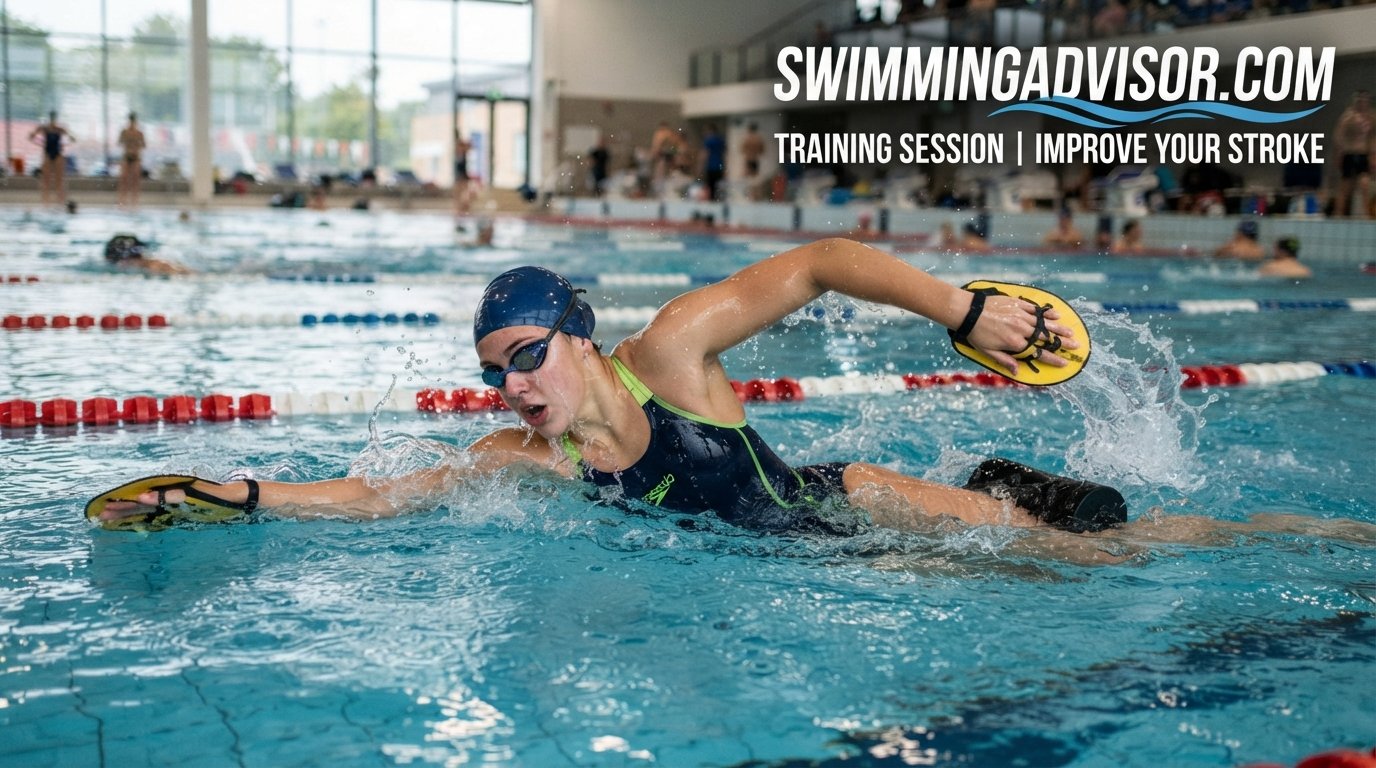
What Do Swim Paddles Do? The Complete Guide to Training With Hand Paddles
Everything you need to know about how swim paddles work, the muscles they target, and how to use them safely to swim faster and stronger.
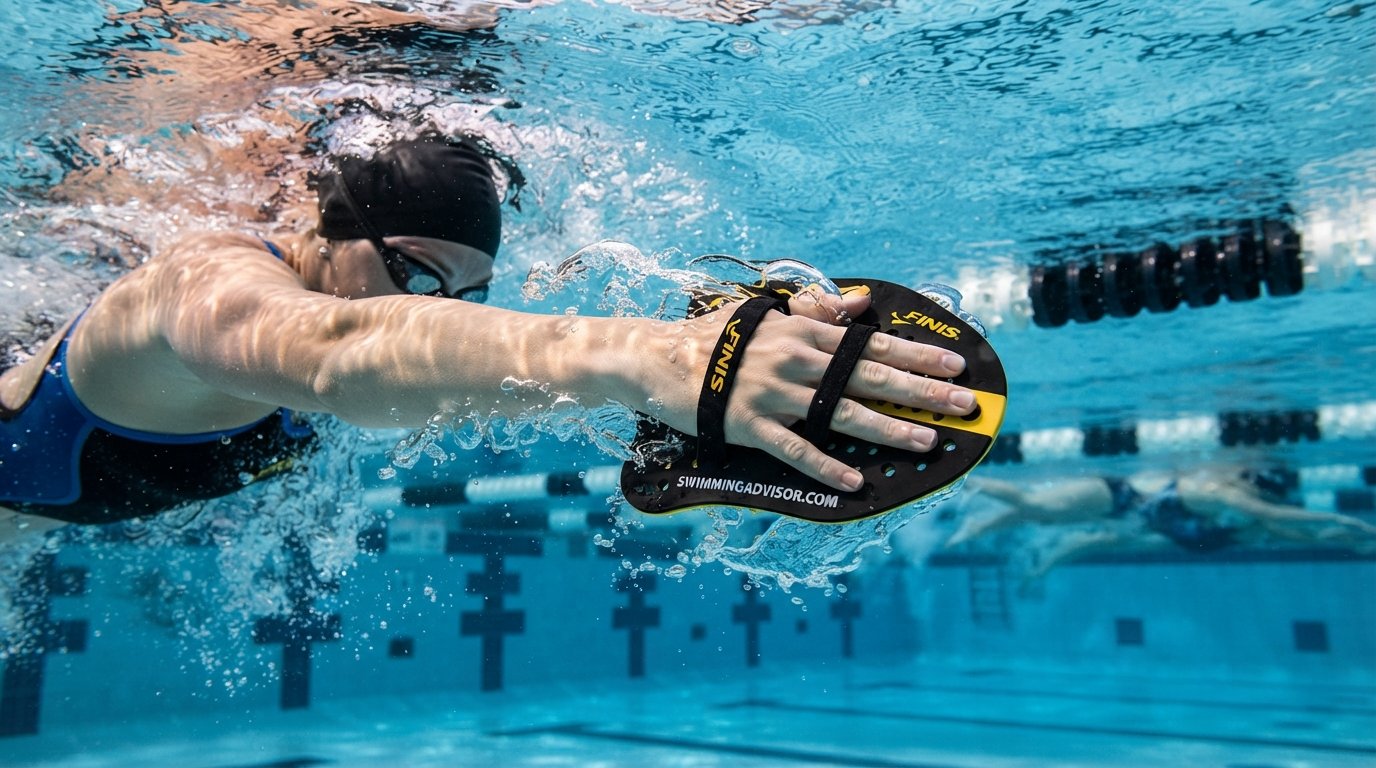
If you’ve spent any time around a pool deck, you’ve probably noticed swimmers gliding through the water wearing strange plastic plates strapped to their hands. Those are swim paddles, and they’re one of the most talked-about — and most misunderstood — pieces of swim training equipment. Some swimmers swear by them for building power and refining technique. Others avoid them entirely, worried about shoulder strain. So what exactly do swim paddles do, and should they be part of your training routine? This guide breaks down everything, from the basic mechanics of how paddles change your stroke to the specific muscles they target, the different types available, and how to use them without getting hurt.
1. What Are Swim Paddles?
Swim paddles are hand-held or hand-strapped devices, usually made of rigid plastic or lightweight composite material, designed to increase the surface area of a swimmer’s hand as it moves through the water. They’re secured to the hand with rubber tubing or silicone straps that loop around the wrist and middle finger, keeping the paddle in place while still allowing the hand to enter and exit the water naturally.
At first glance, a paddle looks like a simple flat piece of plastic, but its shape, size, and strap configuration all influence how it affects your stroke. Some paddles are contoured to match the curve of the palm, others are flat, and some include small drainage holes to reduce resistance and make the paddle feel less punishing on the shoulders.
Paddles have been a staple of competitive swim training for decades, used by everyone from age-group swimmers to Olympic athletes. Their popularity comes down to one simple idea: more surface area means more resistance, and more resistance means your muscles have to work harder to pull the same amount of water. If you’re shopping for a pair, our guide to the best swim paddles breaks down the top models on the market by skill level and hand size.

Popular Pick: Finis Freestyler Paddles
A beginner-friendly paddle with a flexible strap system and moderate surface area, ideal for swimmers just starting to add resistance training to their sets.
Check Price on Amazon2. How Swim Paddles Actually Work
The mechanics behind swim paddles are rooted in basic fluid dynamics. Water resists movement in proportion to the surface area pushing against it. Your bare hand already creates some resistance as you pull through the water, but it’s relatively small compared to the rest of your body. A paddle extends the effective size of your hand, sometimes by 50% or more, which means every pull requires significantly more force to move through the same distance of water.
This added resistance changes the entire feel of your stroke. You’ll notice your catch — the moment your hand grabs the water at the front of the stroke — becomes more pronounced. Because the paddle forces water against a larger surface, it becomes much easier to feel exactly where you’re catching water efficiently and where you might be slipping or pulling incorrectly.
The Catch and Feedback Loop
One of the most valuable aspects of paddle training isn’t strength at all — it’s feedback. When your hand position is even slightly off during the pull, a paddle amplifies that error. If you drop your elbow, slice through the water at the wrong angle, or lose your catch early, the paddle will make it obvious through increased drag or a wobbling sensation. This immediate physical feedback helps swimmers correct technical flaws faster than swimming without paddles, where subtle errors are harder to detect.
Leverage and Torque on the Shoulder
Because paddles extend the lever arm of your hand and forearm, they also increase the torque placed on your shoulder joint with every stroke. This is the double-edged part of paddle training: the same mechanism that builds strength and improves catch awareness also raises the physical demand on the rotator cuff and shoulder stabilizers, which is why paddles carry a higher injury risk than swimming with bare hands.
3. The Main Functions of Swim Paddles
Swim paddles serve several distinct purposes in a training program, and most coaches use them for more than one reason at a time. Here’s a breakdown of what they actually accomplish in the water.
Building Upper Body Strength and Power
Because paddles increase resistance on every pull, they function similarly to adding weight to a strength exercise. Over time, swimming sets with paddles builds power in the muscles responsible for pulling, which can translate to a stronger, faster stroke when paddles are removed.
Improving Stroke Technique and Catch
As mentioned above, paddles exaggerate the sensation of catching and pulling water, making it easier for swimmers to identify and correct technical flaws like early elbow drop, crossing the centerline, or a weak finish.
Increasing Feel for the Water
Swim coaches often describe a swimmer’s “feel for the water” as an intuitive sense of how to apply pressure efficiently. Because paddles amplify sensory feedback from water pressure against the hand, regular paddle use can sharpen this feel over time, even when swimmers later remove the paddles.
Building Muscular Endurance
Longer paddle sets, performed at moderate intensity, help build muscular endurance in the shoulders, lats, and triceps, since the muscles have to sustain increased resistance over repeated strokes.
Isolating the Pull Phase
Many paddle sets are performed alongside a pull buoy, which floats the legs and removes kicking from the equation. This isolates the upper body pull, letting swimmers focus entirely on arm mechanics without worrying about leg drive or body position from kicking.
4. Muscles and Muscle Groups Targeted
Swim paddles primarily load the muscles involved in the pulling phase of the stroke. Understanding which muscles are working helps explain both the benefits and the injury risks associated with paddle training.
| Muscle Group | Role During Paddle Use | Stroke Phase Involved |
|---|---|---|
| Latissimus Dorsi | Main driver of the pulling motion, generates most propulsive force | Pull and push phase |
| Deltoids | Stabilizes and rotates the shoulder throughout the stroke cycle | Catch through recovery |
| Rotator Cuff | Stabilizes the shoulder joint under increased paddle resistance | Entire stroke cycle |
| Triceps Brachii | Extends the elbow during the finish of the pull | Finish phase |
| Pectoralis Major | Assists in adduction of the arm during the pull | Pull phase |
| Trapezius | Supports shoulder blade movement and posture under load | Entire stroke cycle |
| Core Muscles | Stabilizes body position as resistance increases with each stroke | Entire stroke cycle |
Because the rotator cuff plays such a heavy stabilizing role, it’s often the first area to show signs of overuse when paddle training is introduced too aggressively. This is one reason coaches typically recommend easing into paddle sets gradually rather than jumping straight into high-volume use.

Strength-Focused Option: Speedo Power Plus Paddles
A larger surface-area paddle designed for swimmers looking to build raw pulling power once they’ve built a technical base.
Check Price on Amazon5. Types of Swim Paddles
Not all swim paddles are built the same, and the type you choose changes how they affect your stroke. Here’s a look at the most common categories.
Standard Flat Paddles
These are the classic, large, flat paddles most swimmers picture when they think of hand paddles. They maximize surface area and resistance, making them best suited for building raw strength once technique is already solid.
Contoured/Ergonomic Paddles
Shaped to follow the natural curve of the palm, these paddles tend to feel more comfortable and place slightly less strain on the wrist, while still offering a meaningful resistance increase.
Finger Paddles
Much smaller than standard paddles, finger paddles attach only to the fingers rather than the whole hand. They’re often used for technique-focused work since they add just enough resistance to sharpen catch feel without overloading the shoulder.
Perforated/Drainage Paddles
These paddles include small holes across the surface to let water drain through, reducing overall resistance slightly compared to solid paddles. They’re a popular middle-ground choice for swimmers who want feedback without excessive shoulder load.
Tethered/Strapless Paddles
Some paddles are designed without wrist straps, relying purely on water pressure and a snug fit to stay on the hand. These naturally fall off if technique breaks down, which some coaches use as a built-in feedback mechanism.
6. Paddle Type Comparison Table
| Paddle Type | Resistance Level | Best For | Shoulder Strain |
|---|---|---|---|
| Standard Flat | High | Strength building | High |
| Contoured | Medium-High | Comfort + power | Medium |
| Finger Paddles | Low | Technique refinement | Low |
| Perforated | Medium | Balanced training | Medium |
| Strapless | Medium | Self-correcting technique | Low-Medium |
For a deeper breakdown of which specific models fall into each of these categories, check out our full best swim paddles roundup, which tests and ranks paddles across all five types listed above.
7. Benefits of Training With Paddles
Key Benefits
- Builds pulling strength and upper-body power over time
- Sharpens feel for the water and catch awareness
- Provides immediate feedback on technical stroke flaws
- Improves muscular endurance for longer, faster swims
- Adds variety to training and helps prevent plateaus
- Can be combined with other equipment for targeted sets
Potential Drawbacks
- Increases stress on the shoulder joint and rotator cuff
- Can reinforce bad habits if technique is already flawed
- Not ideal for swimmers with existing shoulder issues
- Overuse can lead to fatigue-related stroke breakdown
- Requires a gradual introduction to avoid injury
Our related article on the benefits of hand paddles for swimming goes even deeper into the physiological and technical advantages paddles offer, with specific examples of how coaches structure paddle sets for different training goals.
8. Risks and Common Mistakes
Despite their benefits, swim paddles are one of the more commonly misused pieces of pool equipment. Most injuries associated with paddle training come down to a handful of avoidable mistakes.
Going Too Big, Too Soon
Swimmers new to paddles often reach for the largest size available, assuming bigger means better results. In reality, oversized paddles dramatically increase shoulder torque and are one of the leading causes of paddle-related shoulder pain.
Overusing Paddles in Every Set
Paddles are a training tool, not a default swimming accessory. Using them in every single set, every session, doesn’t allow the shoulder joint adequate recovery time and can lead to cumulative overuse injuries.
Ignoring Shoulder Pain
Some mild fatigue is normal after a challenging paddle set, but sharp or persistent shoulder pain is a signal to stop immediately. Continuing to train through pain is one of the fastest ways to develop a chronic swimming shoulder injury.
Using Paddles With Poor Technique
If your stroke mechanics are already flawed, paddles tend to amplify those flaws rather than fix them, since the added resistance reinforces whatever pattern your muscles are already used to.

Beginner-Friendly Choice: TYR Catalyst 2 Paddles
Smaller surface area and a snug silicone strap system, making them a lower-strain option for swimmers new to paddle training.
Check Price on Amazon9. Who Should (and Shouldn’t) Use Paddles
Good Candidates for Paddle Training
Intermediate and advanced swimmers with solid stroke mechanics and no history of shoulder problems tend to benefit the most from paddle work. Competitive swimmers looking to build power for race-pace efforts are also a natural fit, since paddles closely mimic the resistance felt during maximal-effort swimming.
Swimmers Who Should Be Cautious
Beginners still developing basic stroke technique, swimmers recovering from or currently managing shoulder injuries, and younger athletes whose joints and connective tissue are still developing should approach paddle training carefully, if at all. In these cases, smaller paddles, finger paddles, or simply delaying paddle introduction until technique and strength improve is usually the smarter path.
10. How to Choose the Right Size
Paddle sizing is one of the most important — and most overlooked — factors in safe paddle training. A paddle that’s too large for your hand and skill level places excessive strain on the shoulder, while one that’s too small may not provide enough resistance to be useful.
As a general rule, the paddle should sit roughly at or slightly beyond the width of your hand, not dramatically larger. If you’re unsure where to start, sizing down is almost always the safer choice — you can always progress to a larger paddle as strength and technique improve.
11. How to Use Swim Paddles Safely
Warm Up Without Paddles First
Always begin your session with a paddle-free warm-up to activate the shoulder muscles gradually before introducing added resistance.
Start With Short, Low-Volume Sets
Introduce paddles in short sets of 50–100 meters at a time rather than jumping straight into long, high-volume paddle work.
Pair With Technique Focus, Not Just Speed
Use paddle sets as an opportunity to focus on catch and pull mechanics rather than simply trying to swim as fast as possible.
Limit Frequency
Most coaches recommend limiting dedicated paddle work to two or three sessions per week, allowing the shoulder joint time to recover between sets.
Stop at the First Sign of Pain
Sharp pain, clicking, or persistent soreness in the shoulder are all signs to stop paddle use immediately and consult a coach or medical professional if symptoms continue.
12. Best Paddle Drills and Sets
Catch-Up Drill With Paddles
Perform the catch-up freestyle drill while wearing paddles to emphasize a full extension and strong catch before initiating the pull.
Pull Buoy + Paddle Sets
Combine a pull buoy with paddles to isolate upper-body pulling strength, typically in sets of 4×50 or 6×100 at moderate effort.
Single-Arm Paddle Drill
Swim freestyle using only one paddled arm at a time, alternating sides, to build awareness of catch symmetry between the left and right arm.
Descending Paddle Sets
Swim a series of repeats with paddles, gradually increasing effort on each one, to build both power and pacing control under resistance.
13. Pairing Paddles With Other Gear
Swim paddles are rarely used in isolation. Coaches frequently pair them with other equipment to target specific aspects of the stroke. A pull buoy removes the legs from the equation entirely, letting swimmers focus purely on the arm pull. Fins can be added to maintain body position and speed while still isolating upper-body power. If you’re building out a full equipment bag for pool sessions, our guide on the best swimming watches is a useful resource for tracking pace and stroke count across paddle-focused sets, while our best inflatable swimming pools guide can help if you’re setting up a home training space to practice technique work between formal sessions.
14. Pros and Cons Summary
Overall Pros
- Effective tool for building pulling strength
- Sharpens technical awareness of the catch and pull
- Versatile across all competitive strokes
- Widely available at a range of price points
Overall Cons
- Higher injury risk if introduced too aggressively
- Requires proper sizing and gradual progression
- Not suitable for swimmers with active shoulder issues
- Can mask rather than fix underlying technique flaws if overused
15. Frequently Asked Questions
What do swim paddles actually do for your stroke?
Swim paddles increase the surface area of your hand, which increases resistance during the pull phase of your stroke. This builds pulling strength over time and gives you more tactile feedback about your catch and pull technique.
Are swim paddles good for beginners?
Beginners can use paddles, but it’s best to start with a small, low-resistance paddle and focus on short sets. Swimmers who haven’t yet developed solid stroke mechanics should be especially cautious, since paddles amplify existing technique flaws.
Do swim paddles build muscle?
Yes, over time, the added resistance from paddles can help build strength and muscular endurance in the lats, shoulders, and triceps, similar to how resistance training builds muscle in other sports.
Can swim paddles cause shoulder injuries?
They can, particularly if the paddles are too large, used too frequently, or introduced without a gradual buildup. The increased torque on the shoulder joint is the main mechanism behind paddle-related injuries.
How often should I use swim paddles in training?
Most coaches recommend limiting dedicated paddle sets to two or three sessions per week, giving the shoulder joint time to recover between uses.
What size swim paddles should I buy?
Choose a paddle that closely matches the width of your hand rather than sizing up. Beginners and swimmers focused on technique often do best with smaller or finger paddles, while advanced swimmers may progress to larger paddles for strength work.
Should paddles be used with a pull buoy?
Pairing paddles with a pull buoy is common because it isolates the upper-body pull by removing the legs from the stroke, allowing swimmers to focus entirely on arm mechanics and pulling power.
Can swim paddles improve technique?
Paddles can help refine technique by exaggerating the sensation of catching and pulling water, making it easier to notice and correct flaws like a dropped elbow or weak catch — but only if the swimmer already has reasonably sound mechanics to begin with.
Do swim paddles work for all four competitive strokes?
Yes, paddles can be used with freestyle, backstroke, breaststroke, and butterfly, though the resistance and strap type that works best can vary depending on the stroke and the swimmer’s comfort.
Are strapless paddles better than strapped paddles?
Strapless paddles rely on proper technique to stay on the hand, which some coaches use as a built-in feedback mechanism. Strapped paddles offer more security but don’t provide that same self-correcting cue.
Can swim paddles help with race pace training?
Yes, paddles are often used in race-pace sets since the added resistance closely mimics the effort level of maximal-intensity swimming, helping athletes build sport-specific power.
Is it normal to feel sore after using swim paddles?
Mild muscle fatigue after a paddle set is normal, similar to soreness after any resistance-based workout. Sharp or persistent joint pain, however, is not normal and should be addressed by easing off paddle volume or consulting a professional.
16. Conclusion: Should You Add Swim Paddles to Your Training?
Swim paddles are a genuinely useful training tool when used correctly — they build pulling strength, sharpen your feel for the water, and provide instant feedback on technical flaws that are otherwise hard to detect. But they come with real risk if introduced too aggressively, sized incorrectly, or overused without proper recovery. The key is starting small, focusing on technique before speed, and listening to your body along the way. If you’re ready to add paddles to your routine, take a look at our full best swim paddles guide to find a pair that matches your skill level and training goals.
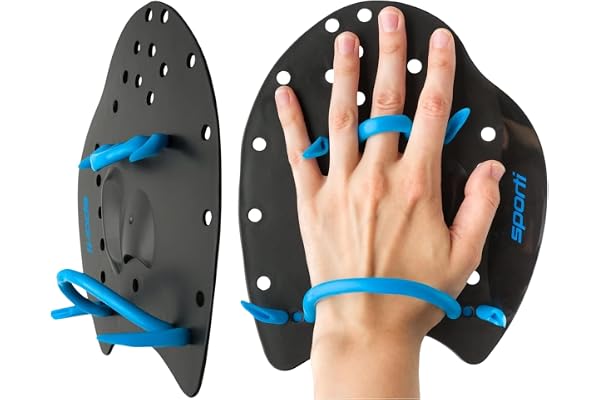
Ready to Start Training With Paddles?
Browse a top-rated, beginner-friendly paddle set and start building pulling strength and catch awareness in your next session.
Shop Swim Paddles on AmazonAs an Amazon Associate, this site earns from qualifying purchases. Product links on this page may direct you to Amazon.com, and we may earn a small commission at no additional cost to you.