How to Heat Inflatable Swimming Pools Naturally
Nine proven, electricity-free methods to warm your backyard pool — from solar covers and dark hoses to windbreaks and greenhouse enclosures. More swims, less shivering.
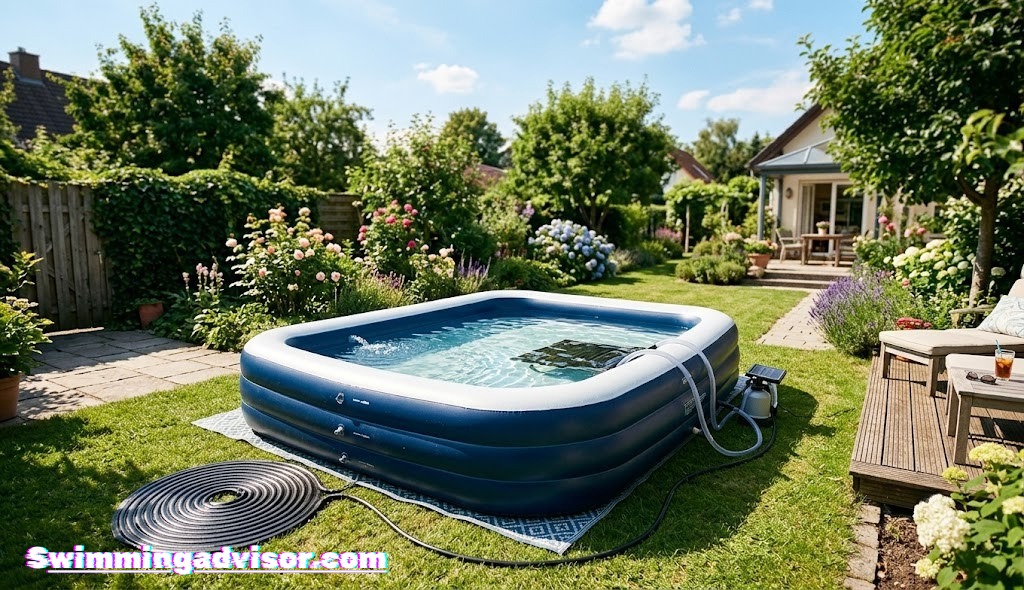
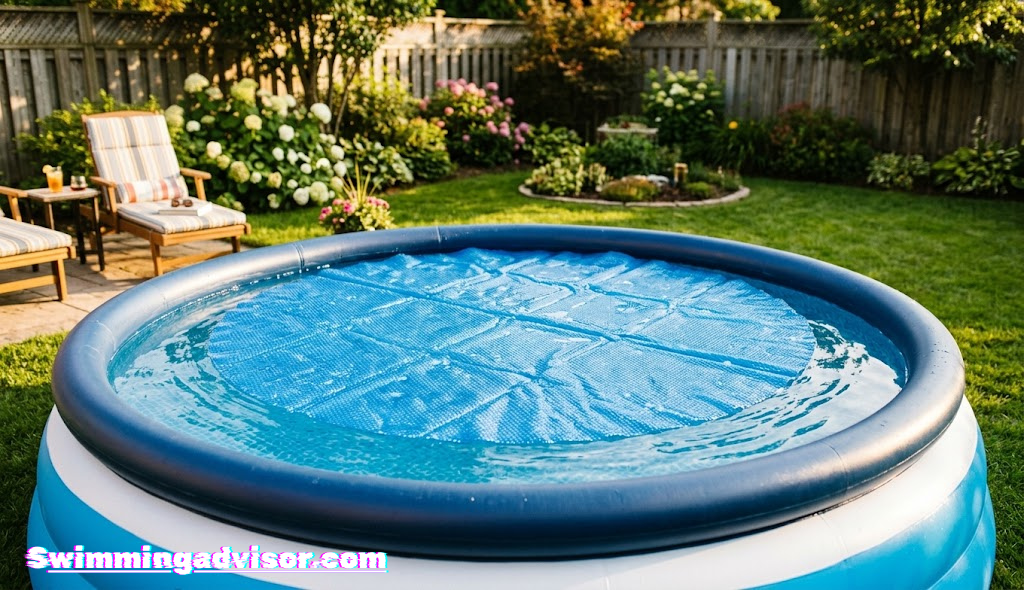
Cold pool water is the number one reason inflatable pools sit unused through perfectly good afternoons. You’ve set up the pool, spent money on chemicals, leveled the ground — and then the water hits 65°F and nobody wants to get in. The good news is that you don’t need an electric heater, a plumber, or a second power outlet to fix this. The sun alone delivers roughly 1,000 watts of energy per square meter on a clear day, and the right combination of natural methods can channel that energy directly into your pool water with surprising efficiency.
This guide covers nine natural, cost-effective methods for raising and holding your inflatable pool’s water temperature — from the most impactful (solar covers) to the most overlooked (windbreaks). Each method is explained in practical terms, with a clear visual diagram showing how it works, honest pros and cons, and specific product recommendations where they add value. By the end, you’ll have a complete heating strategy tailored to your pool size, climate, and budget.
Why Natural Pool Heating Makes Sense
Before diving into specific methods, it’s worth establishing why natural heating deserves serious attention rather than being treated as an inferior substitute for electric heaters. The argument isn’t only about cost — it’s about physics and practicality in a way that actually favors natural approaches for most inflatable pool owners.
Electric pool heaters for above-ground and inflatable pools typically run between 1,500 and 11,000 watts. A modest 1,500-watt immersion heater running eight hours a day adds roughly $50–$120 to a monthly electricity bill depending on your utility rates. Over a twelve-week season, that’s $150–$360 in heating costs on top of the heater purchase price. For a family that bought a $200 inflatable pool, spending $150+ per season on electricity to heat it isn’t rational economics.
Natural methods, by contrast, convert free solar energy. A quality solar cover costs $30–$80 one time and can raise water temperature by 10–15°F consistently throughout the season. Paired with the other methods in this guide, you can realistically achieve water temperatures 15–25°F above ambient — the difference between “too cold to bother” and “perfect afternoon swim.” If you’re still choosing your pool, our roundup of the best inflatable swimming pools includes models specifically suited to natural heating approaches.
There’s also a safety dimension that rarely gets mentioned. Electric heaters in or near inflatable pools introduce electrical equipment adjacent to water and plastic — a combination that demands careful product selection, weatherproof connections, and ideally a dedicated RCD-protected circuit. Natural methods carry none of these electrical risks. For families with young children or dogs, that simplicity is genuinely valuable.
The Science of Pool Heat Loss: What You’re Fighting
Effective natural heating isn’t just about adding heat to the pool — it’s equally about reducing the rate at which the pool loses the heat it already has. Understanding the four main heat loss mechanisms tells you which natural methods will make the biggest difference for your specific situation.
Evaporation (60–70% of heat loss)
Evaporation is by far the dominant heat loss mechanism in any open body of water. When water molecules evaporate from the surface, they carry thermal energy with them, cooling the remaining water significantly. On a breezy day, evaporation from an uncovered inflatable pool can dissipate the equivalent of several hours’ worth of solar heating within hours of sunset. This is why covering the pool — even with a basic tarp — makes such a dramatic difference to overnight heat retention.
Radiation (10–20% of heat loss)
All warm objects radiate thermal energy as infrared radiation. Pool water radiates heat upward into the sky at all times, with the rate increasing during cold, clear nights when the sky acts as a thermal sink. A solar cover or enclosure reduces radiative losses by placing an insulating layer between the water surface and the open sky.
Convection (15–20% of heat loss)
Convective heat loss occurs when wind sweeps the warm air layer above the water surface away and replaces it with cooler ambient air. This effectively creates a permanent temperature differential that continuously draws heat out of the water. A windbreak that reduces air movement over the pool surface dramatically reduces this mechanism, making it one of the highest-impact changes you can make to pool heat retention.
Conduction (5–10% of heat loss)
Heat conducts through the pool walls and floor into the cooler ground or air surrounding the pool. In inflatable pools, the thin PVC walls provide minimal insulation, making this a minor but real heat drain. Placing the pool on an insulating surface (a foam mat or thick ground cloth) reduces conductive ground losses — a practice already recommended for protecting the pool floor, as detailed in our guide to what to put under inflatable swimming pools.
Simply covering your inflatable pool with a solar blanket between uses eliminates the largest single source of heat loss — evaporation — in one action. Before buying any heating product, a solar cover should always be the first investment.
Method 1: Strategic Pool Placement in Maximum Sunlight
Position the pool for all-day solar exposure
The foundation of all natural pool heating is solar radiation — and the amount your pool receives is determined largely by where you place it. This is the one method that costs absolutely nothing and has a compounding effect on every other technique: a pool in perfect sun benefits more from a solar cover, heats faster from a dark hose top-up, and retains heat longer when the water was warmer to begin with.
The ideal location gets direct, unobstructed sunlight from late morning (around 10 AM) through early evening (5–6 PM). Avoid locations that receive morning-only or afternoon-only sun — you want the full central portion of the day when solar intensity is highest. South-facing locations in the northern hemisphere typically deliver the longest daily sun exposure; north-facing spots should be avoided in all but tropical latitudes.
Identify and avoid shade patterns that you might not initially notice: a tree that casts minimal shade at 9 AM may cast a significant shadow directly over the pool by 2 PM. Walk your yard at different times of day before final pool placement — or use a sun-path app to simulate shadow positions throughout the day. The difference between a pool in 6 hours of sun and one in 9 hours of sun can be 5–8°F of water temperature.
Proximity to dark-colored pavement or walls provides a secondary heating benefit: these surfaces absorb solar radiation during the day and radiate it back as heat into the air around the pool. A pool adjacent to a dark brick wall or south-facing dark paving receives ambient warm air from those surfaces as a secondary heat source throughout the day.
✅ Pros
- Zero cost — just planning
- Amplifies every other method
- Permanent benefit once done
❌ Cons
- Depends on yard layout
- Best spot may not be flattest
- More UV exposure for bathers
Method 2: Solar Pool Cover (Bubble Blanket)
Float a solar blanket on the water surface
A solar pool cover — also called a solar blanket or bubble cover — is the single most effective natural pool heating tool available at any price point. It works through two distinct mechanisms simultaneously: it absorbs solar radiation through its blue or clear bubble surface and transfers that heat directly into the water, and it traps heat by creating a physical barrier that prevents evaporation. The result is water that heats faster during the day and cools far more slowly at night.
The bubble side of the cover should always face down, in contact with the water. The bubbles act like a lens, concentrating sunlight downward into the water while trapping a thin layer of warm water directly beneath each bubble. A good solar cover can raise pool water temperature by 10–15°F over 6–8 hours of strong sun, and can prevent overnight heat loss of 10–12°F that would otherwise occur in an uncovered pool on a cool night.
For inflatable pools, you don’t need an exact-fit cover. Solar blankets are sold in rectangular panels that can be cut with scissors to match the shape of your pool — round, oval, or rectangular. Cut it slightly larger than your pool interior and trim to fit with the cover resting on the water. Weighted solar blankets designed for above-ground pools work well; alternately, solar rings (covered in Method 4) are a cut-free alternative that works effectively on any pool shape without needing to be trimmed.
When not in use, remove the cover before adding swimmers — having the blanket in the pool while people are swimming is uncomfortable and can cause entanglement. When removed, fold or roll the cover onto a reel (or simply fold accordion-style over the pool edge) to keep it off the ground where it can degrade from contact with soil, insects, and UV when not reflecting to your benefit.
✅ Pros
- Highest temperature gain per dollar
- Eliminates evaporative losses
- Works passively — no effort required
- Cuts chemical consumption 30–50%
- Easy to trim to any pool shape
❌ Cons
- Must be removed before swimming
- Degrades after 2–3 seasons of UV
- Can be awkward to store/handle on larger pools
Our in-depth review of the best covers for inflatable swimming pools compares solar blankets, thermal covers, and winter covers to help you choose the right option for your pool size and budget.

Solar Pool Cover Blanket — Cut-to-fit, bubble-style solar blanket that fits any inflatable pool shape. The single most effective natural heating upgrade available.
🛒 Check Solar Covers on AmazonMethod 3: Pre-Heat Fill Water with a Dark Garden Hose
Coil a black garden hose in full sun before filling
This is arguably the most underrated natural heating technique for inflatable pools, and it has a satisfying elegance: the garden hose you already own, left coiled in a sunny spot for a few hours before you start filling the pool, becomes a simple solar water heater. Black and dark-colored hoses absorb solar radiation extremely efficiently; on a hot summer day, water standing in a coiled black hose in direct sun reaches temperatures of 100–120°F — far hotter than any household water heater delivers.
The technique works best during the initial pool fill and for daily water top-ups rather than as a primary heating mechanism for already-filled large pools. But the impact is meaningful: filling a 1,000-gallon pool with water that starts at 100°F rather than 60°F (cold mains supply) gives you an immediate 10–20°F temperature advantage before any other heating method is applied. For a 500-gallon splash pool, this technique alone can achieve comfortable swimming temperatures on a warm day.
The practical method: lay or coil 50–100 feet of black garden hose in direct sunlight at least two hours before you plan to fill the pool. Leave the hose closed at the far end, allowing the standing water inside to heat fully. When ready to fill, open both ends — the hot water that flows out first goes into the pool. Continue running the hose (which is now actively circulating warmer water from solar-heated tubing) throughout the fill. If you have a second hose, you can run one as a “solar heater loop” continuously: water exits the pool, circulates through the sun-heated hose, and re-enters warmer.
✅ Pros
- Uses equipment you already own
- Zero additional cost
- Delivers very hot water instantly
- Scalable with longer hoses
❌ Cons
- Most effective during initial fill only
- Requires 2+ hours of prep time in sun
- Water cools in the hose overnight
Water that has sat in a garden hose in very hot sun can reach temperatures that are uncomfortable or potentially scalding. Always test the first flow of water from a sun-heated hose before directing it at children, and consider letting the very hottest water flow to a garden bed before redirecting to the pool if temperatures feel extreme.
Method 4: Solar Pool Rings
Float solar ring panels on the water surface
Solar pool rings are an excellent alternative to full solar covers for inflatable pools — they’re particularly well suited to round pools, easier to handle than large sheets of solar blanket material, and can be added or removed individually based on how much heating you need on a given day.
Each solar ring is typically 60 inches in diameter and consists of two layers of UV-resistant vinyl. The clear upper layer lets sunlight through; the blue lower layer absorbs that sunlight and converts it to heat, which transfers directly into the water below. Magnets embedded in the edges of each ring cause them to connect to adjacent rings, creating a continuous cover over the pool surface without requiring you to fit or cut a single piece.
For a 12-foot round inflatable pool, four to six solar rings typically cover 70–80% of the surface area — enough to achieve meaningful heating without needing to match coverage to exact pool dimensions. As a rough guide, each ring heats approximately 50–100 gallons of water by 3–5°F per day of sun exposure. For a smaller pool of 500–800 gallons, two rings will produce noticeable temperature gains within a few hours of sunny weather.
Solar rings don’t need to be removed before swimming — simply push them aside to create a swimming area and let them float back into position when the pool is in use. This convenience factor is a genuine advantage over full solar blankets for pools where spontaneous use is common.
✅ Pros
- No cutting or fitting required
- Easy to add/remove individually
- Can be used while swimming
- Magnetic self-connecting design
- Works on any pool shape
❌ Cons
- Less efficient than full solar blanket
- Gaps between rings reduce effectiveness
- Higher cost per sq ft than blanket

Solar Pool Rings — Magnetic-edge rings that self-connect on any pool surface. Perfect for round inflatable pools.
🛒 Shop Solar Rings on AmazonMethod 5: Install a Windbreak Around the Pool
Block prevailing winds to stop convective and evaporative heat loss
Wind is the silent enemy of warm pool water, and most owners don’t realize how dramatically it accelerates heat loss. A steady 10 mph breeze across an uncovered pool surface can dissipate heat three to four times faster than still air by continuously stripping away the thin warm-air boundary layer above the water and driving evaporation. On a breezy afternoon, water temperature can drop 5–8°F in just a few hours even with the sun directly overhead.
A windbreak doesn’t need to be elaborate to be effective. The goal is to reduce wind speed across the pool surface — not eliminate it entirely. Research on pool windbreaks shows that a barrier positioned 1 pool-width upwind provides protection for a distance of 5–7 pool widths downwind, so even a modest fence or hedge positioned to one side of the pool makes a meaningful difference.
Effective windbreak options for inflatable pools include: permanent fencing (the most effective long-term solution), established hedgerows or shrubs that provide a solid green wall, temporary bamboo reed fencing panels (easy to install and relocate), outdoor fabric privacy screens attached to portable stakes, or creative use of large garden structures like pergolas, trellises with climbing plants, or even a row of potted tall grasses or bamboo.
A windbreak also makes the pool area more comfortable for bathers — particularly children who may be chilled by wind even when the water is warm. This secondary benefit of a calmer, warmer pool environment is worth factoring into the decision to invest in wind protection.
✅ Pros
- Amplifies all other heating methods
- Makes pool area more pleasant
- Improves bather comfort
- Temporary options are cheap
❌ Cons
- Permanent fencing requires planning
- May reduce sunlight if positioned incorrectly
Method 6: Reduce Water Volume to Speed Up Heating
Fill to a shallower depth for faster warm-up
This is a simple but frequently overlooked strategy that costs absolutely nothing and is immediately effective. The physics is straightforward: the same solar energy hitting the pool surface heats a smaller volume of water faster. A pool filled to 18 inches will reach a comfortable temperature in roughly half the time as the same pool filled to 36 inches, because there is literally half the water to heat.
For families with young children who primarily splash and play rather than swim, operating at reduced depth is entirely sensible from a safety perspective as well. Toddlers and children under five are most safely supervised in water no deeper than their waist, meaning filling a pool to its maximum depth isn’t necessary or desirable for this use case anyway.
On cooler days when you want to swim quickly but the water needs to reach a comfortable temperature, fill the pool to two-thirds its normal depth. Once the water has warmed up to a comfortable temperature from a morning of sun exposure, top up with additional water — ideally pre-warmed through the dark hose method described in Method 3. The warm baseline water temperature will assimilate the top-up volume without losing as much heat as if you had added all the cold water at the start.
Shallow filling also means less water to treat chemically, less water to drain when changing, and less pressure on pool walls and seams — a secondary benefit that extends pool lifespan. If you’re managing how much water goes in inflatable swimming pools carefully, strategic partial filling is one of the easiest management decisions available.
Method 7: Use a Clear Pool Enclosure (Greenhouse Effect)
Create a greenhouse effect with a clear pool tent
For the maximum natural heating effect available without any electricity, a clear inflatable or pop-up pool enclosure creates a genuine greenhouse environment around the pool. Sunlight enters freely through the clear walls, warms the air and water inside, and the warm air cannot escape — creating conditions where the pool water temperature can exceed ambient outdoor temperature by 15–25°F on a sunny day.
Pool enclosures designed for inflatable pools range from simple pop-up frame tents with clear PVC panels to dome-shaped inflatable structures. They serve multiple purposes simultaneously: heating the water, blocking wind entirely, preventing debris from entering the pool, reducing UV exposure on bathers (while still allowing substantial UV through for heating purposes), and providing a degree of privacy. In cooler climates, a pool enclosure can genuinely extend the swimming season by four to six weeks at each end of summer.
The practical consideration is size matching: you need an enclosure large enough to cover your pool plus a walkway perimeter. Many enclosures are rated by pool diameter — a 12-foot pool enclosure will typically be sold as a 14–15-foot tent to accommodate the pool plus access space. Good ventilation is important; many pool enclosures include mesh ventilation panels that allow airflow without sacrificing too much heat. On extremely hot days, partial ventilation prevents the enclosed air from becoming uncomfortably humid for bathers.
This method is the premium option in the natural heating toolkit — more expensive to implement than a solar cover but delivers more consistent temperatures, better debris management, and a more comfortable overall environment. For buyers considering this approach, it’s worth evaluating the pool size carefully, as a larger inflatable pool suited to adults will benefit more proportionally from an enclosure than a small kiddie splash pool.
✅ Pros
- Maximum temperature gain of all methods
- Blocks wind, debris, and insects
- Extends swimming season significantly
- Adds privacy for bathers
❌ Cons
- Highest upfront cost of natural methods
- Requires size matching to pool
- Needs ventilation on hot days
- Storage when not in use
Method 8: Dark Pool Liner Strategy
Choose or add dark materials inside the pool to absorb more solar heat
Light-colored pool walls reflect sunlight; dark-colored surfaces absorb it. This basic principle of solar radiation applies directly to inflatable pool heating: a pool with a dark blue, navy, or charcoal-colored liner will absorb significantly more solar energy than a white or very pale blue equivalent, all else being equal. On a sunny day, the difference can be 3–7°F in water temperature between an identical-volume light and dark pool.
If you’re in the process of choosing an inflatable pool, this is a factor worth considering. Pools with darker interior vinyl — typically dark blue or navy rather than the pale blue of basic models — are actively better solar absorbers. Some pools feature dark-colored bottom panels specifically for this reason. Our guide to the best inflatable swimming pools includes models with favorable solar-absorption characteristics.
For pools you already own with light-colored liners, you can approximate the dark liner effect using a black or very dark tarp laid on the pool floor before filling. The dark material sits on the floor of the pool, absorbs solar radiation as sunlight passes through the shallow water, and converts it to heat in the water immediately above it. Use a food-safe or pool-safe dark tarp rather than a builder’s tarp that may leach chemicals into the water.
An even simpler approach is to add dark river pebbles or decorative dark stones to the pool floor — these absorb solar heat and conduct it into the surrounding water, effectively turning the pool floor into a distributed heat absorber. This works particularly well in shallow pools where the stones are in direct sunlight from above.
A sheet of black pond liner (available cheaply from garden centers) placed on the pool floor before filling is an inexpensive, food-safe way to add the dark absorption effect to any existing light-colored inflatable pool.
Method 9: Nighttime Heat Retention System
Lock in daytime heat gains through the night
The most frustrating aspect of natural pool heating for many owners is waking up to discover that the pool water — comfortably warm at sunset — is cold again by morning. This doesn’t indicate a failure of the daytime heating methods; it reflects the significant heat loss that occurs during cooler nights from uncovered, exposed water. The solution is a dedicated nighttime retention strategy that preserves the heat gains achieved during the day.
The most effective nighttime retention system combines two elements: a solar cover (which blocks the dominant evaporative heat loss mechanism) and a windbreak (which reduces convective losses). Used together, these two measures can preserve 80–90% of daytime heat gains through the night in moderate climates. Without them, a pool may lose 10–15°F of temperature by the following morning — requiring the full daytime heating cycle to repeat from a lower starting point.
For additional nighttime insulation, a floating thermal blanket placed over the solar cover adds another layer of resistance to radiative heat loss. These blankets — thin, foil-backed foam sheets — are lightweight, inexpensive, and fold flat for easy storage. They’re particularly useful in climates with cool nights and warm days, where the daytime-to-nighttime temperature differential is large and heat loss during the night is correspondingly rapid.
Establish a consistent evening routine: deploy the solar cover as soon as the last swimmer exits, ensure the windbreak is in position, and where possible, keep the pool covered until the sun has had time to heat the air above the pool in the morning. Starting each day from a warm baseline means you reach comfortable swimming temperature hours earlier, even before the day’s full solar heating cycle has accumulated.
✅ Pros
- Prevents overnight temperature loss
- Starts each day from a warm baseline
- Multiplies daytime heating investment
- Reduces daily re-heating time by hours
❌ Cons
- Requires a consistent evening routine
- Solar cover needs handling twice daily
Combining Methods for Maximum Water Temperature
Each method in this guide works independently, but the real temperature gains come from combining them intelligently. The methods are not additive in a simple linear sense — some amplify others significantly. Here’s how to layer them for the best outcome based on your situation.
The Minimum Viable Stack (Zero Cost)
If you have zero budget for accessories: position the pool in maximum sunlight (Method 1), fill via the dark hose technique (Method 3), and reduce water depth for initial heating (Method 6). These three free methods alone can deliver water 10–15°F warmer than an unoptimized pool on the same sunny day. Cover the pool overnight with any available dark tarp to retain heat. This approach costs nothing and works surprisingly well.
The Recommended Stack (Solar Cover + Windbreak)
For most buyers, the practical optimal stack is: optimal sunlight placement (Method 1) + solar cover (Method 2) + dark hose fill (Method 3) + a basic windbreak (Method 5) + overnight cover retention (Method 9). This combination reliably achieves 15–20°F above starting water temperature in good sun and retains 80%+ of heat gains overnight. Total investment: $30–$80 for a solar cover, and either free windbreak from existing features or $15–$30 for temporary fence panels.
The Premium Stack (Maximum Temperature)
For buyers committed to genuinely warm water throughout the season: all of the above, plus solar rings deployed during peak sun hours (Method 4), plus a clear pool enclosure (Method 7). This combination can achieve water temperatures 20–30°F above ambient and maintain them reliably. It’s the approach that makes inflatable pool ownership in temperate climates genuinely comparable in comfort to owned heated in-ground pools. The investment of $150–$300 in solar rings and an enclosure pays for itself in extended pool use within a single season.
Always prioritize heat retention before adding more heat input. A solar cover that costs $40 preserves more heat than a $300 heater on an uncovered pool. Stop the leaks first, then fill up.

Browse Solar Pool Heating Products — Solar covers, rings, thermometers, and enclosures for inflatable pools on Amazon.
🛒 Shop Solar Heating ProductsAll 9 Methods: Full Comparison Table
| # | Method | Temp Gain | Cost | Effort | Best For |
|---|---|---|---|---|---|
| 1 | Optimal Placement | +5–8°F | Free | One-time plan | All pool owners |
| 2 | Solar Cover ⭐ Best ROI | +10–15°F | $30–$80 | Daily deploy/remove | All pool owners — first buy |
| 3 | Dark Hose Pre-Heat | +10–20°F (fill) | Free | 2hr prep | Initial fill & top-ups |
| 4 | Solar Rings | +5–10°F | $40–$100 | Float on surface | Round pools, convenience |
| 5 | Windbreak | +4–8°F retained | $0–$80 | One-time install | Windy locations |
| 6 | Reduce Water Volume | Heats 2× faster | Free | None | Quick use, young kids |
| 7 | Clear Enclosure | +15–25°F | $80–$300 | Set up once | Cooler climates, max heat |
| 8 | Dark Liner | +3–7°F | $10–$30 | One-time | Light-colored pools |
| 9 | Nighttime Retention | Preserves 80–90% | Cover already owned | Evening routine | All pool owners |
Maintaining Water Quality in a Heated Inflatable Pool
Warmer water is comfortable to swim in, but it also accelerates bacterial growth and speeds up the breakdown of pool chemicals — particularly chlorine. A heated pool needs slightly more attentive chemistry management than a cold, unused one. Understanding this trade-off upfront allows you to enjoy warm water without compromising water safety.
Chlorine Demand in Warm Water
Chlorine degrades faster at higher water temperatures. At 80°F, chlorine loses its effectiveness roughly twice as fast as at 60°F. This means a warm pool needs more frequent chlorine top-ups than a cold pool to maintain the same 1–3 ppm free chlorine level. Test the water more frequently on warm days and after periods of heavy use, and adjust your dosing schedule accordingly. Stabilized chlorine (trichlor or dichlor) with added cyanuric acid is particularly useful in warm, sun-exposed pools because the stabilizer slows UV degradation of the chlorine.
Algae Risk Increases with Temperature
Algae grows faster in warm water than in cold. A pool that maintains consistent chemical balance at 65°F may start developing algae within 48 hours if water temperature rises to 80°F and chemical levels aren’t adjusted. Increase algaecide dosing frequency by 30–50% when operating the pool in its warm, heated mode, and scrub the pool walls more frequently. Our guide on how to keep algae out of inflatable swimming pools covers the full prevention protocol.
Solar Covers and Chemical Interaction
Solar covers are not chemically neutral — they can slightly affect pool chemistry by creating an enclosed microenvironment at the water surface. Some owners observe pH creep (gradual pH increase) under solar covers. Test pH more frequently in solar-covered pools and be prepared to add pH Down if the reading exceeds 7.6. Additionally, never apply chlorine shock to a covered pool — shock releases gases that can damage the underside of a solar cover. Always shock with the cover removed, and replace the cover only after the surface chlorine has dissipated. For a full breakdown of which chemicals to use and how much, see our guide on chemicals needed for inflatable swimming pools.
Water Clarity and Circulation
Warm, still water in an inflatable pool with limited circulation is an ideal environment for bacteria and biofilm. If your pool doesn’t have a filter pump, the combination of heat and reduced water changes required when using a solar cover can degrade water quality faster than in a cool, regularly drained pool. Either run a filter pump (even a small cartridge pump adds meaningful circulation), increase water change frequency to compensate, or clean the pool thoroughly more often. Our guide on how to clean inflatable swimming pools without a pump covers maintenance routines for pools without filtration.
If you do need to drain the pool for a full clean, our resource on how to drain inflatable swimming pools quickly covers all the practical methods from gravity valves to sump pumps.

Pool Water Test Strips — Test pH, chlorine, and alkalinity in 60 seconds. Essential for managing warm pool chemistry accurately.
🛒 Shop Test Strips on AmazonWarm inflatable pools also benefit from a quality vacuum to remove settled debris before it degrades water quality. The best vacuums for inflatable swimming pools covers battery-powered, manual, and pump-attached options sized appropriately for inflatable pool use.
If you’re heating a pool intended for adult use where deeper water temperatures and longer soak sessions are the goal, the considerations around pool sizing become relevant — see our guide to the best inflatable swimming pools for adults for pools with the depth and volume that benefit most from natural heating methods.
For those considering a second dedicated pool for young children, heated separately from the main family pool, our review of the best inflatable swimming pools for kids covers splash-depth options that heat especially fast in sunlight given their smaller volume.
Frequently Asked Questions
🔗 Complete Inflatable Pool Guide Network
- Best Inflatable Swimming Pools — Full Buying Guide
- Best Inflatable Pools for Adults
- Best Inflatable Pools for Kids
- Best Foldable Pet Swimming Pools
- How to Level Ground for Inflatable Swimming Pools
- What to Put Under Inflatable Swimming Pools
- How to Clean Inflatable Pools Without a Pump
- Are Inflatable Swimming Pools Safe for Dogs?
- How Much Water Goes in Inflatable Swimming Pools
- How to Repair Holes in Inflatable Swimming Pools
- Chemicals Needed for Inflatable Swimming Pools
- Best Covers for Inflatable Swimming Pools
- How to Drain Inflatable Swimming Pools Quickly
- How to Keep Algae Out of Inflatable Swimming Pools
- Best Vacuums for Inflatable Swimming Pools
- Rectangular vs Round Inflatable Swimming Pools
- Best Inflatable Swimming Pools for Adults
☀️ Warm Water Is Within Reach — Start Today
Cold pool water doesn’t have to be the price of owning an inflatable pool. The nine methods in this guide represent a complete natural heating toolkit — from free strategies that cost nothing but a few minutes of planning, to modest investments in solar covers and rings that consistently deliver 15°F+ of temperature gain every sunny day.
The foundation is always the same: maximize heat input from sunlight, then minimize heat loss through evaporation, wind, and overnight cooling. A solar cover alone — the single best investment for any inflatable pool owner — can transform a pool that sits unused through cool mornings into one that reaches comfortable swimming temperature by late morning. Add a windbreak and a dark hose fill, and you’ve built a natural heating system that rivals electric alternatives at a fraction of the cost and with zero ongoing electricity bills.
If you’re still choosing your pool, factor in dark liner color, size appropriate for natural heating, and a shape that fits well under a solar cover. Our hub guide on the best inflatable swimming pools will help you choose a pool that works with these techniques from the ground up. If you already have a pool, start with the solar cover — it’s the change that will make the biggest difference to your enjoyment of this season, starting tomorrow morning.
🛒 Shop Solar Pool Covers on Amazon
Pingback: How to Increase Swimming Endurance: 8-Week Plan
Pingback: How to Improve Swimming Technique: Step-by-Step Guide
Pingback: Does Swimming Help You Lose Weight? What Works
Pingback: Does Swimming Build Muscle? What the Pool Really Does
Pingback: Does Swimming Make You Taller? Science Says No