Are Inflatable Swimming Pools Safe for Dogs?
The complete answer for pet owners — covering real risks, the best pool types for dogs, breed-specific safety, water chemistry, and every precaution that actually matters.
The Short Answer: Yes, But Context Is Everything
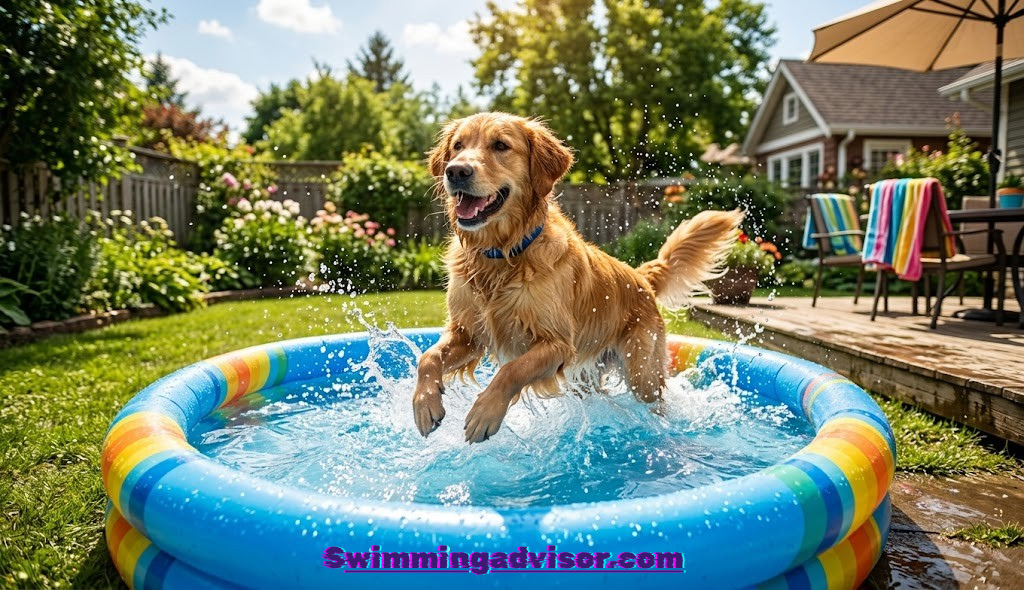
Inflatable swimming pools can absolutely be safe for dogs — but only if you understand the specific risks involved and take deliberate steps to address them. Dogs and standard inflatable pools aren’t a natural match out of the box. Most inflatable pools are designed with humans in mind, and human-centric design creates real hazards for four-legged swimmers: thin vinyl that claws puncture easily, water chemistry calibrated for human skin (not dog coats), and water depths that suit a child but challenge certain breeds.
That said, with the right pool, the right water chemistry, trimmed nails, and consistent supervision, a backyard inflatable pool can become one of the best summer experiences you give your dog. Cooling down in a shallow pool on a hot day reduces heat stress significantly — a genuine welfare benefit, not just a luxury. The question isn’t whether dogs can use inflatable pools, but how to set one up so they can use it safely.
🐕 Overall Dog Safety Rating — Inflatable Pools
This guide breaks down every risk category in detail so you can make a fully informed decision — not just follow a blanket “yes” or “no.” By the end, you’ll know exactly what type of pool to choose, how to prep it for dog use, what breeds need extra caution, and what to watch for during and after swim sessions.
Real Risks: What Can Actually Go Wrong
Before getting into solutions, it’s important to name the actual risks clearly. Vague warnings (“pools can be dangerous for dogs”) aren’t useful. These are the specific failure modes pet owners need to understand.
| Risk Category | How It Happens | Severity | Preventable? |
|---|---|---|---|
| Liner puncture | Sharp claws slice thin vinyl during scrambling | Medium — pool damage, not injury | Yes — nail trim + right pool |
| Chemical ingestion | Dog drinks pool water with high chlorine or algaecide | Medium — GI upset to toxicity | Yes — fresh water nearby, check levels |
| Drowning / exhaustion | Dog can’t exit, or tires treading water | High — potentially fatal | Yes — ramp, supervision, pool depth |
| Heat illness | Warm pool water raises body temp instead of cooling | Medium — heatstroke risk | Yes — shade, monitor water temp |
| Ear infections | Trapped water in ear canal after swimming | Low-Medium — painful, treatable | Yes — dry ears after swimming |
| Skin / coat irritation | Chlorine or pH imbalance strips coat oils | Low — discomfort, dry skin | Yes — rinse dog post-swim, balance pH |
| Algae / bacteria exposure | Dirty pool water carries pathogens | Medium — GI illness | Yes — change water regularly |
The pattern across every risk is clear: most dangers from inflatable pools are preventable with the right setup and supervision. The only risk that is difficult to mitigate entirely is the drowning risk for breeds that are inherently poor swimmers — and for those breeds, the solution is simply choosing a very shallow pool and never leaving them unattended for a second.
The Claw Puncture Problem — And How to Solve It
The most common complaint from pet owners who’ve tried standard inflatable pools with their dogs isn’t a safety issue at all — it’s a durability issue. Dogs puncture standard vinyl inflatable pools. It happens fast, often within a single session, and it usually happens not from the dog standing calmly in the pool but from the moment of entry or exit when paws scramble against the inflated wall.
Understanding the mechanics helps: a typical inflatable pool’s walls are made from vinyl in the range of 0.2–0.4mm thick. A dog’s dewclaw or front nails, if sharp and untrimmed, can generate point pressures easily sufficient to pierce material at that thickness — especially when the dog is pushing off the wall to climb out or pawing at the edge. Larger, heavier dogs create more force; breeds that paddle actively near the wall are at highest risk of causing punctures.
Effective Prevention Strategies
- Trim your dog’s nails short (1–2 days before pool use, not the same day, as freshly cut nails can still be sharp)
- Smooth any remaining sharp nail edges with a nail file or emery board
- Place a rubber anti-slip bath mat on the pool floor — cushions impact, gives traction, prevents scratching the liner
- Use a purpose-built dog pool with reinforced, puncture-resistant materials (see pool types section below)
- Install a dog ramp or steps at the pool’s edge so your dog never needs to scramble over or against the wall
- Consider soft-sided foldable pools for smaller dogs, which have rigid but low-profile walls dogs can step in and out of easily
✔ Dog-Specific Pool Advantages
- Thicker, reinforced PVC or rubber walls
- Low entry walls dogs can step over
- Non-slip textured floor surfaces
- Drain plugs at floor level for quick water changes
- Sized for dog proportions, not human lounging
✗ Standard Pool Disadvantages for Dogs
- Thin vinyl vulnerable to claw punctures
- Tall inflated walls hard for dogs to exit safely
- No dedicated ramp or step provisions
- Smooth floor offers poor traction for pawing
- Often deeper than a dog needs or benefits from
Best Foldable Pet Swimming Pools
Purpose-built for dogs — thicker walls, low entry, drain plug included. See our top picks for every dog size.
See Our Top Pet Pool Picks →Water Chemistry and Dogs: What’s Safe, What’s Not
Water chemistry is the most misunderstood aspect of dogs and inflatable pools. Some pet owners avoid any chemicals, letting the pool water go untreated — which creates a bacterial soup. Others dose pools the same way they would a large backyard pool, not realizing that a small inflatable pool with a dog reaches unsafe chemical concentrations much faster than a large body of water.
The truth is nuanced: properly balanced pool water at the same parameters safe for human children is generally safe for dogs swimming briefly. The problems occur at the extremes — both too little treatment and too much.
Safe Chlorine Range for Dogs
The safe range for dogs is essentially the same as for humans: 1–3 ppm (parts per million) of free chlorine, with a pH between 7.2 and 7.6. At these levels, a dog swimming for 20–30 minutes and accidentally ingesting small amounts of water (which all dogs do) will not experience toxicity. The coat may show slight chemical smell and the skin may experience mild dryness with repeated exposure, but there are no acute health risks.
| Chemical / Parameter | Safe Range for Dogs | Risk If Exceeded | How Often to Test |
|---|---|---|---|
| Free chlorine | 1–3 ppm | GI upset, eye/skin irritation, toxicity >5 ppm | Before each swim session |
| pH | 7.2–7.6 | Eye/skin irritation, chlorine inefficiency | Every 2–3 days |
| Algaecide | Avoid with dogs | Toxic if ingested — use manual water changes instead | N/A — skip it |
| Stabilizer (CYA) | 30–50 ppm | Reduces chlorine efficacy above 80 ppm | Weekly |
| Water temperature | Below 85°F (29°C) | Warm water increases bacterial growth; reduces cooling benefit | Before each use |
The Algaecide Warning
Most commercial algaecides contain quaternary ammonium compounds or copper sulfate — both of which are toxic to dogs if ingested. A dog that drinks pool water treated with algaecide can experience vomiting, diarrhea, and in higher doses, neurological symptoms. If your pool is used by your dog, skip algaecide entirely. Instead, manage algae through consistent chlorine levels, shade placement, and regular water changes. Our dedicated guide on how to keep algae out of inflatable swimming pools covers chemical-free and dog-safe algae prevention strategies in full.
For a full breakdown of how pool chemicals interact with dogs and what to use in shared pools, see our guide on chemicals needed for inflatable swimming pools.

Pool Water Test Kits — Dog-Safe Monitoring
Test chlorine and pH before every dog swim session. These strips and kits are fast, accurate, and affordable.
Shop Test Kits on Amazon →Drowning and Exhaustion: Understanding the Real Risk
Drowning risk for dogs in inflatable pools is real but highly variable. It depends on four factors: the pool’s depth and wall height, the dog’s breed and natural swimming ability, the dog’s age and physical condition, and whether a human is watching. Get all four right, and the risk drops to near zero. Get any of them wrong, and the combination can turn a pool session tragic.
How Dogs Drown in Shallow Pools
Most people imagine drowning only happens in deep water. But dogs drown in shallow pools for a specific reason: they can’t get out. A dog that enters a pool by jumping over an inflated ring wall can easily tire, panic, and be unable to get back over that same wall. Paddling in one spot burns energy fast. A large dog in a pool with no exit ramp that panics and tires can drown in water shallow enough to stand in, simply because it can’t find the exit or gather the energy to exit under its own power.
Smaller breeds, senior dogs, and very young puppies face this risk in even very shallow water — the issue isn’t depth, it’s entrapment and exhaustion. Always ensure your dog can exit the pool independently without jumping or scrambling over an inflated wall.
Water Depth Guidelines by Dog Size
| Dog Size | Max Recommended Depth | Notes |
|---|---|---|
| Small breeds (under 20 lbs) | 4–6 inches | Splashing and cooling only; no swimming |
| Medium breeds (20–50 lbs) | 8–14 inches | Comfortable paddling; needs easy exit |
| Large breeds (50–90 lbs) | 12–20 inches | Natural swimmers can go deeper; supervise closely |
| Extra-large breeds (90 lbs+) | 16–24 inches | Strong swimmers; ensure pool can hold weight without collapsing |
| Brachycephalic / flat-faced breeds | 4–8 inches max | Never deep enough to require active swimming; constant supervision |
If you’re filling a larger pool that your dog will share with family members, water volume matters for both safety and economics. Our guide on how much water goes in inflatable swimming pools helps you calculate the right fill depth for mixed human-and-dog use.

Dog Pool Ramps & Exit Steps
Give your dog an independent, safe exit. Browse the best dog pool ramps compatible with inflatable pools.
Shop Dog Pool Ramps →Breed-by-Breed Safety Guide
Not all dogs approach water the same way, and not all dogs are built equally for swimming. Understanding where your dog’s breed falls on the swimming ability spectrum is essential for setting up a pool that’s safe and appropriately sized.
Natural Water Breeds — Generally Safe in Pools
These breeds were historically developed for water retrieval and waterfowl hunting. They have webbed paws, water-resistant double coats, and an instinctive and efficient swimming stroke. In an appropriate pool with an easy exit, they’re genuinely in their element.
Middle-Ground Breeds — Capable but Need Supervision
These breeds can swim but may tire more quickly, have less natural buoyancy, or have body shapes that make the dog work harder to stay afloat. They can safely use pools but need exit ramps, consistent supervision, and shorter session lengths.
High-Risk Breeds — Extreme Caution Required
These breeds face genuine physical challenges when swimming. Brachycephalic (flat-faced) breeds have compromised airways that make breathing during exertion difficult. Heavy-bodied, short-legged breeds are negatively buoyant — their body composition makes them sink rather than float naturally. These dogs should only use very shallow splash pools under constant, hands-on supervision.

Dog Life Vests for Non-Swimming Breeds
An extra layer of safety for flat-faced and heavy-bodied breeds. Find the right fit for your dog’s size and weight.
Shop Dog Life Vests on Amazon →Best Pool Types for Dogs: A Practical Guide
Choosing the right pool for your dog is as important as any other safety measure. The wrong pool creates risks; the right one eliminates most of them from the start. Here’s how the main types compare for dog use.
1. Dedicated Dog/Pet Pools (Best Overall)
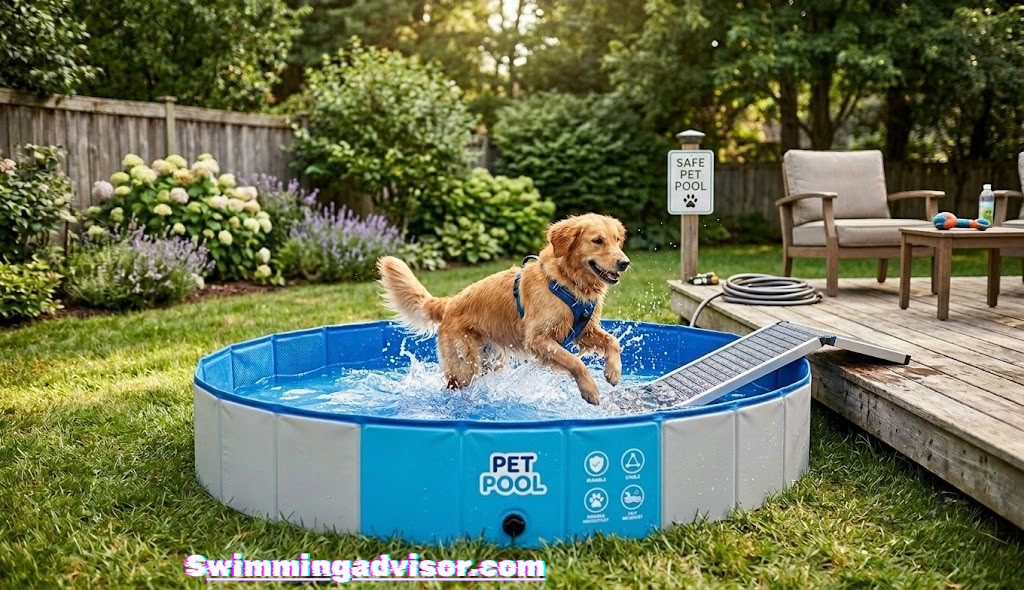
These are specifically designed for canine use. They’re typically made from heavy-duty PVC, durable rubber, or thick reinforced vinyl — materials that are dramatically more resistant to claw damage than standard inflatable pools. Most have low, fold-flat walls that dogs can step in and out of without scrambling, and a drain plug at the floor level for easy water changes. The best foldable pet swimming pools in this category are an excellent choice for most households with dogs.
✔ Dog Pool Pros
- Built for claw resistance
- Low walls, easy entry/exit
- Sized for dogs, not humans
- Drain plug for quick changes
- Often cheaper than standard pools
✗ Dog Pool Cons
- Too small for human use
- Limited water volume for large dogs
- Less durable under active digging breeds
2. Hard-Sided Inflatable Ring Pools (With Modifications)
Standard ring-top inflatable pools — the kind where you inflate the top ring and fill with water to raise the walls — can work for dogs with modifications. The inflated ring wall itself is relatively firm, which is good for puncture resistance on the sides. The floor is still vulnerable to scratching. Adding a rubber mat to the floor, a ramp for exit, and keeping nails trimmed makes these viable for medium to large dogs.
If you’re considering a medium or large ring pool for family and dog use, our roundup of the best inflatable swimming pools includes models with thicker floor materials that hold up better to pet use.
3. Frame Pools (Best for Large Dogs)
While not technically “inflatable,” frame pools with a steel or aluminum frame and a liner are an excellent option for households with large dogs. The walls are typically rigid enough that a dog pawing at the side won’t cause the pool to collapse, and most have a drain valve near the floor. The liner can still be damaged by claws but is often thicker (0.4–0.6mm) than standard inflatable vinyl. The tradeoff is that frame pools require more setup and can’t be deflated and stored as easily.
4. Kiddie Splash Pads (Best for Small Dogs and Puppies)
For very small dogs, toy breeds, and puppies just getting used to water, a flat splash pad or very shallow molded plastic play pool (2–3 inches of water) is often the safest option of all. There’s no depth to drown in, no wall to scramble over, and the dog stays in constant contact with a stable surface. The limitation is obvious — there’s no actual swimming, just splashing — but for small dogs on a hot day, that’s all they need.
| Pool Type | Best Dog Size | Claw Safety | Exit Safety | Overall Dog Rating |
|---|---|---|---|---|
| Dedicated dog pool | All sizes | ★★★★★ | ★★★★★ | ★★★★★ |
| Ring-top inflatable | Medium–Large | ★★★☆☆ | ★★☆☆☆ | ★★★☆☆ |
| Frame pool with liner | Large–XL | ★★★★☆ | ★★★☆☆ | ★★★★☆ |
| Shallow splash pad | Small–Toy | ★★★★★ | ★★★★★ | ★★★★☆ |
| Standard thin-vinyl inflatable | Not recommended | ★☆☆☆☆ | ★★☆☆☆ | ★★☆☆☆ |
12 Practical Safety Tips for Dogs in Inflatable Pools
These aren’t abstract guidelines — each one is tied to a specific risk that causes real problems for real dogs. Run through this list when setting up your pool for the season.
Teaching Your Dog to Use the Exit Ramp
One of the most practical safety investments you can make is teaching your dog to use an exit ramp before pool season begins. The trick is desensitization: place the ramp next to the pool (no water in it yet), encourage your dog to walk across it with treats. Once comfortable with the ramp on flat ground, place it at the pool edge and repeat. Only add water once your dog uses the ramp independently and confidently. This small training step can be a literal lifesaver for non-swimming breeds.
Managing Pool Temperature
Pool water left in direct sun gets warm quickly — sometimes uncomfortably warm within a few hours. Water over 85°F (29°C) doesn’t cool a dog down; it can actually raise body temperature, contributing to heat illness. The pool itself should be in partial shade, or the water should be refreshed with cooler water during the day. You can also add ice to the pool to bring the temperature down quickly before a swim session — dogs generally love this addition.
If you want to heat your pool for early season or cool evening use, our guide on how to heat inflatable swimming pools naturally covers solar heating methods that are safe for shared dog-and-human use.
Best Inflatable Pools for Families With Dogs
Not all pools are made equal when dogs are involved. See the options best suited for pet-friendly backyards.
Browse Pool Reviews →Health Warning Signs to Watch For During and After Swimming
Knowing when your dog is in trouble — or developing a health issue related to pool use — is as important as prevention. Dogs can’t tell you something is wrong, so you need to know what to look for.
During Swimming — Stop and Remove Immediately If You See:
- Excessive gasping, wheezing, or labored breathing (especially flat-faced breeds)
- Eyes rolling back, drooping eyelids, or sudden lethargy
- Frantic, uncoordinated paddling with the head going underwater
- Vomiting while in or immediately after exiting the pool
- Visible panic — rapid vocalization, inability to navigate toward exit
After Swimming — Watch for These in the 24 Hours Following Pool Use:
- Persistent head shaking or pawing at ears (possible water in ear canal → ear infection)
- Excessive thirst or urination beyond normal levels (possible secondary drowning — rare but serious)
- Vomiting or diarrhea (possible chemical or bacterial ingestion)
- Red, irritated skin or intense scratching, especially on the belly (chlorine irritation or contact allergy)
- Unusual lethargy, stumbling, or disorientation (possible toxin ingestion)
- Coughing that persists more than 30 minutes after swimming (possible aspiration — see a vet promptly)
Pool Maintenance for Dog Owners: Keeping Water Safe All Season
Dog use degrades pool water quality faster than human use alone. A maintenance routine that accounts for your dog’s presence keeps the water safe for both species throughout the swim season.
Water Change Frequency
For small, unfiltered dog-specific pools (under 200 gallons), change the water every 1–3 days during active use. Dog fur, saliva, and debris accumulate rapidly in this volume of water. Cloudiness, visible debris, or an unusual smell are all signals to change immediately, regardless of schedule.
For larger pools with filtration, run the filter for an additional hour per dog swim session beyond the normal filtration schedule. Test chemistry daily when dogs are using the pool. When it’s time to drain the pool, our guide on how to drain inflatable swimming pools quickly covers the fastest safe methods that don’t damage your liner.
Cleaning Between Uses
When changing water in a dog pool, rinse the interior surface thoroughly before refilling. Dog saliva and organic matter create biofilm — a slippery residue on the pool surface that is a precursor to bacterial growth. A diluted white vinegar rinse (1 part vinegar to 10 parts water) applied, scrubbed briefly, and rinsed off is an effective, dog-safe cleaning approach. Our guide on how to clean inflatable swimming pools without a pump covers this process step by step.
Covering When Not in Use
A pool left uncovered accumulates debris rapidly, especially in yards with dogs who track in grass, soil, and outdoor material. A pool cover between uses dramatically reduces the cleaning burden. Browse our roundup of the best covers for inflatable swimming pools — several options are lightweight and quick to place, removing the friction from making covering a daily habit.
Vacuuming Dog Hair and Debris
Dog fur in pool water is a constant maintenance challenge. It clogs filters quickly and creates visible mats that children find unpleasant. A dedicated pool vacuum for inflatable pools makes this manageable without full water changes. See our reviews of the best vacuums for inflatable swimming pools — many are battery-powered and designed specifically for the liner types used in inflatable pools.
Pool Vacuums for Dog Hair Removal
Keep fur and debris under control without constant water changes. Battery-powered options work great in inflatable pools.
See Vacuum Reviews →Frequently Asked Questions
Are inflatable swimming pools safe for dogs?
Yes, with the right setup and precautions. The main risks — liner punctures, chemical exposure, and drowning — are all preventable. Using a dog-specific pool, maintaining safe water chemistry, providing an easy exit ramp, trimming nails, and supervising your dog at all times make inflatable pools a safe and enjoyable option for most dogs.
Will my dog’s nails pop an inflatable pool?
Standard thin-vinyl inflatable pools are very vulnerable to claw punctures, particularly during entry and exit when dogs scramble against the wall. Using a dog-specific pool with reinforced PVC walls, trimming nails 1–2 days before pool use, and installing a step-in ramp dramatically reduces this risk. If a puncture does occur, patch kits fix most claw holes quickly.
Is chlorine in an inflatable pool safe for dogs?
At properly maintained levels (1–3 ppm free chlorine, pH 7.2–7.6), chlorine is generally safe for dogs who swim briefly. Problems occur at high chlorine concentrations above 5 ppm, with repeated large water ingestion, or for dogs with pre-existing skin conditions. Always keep a bowl of fresh water next to the pool, and rinse your dog thoroughly after each swim session.
How do I keep my dog safe in an inflatable pool?
Supervise every second your dog is near the pool, provide a ramp for independent exit, trim nails before pool use, maintain correct water chemistry, place fresh drinking water poolside, rinse your dog after swimming, dry ears thoroughly, and limit initial sessions to 15–20 minutes while your dog builds swimming confidence. Never leave any dog — even a strong swimmer — unattended near a filled pool.
Can dogs drink inflatable pool water?
Dogs should not drink pool water in any significant amount. Even low-chlorine water causes gastrointestinal upset when consumed frequently. Pools treated with algaecide are especially dangerous for dogs to drink from. Always place a full bowl of fresh water at the pool’s edge before your dog gets in — this is the single most effective way to prevent incidental pool water ingestion.
What type of inflatable pool is best for dogs?
Purpose-built dog pools with thick PVC or rubber walls, low step-in entry, non-slip surfaces, and a floor-level drain plug are the best choice. Foldable pet pools are a close second — they’re durable, easy to drain and clean, and sized appropriately for dogs. Avoid standard thin-vinyl inflatable pools designed for humans, especially for active dogs with untrimmed nails.
Can all dog breeds swim in inflatable pools?
No. Natural water breeds like Labradors and Golden Retrievers are well-suited for pool use. Brachycephalic breeds (Bulldogs, Pugs) and heavy, short-limbed breeds (Dachshunds, Basset Hounds) cannot swim safely in any real depth of water. These breeds should only use very shallow splash pools under constant hands-on supervision. A dog life vest adds a safety margin for at-risk breeds who love water.
How often should I change the water in a dog pool?
For small unfiltered dog pools, every 1–3 days during active use. Dog fur, saliva, and tracked debris degrade water quality far faster than human use alone. Change immediately if you notice cloudiness, debris accumulation, algae, or an unusual smell. For larger filtered pools shared by humans and dogs, test and adjust chemical levels daily during dog swimming sessions.
Is it safe for dogs to use the same pool as humans?
Yes, with increased chemistry monitoring. Dogs introduce significant organic material that raises chlorine demand. Test and adjust chemical levels after each dog swim session before human swimmers use the pool. Rinse your dog’s paws before pool entry, and run the filter for an extra hour per dog swim session. The water chemistry parameters safe for humans are the same ones safe for dogs at 1–3 ppm free chlorine.
How do I repair a dog-damaged inflatable pool?
Small claw punctures can be repaired with a vinyl patch kit. Dry the damaged area completely, clean it with rubbing alcohol, apply the self-adhesive patch per the kit instructions, and allow 24 hours to cure before refilling. For larger tears, a repair kit with liquid vinyl adhesive provides a stronger bond. Prevention is always better than repair — trim nails and use a dog-appropriate pool to avoid the problem entirely.
Conclusion: Yes, Inflatable Pools Can Be Safe for Dogs
The answer to “are inflatable swimming pools safe for dogs?” is a confident yes — qualified by the specifics of your setup, your dog’s breed, and your commitment to supervision. Dogs that can access a properly equipped pool in a safely managed environment genuinely benefit from it: staying cool in summer heat, getting low-impact exercise, and enjoying one of the few outdoor activities where their energy is an asset rather than a challenge to manage.
The risks — punctured liners, chemical ingestion, drowning, ear infections, and skin irritation — are all real. But none of them are inevitable, and none of them are difficult to prevent once you know what you’re dealing with. Trim nails, choose the right pool, balance the chemistry, provide an exit, supervise constantly, and rinse your dog after every session. Those six habits cover the vast majority of potential issues.
For breeds that aren’t natural swimmers, add a life vest and keep the pool very shallow. For breeds that live for water, invest in a dog-specific pool that can hold up to their enthusiasm. And for the families who want one pool for everyone, the management steps to make that safe are a few daily minutes of testing and adjustment — a small price for an activity the whole household, dogs included, can enjoy together.
Explore the rest of our guides on inflatable pools — from the best inflatable pools for kids to the best inflatable pools for adults — to build the perfect backyard water setup for your whole family.
Find the Perfect Pool for Your Dog
Browse our curated picks for foldable pet pools, family-friendly inflatables, and all the accessories that make dog swim days safe and easy.
See Our Top Pet Pool Picks →Affiliate Disclosure: SwimmingAdvisor.com participates in the Amazon Services LLC Associates Program, an affiliate advertising program designed to provide a means for sites to earn advertising fees by advertising and linking to Amazon.com. When you purchase through links on this site, we may earn a small commission at no additional cost to you. All product recommendations are based on our own research and editorial standards.